Saudi Arabia Flag
A government website registered with the Digital Government Authority.
Live Stream LinkLive Stream
Official Saudi Government websites URL ends with.gov.sa .

Website belongs to an official government organization in the Kingdom ofSaudi Arabia always ends with .gov.sa .

Official Reliable websites useHTTPS

Ensure the website is using the HTTPS protocol.

Dga Logo

Registered on Digital Government Authority:

20250724844

News

General Authority for Statistics News

Image Alt Text

GaStat: Real Estate Index Decreased by (6.3%) compared to the previous year and stabilized compared to Second Quarter

26-10-2017

GaStat: Real Estate Index Decreased by (6.3%) compared to the previous year and stabilized compared to Second Quarter On Tuesday Safar 4th, 1439 (October 24th,2017), GaStat issued its quarterly indicator of the real estate price general index in the Kingdom of Saudi Arabia for the third quarter (2017) and published it through its official website www.stats.gov.sa . This indicator is based on available registry data of the Ministry of Justice regarding real estate transactions. This indicator is an essential tool that supports entities which make economic and statistical decisions regarding the real estate price movements and future forecasts during different periods of time. The indicator includes three main sectors consisting of many real estate types: residential sector (piece of land, building, villa, apartment, and house), commercial sector (piece of land, building, shop, gallery and commercial centre), and agricultural sector which only includes agricultural land. The index of real estate prices for the third quarter 2017 recorded a relative stability compared to the previous quarter (second quarter 2017), reaching (84.9) in the third quarter 2017. The report attributed the stability of the real estate price index for the third quarter of 2017 to the varying percentage of change in the main sectors composing the indicator. The commercial sector witnessed a decline by (1.0%), the residential sector witnesses an increase by (0.2%), while the agricultural sector was stable without any relative change. The indicator recorded a decline of (6.3%) compared to the same quarter of the previous year (third quarter 2017). The report attributed this decline to the decline in the main sectors composing the indicator: the residential sector (7.9%), the commercial sector (10.9%) and the agricultural sector (1.0%).
Image Alt Text

GaStat: Real Estate Index Decreased by (6.3%) compared to the previous year and stabilized compared to Second Quarter

26-10-2017

GaStat: Real Estate Index Decreased by (6.3%) compared to the previous year and stabilized compared to Second Quarter On Tuesday Safar 4th, 1439 (October 24th,2017), GaStat issued its quarterly indicator of the real estate price general index in the Kingdom of Saudi Arabia for the third quarter (2017) and published it through its official website www.stats.gov.sa . This indicator is based on available registry data of the Ministry of Justice regarding real estate transactions. This indicator is an essential tool that supports entities which make economic and statistical decisions regarding the real estate price movements and future forecasts during different periods of time. The indicator includes three main sectors consisting of many real estate types: residential sector (piece of land, building, villa, apartment, and house), commercial sector (piece of land, building, shop, gallery and commercial centre), and agricultural sector which only includes agricultural land. The index of real estate prices for the third quarter 2017 recorded a relative stability compared to the previous quarter (second quarter 2017), reaching (84.9) in the third quarter 2017. The report attributed the stability of the real estate price index for the third quarter of 2017 to the varying percentage of change in the main sectors composing the indicator. The commercial sector witnessed a decline by (1.0%), the residential sector witnesses an increase by (0.2%), while the agricultural sector was stable without any relative change. The indicator recorded a decline of (6.3%) compared to the same quarter of the previous year (third quarter 2017). The report attributed this decline to the decline in the main sectors composing the indicator: the residential sector (7.9%), the commercial sector (10.9%) and the agricultural sector (1.0%).
logo-vertical

GaStat: The Saudi unemployment rate is 12.8% in the 2nd Quarter (2017)

02-10-2017
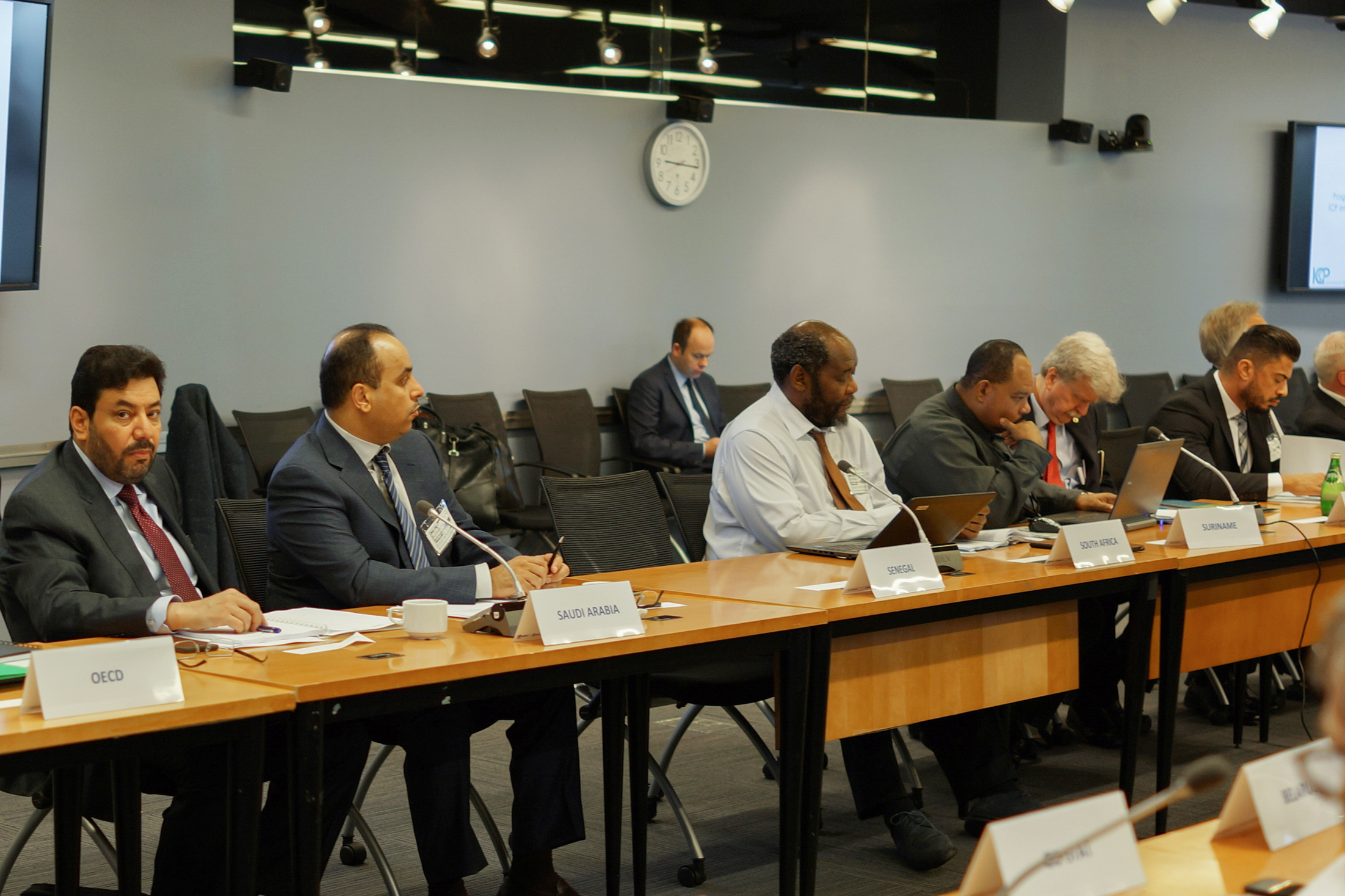
Labor Market Bulletin Includes 67 Statistical indicators GaStat: The Saudi unemployment rate is 12.8% in the 2nd Quarter (2017)  The General authority for Statistics (GaStat) published the Labor Market Bulletin for the second quarter of 2017 on Sunday Muharram 11th,1439H (Corresponding to October 1st,2017) which provides comprehensive data and indicators on the labor market in the Kingdom from April 1st to June 30th, 2017 (Corresponding to Rajab 15th to Shawwal 6th, 1438H) to support decision and policy makers regarding labor force. It also contributes in building a database on the labor market in the Kingdom that can be used to prepare and plan future social and economic development programs. The quarterly bulletin includes 67 statistical indicators which contain data and indicators from the Labor Force Survey estimates and labor market data from the administrative records of the relevant entities (Ministry of Labor and Social Development, Ministry of Civil Service, General Organization for Social Insurance(GOSI), Human Resources Development Fund and National Information Center) applying international standards in this area. The results of the bulletin for the second quarter of 2017 indicated that the total number of employees from the data of administrative records in the Kingdom of Saudi Arabia reached (13,841,158) individuals compared to (13,889,137) for the first quarter of 2017.   According to the results of the bulletin also from the data of administrative records in the government agencies for the second quarter of 2017, the total number of Saudis seeking work reached (1,075,933) individuals, (216,352) of them are males and (859,581) are females. The results also showed that the highest percentage of Saudis seeking employment was among the age group (25-29), which is (34.2%). Also according to the results of the administrative records data, nearly half of the Saudi job seekers hold university degrees reaching (50.5%). The results of the bulletin showed that the unemployment rate in Saudi Arabia for the Saudi population (15 years and over) from the Labor Force Survey estimates for the second quarter 2017 reached (12.8%), (7.4%) are males and (33.1%) are females. And the unemployment rate in the Kingdom for the total population (15 years and over) is (6.0%), (3.3%) are males and (22.9%) are females. The results also showed that (11.6%) of the unemployed Saudis had previously worked, and (32.9%) of unemployed Saudis who had previously worked left their jobs due to dismissal from the employer. The survey results also showed that (9.6%) of unemployed Saudis have already been trained. Regarding the economic activity rate of total population (15 years and over) it reached (54.2%), divided between males (78.2%) and females (18.7%). In its bulletin, GaStat also explained that the economic activity rate for total Saudi population (15 years and over) reached (40.3%). The bulletin included a large number of detailed data on workers according to the regulations they are subject to, nationality, sex, age, administrative region and educational level, as well as data for job seekers, average monthly wages, working hours and domestic workers. For more details, you can view the bulletin through Gastat’s official website: www.stats.gov.sa
logo-vertical

GaStat: The Saudi unemployment rate is 12.8% in the 2nd Quarter (2017)

02-10-2017

Labor Market Bulletin Includes 67 Statistical indicators GaStat: The Saudi unemployment rate is 12.8% in the 2nd Quarter (2017)  The General authority for Statistics (GaStat) published the Labor Market Bulletin for the second quarter of 2017 on Sunday Muharram 11th,1439H (Corresponding to October 1st,2017) which provides comprehensive data and indicators on the labor market in the Kingdom from April 1st to June 30th, 2017 (Corresponding to Rajab 15th to Shawwal 6th, 1438H) to support decision and policy makers regarding labor force. It also contributes in building a database on the labor market in the Kingdom that can be used to prepare and plan future social and economic development programs. The quarterly bulletin includes 67 statistical indicators which contain data and indicators from the Labor Force Survey estimates and labor market data from the administrative records of the relevant entities (Ministry of Labor and Social Development, Ministry of Civil Service, General Organization for Social Insurance(GOSI), Human Resources Development Fund and National Information Center) applying international standards in this area. The results of the bulletin for the second quarter of 2017 indicated that the total number of employees from the data of administrative records in the Kingdom of Saudi Arabia reached (13,841,158) individuals compared to (13,889,137) for the first quarter of 2017.   According to the results of the bulletin also from the data of administrative records in the government agencies for the second quarter of 2017, the total number of Saudis seeking work reached (1,075,933) individuals, (216,352) of them are males and (859,581) are females. The results also showed that the highest percentage of Saudis seeking employment was among the age group (25-29), which is (34.2%). Also according to the results of the administrative records data, nearly half of the Saudi job seekers hold university degrees reaching (50.5%). The results of the bulletin showed that the unemployment rate in Saudi Arabia for the Saudi population (15 years and over) from the Labor Force Survey estimates for the second quarter 2017 reached (12.8%), (7.4%) are males and (33.1%) are females. And the unemployment rate in the Kingdom for the total population (15 years and over) is (6.0%), (3.3%) are males and (22.9%) are females. The results also showed that (11.6%) of the unemployed Saudis had previously worked, and (32.9%) of unemployed Saudis who had previously worked left their jobs due to dismissal from the employer. The survey results also showed that (9.6%) of unemployed Saudis have already been trained. Regarding the economic activity rate of total population (15 years and over) it reached (54.2%), divided between males (78.2%) and females (18.7%). In its bulletin, GaStat also explained that the economic activity rate for total Saudi population (15 years and over) reached (40.3%). The bulletin included a large number of detailed data on workers according to the regulations they are subject to, nationality, sex, age, administrative region and educational level, as well as data for job seekers, average monthly wages, working hours and domestic workers. For more details, you can view the bulletin through Gastat’s official website: www.stats.gov.sa
Image Alt Text

Dr. Altekhaifi: KSA's distinctive work at statistics leads to council membership and participation in recurring meetings

19-09-2017

UN International Comparison Program board of directors holds second meeting Dr. Altekhaifi: KSA's distinctive work at statistics leads to council membership and participation in recurring meetings Saudi Arabia has participated at the second meeting of the board of directors of the International Comparison Program (ICP), which was held at Washington D.C. early this week.  His Excellency, president of the General Authority for Statistics, Dr. Fahad bin Sulaiman Altekhaifi, confirmed that the program’s work and results will help shape policies for global comparison to support statistical products of the participating countries. It will also enable the General Authority for Statistics to access the best global practices for statistics for the purpose of improving and developing the statistical work. Also, it will raise the quality of the data, which will reflect positively on the decisions for development that rely mainly on statistics. On the other hand, his excellency Dr. Altekhaifi pointed out that the board of directors, which has 11 countries including Saudi Arabia, which represents west Asia, has looked into the progress made when implementing the 2017 cycle in the participating areas. The council also specified a list of research topics including, implementing a rolling survey approach and building Purchasing Power Parity (PPP) time series, integrating ICP and Consumer Price Index (CPI) activities, Streamlining the process of establishing product lists and the use of importance indicators, improving the availability and quality of input data for rents, government services, and construction, streamline the use of productivity adjustments for government services, fine tuning global linking procedures, quality assurance of resulting PPPs and measures of reliability and other topics related to statistical work. Dr. Altekhaifi added that the ICP selecting of Saudi Arabia for the membership at the 2017-2019 cycle came as a result of the positive role of the General Authority for Statistics in different statistical programs organized by the UN. It also confirmed the kingdom’s effective role on the global map of statistics. Moreover, it reflects the results of the strategic transformation of the kingdom’s Statistic sector, which the leadership cares for and supports due to its role in aiding the national development decisions.  The ICP, which is under the supervision of the World Bank, is a partnership program for statistics on a global level. It is based on a statistical system that is connected with economic analysis. It uses statistical methods to derive the necessary data to calculate the PPP for about 200 countries and economies worldwide. It will facilitate the use of PPP as currency converters. That will allow for the comparison of the total economic indicators and the economic situations of countries worldwide. It is noteworthy to mention that the ICP board of directors is compiled of executives, chairpersons, and leading experts in 11 statistical devices participating in the program. They are distributed according to the regional areas: Africa, Asia, Pacific Islands, Latin America, the Caribbean, West Asia, Commonwealth of Independence States, European Union, non-European Union States, members of the organization for Economic Cooperation and Development, representatives of the International Monetary Fund, World Bank, UN Statistics Division, and the Inter-Agency Coordination Group.
Image Alt Text

Dr. Altekhaifi: KSA's distinctive work at statistics leads to council membership and participation in recurring meetings

19-09-2017

UN International Comparison Program board of directors holds second meeting Dr. Altekhaifi: KSA's distinctive work at statistics leads to council membership and participation in recurring meetings Saudi Arabia has participated at the second meeting of the board of directors of the International Comparison Program (ICP), which was held at Washington D.C. early this week.  His Excellency, president of the General Authority for Statistics, Dr. Fahad bin Sulaiman Altekhaifi, confirmed that the program’s work and results will help shape policies for global comparison to support statistical products of the participating countries. It will also enable the General Authority for Statistics to access the best global practices for statistics for the purpose of improving and developing the statistical work. Also, it will raise the quality of the data, which will reflect positively on the decisions for development that rely mainly on statistics. On the other hand, his excellency Dr. Altekhaifi pointed out that the board of directors, which has 11 countries including Saudi Arabia, which represents west Asia, has looked into the progress made when implementing the 2017 cycle in the participating areas. The council also specified a list of research topics including, implementing a rolling survey approach and building Purchasing Power Parity (PPP) time series, integrating ICP and Consumer Price Index (CPI) activities, Streamlining the process of establishing product lists and the use of importance indicators, improving the availability and quality of input data for rents, government services, and construction, streamline the use of productivity adjustments for government services, fine tuning global linking procedures, quality assurance of resulting PPPs and measures of reliability and other topics related to statistical work. Dr. Altekhaifi added that the ICP selecting of Saudi Arabia for the membership at the 2017-2019 cycle came as a result of the positive role of the General Authority for Statistics in different statistical programs organized by the UN. It also confirmed the kingdom’s effective role on the global map of statistics. Moreover, it reflects the results of the strategic transformation of the kingdom’s Statistic sector, which the leadership cares for and supports due to its role in aiding the national development decisions.  The ICP, which is under the supervision of the World Bank, is a partnership program for statistics on a global level. It is based on a statistical system that is connected with economic analysis. It uses statistical methods to derive the necessary data to calculate the PPP for about 200 countries and economies worldwide. It will facilitate the use of PPP as currency converters. That will allow for the comparison of the total economic indicators and the economic situations of countries worldwide. It is noteworthy to mention that the ICP board of directors is compiled of executives, chairpersons, and leading experts in 11 statistical devices participating in the program. They are distributed according to the regional areas: Africa, Asia, Pacific Islands, Latin America, the Caribbean, West Asia, Commonwealth of Independence States, European Union, non-European Union States, members of the organization for Economic Cooperation and Development, representatives of the International Monetary Fund, World Bank, UN Statistics Division, and the Inter-Agency Coordination Group.
Image Alt Text

GASTAT: Final announcement of the number of Pilgrims 1438 comes after sunset on the day of Arafah

12-09-2017

A detailed report on Hajj statistics featuring 40 key statistical outputs to be released following the official announcement
The General Authority for Statistics (GASTAT): Final Count of Hajj Pilgrims for 1438 AH to Be Announced After Sunset on the Day of Arafah
 GASTAT has announced that the counting and enumeration of pilgrims for the 1438 AH Hajj season, through the official entry points to the city of Makkah, will conclude at 6:30 PM, coinciding with sunset on Thursday, the ninth of Dhul-Hijjah (Day of Arafah). The final announcement of the total number of pilgrims and the release of the detailed Hajj statistics report will follow a few hours later, the same evening.
Mr. Abdullah Al-Batel, Deputy President of the Authority for Statistical Operations, confirmed that the Hajj Statistics Report, which will be issued shortly after the official announcement, will include forty principal statistical outputs intended to support strategic planning for serving the pilgrims and visitors to the Two Holy Mosques. He explained that the report provides comprehensive and accurate data on the number of pilgrims, classified by their methods and dates of arrival, and includes a variety of analytical tables and charts presenting figures such as the number of domestic pilgrims by gender and arrival method, the arrival patterns of Saudi pilgrims, the breakdown of non-Saudi domestic pilgrims by gender and nationality, their distribution by arrival method and nationality, and comparative figures across different nationalities. The report also details the number of vehicles used to transport domestic pilgrims to Makkah, organized by vehicle type and date of arrival. Furthermore, it presents data on international pilgrims by gender and arrival method, by gender and date of arrival, as well as comparative statistics on their methods of arrival. This information will be made available in multiple formats, including the Hajj Statistical Map, which allows users to easily access all data related to Hajj statistics.
Mr. Al-Batel further emphasized that the Hajj Statistics Program, implemented by GASTAT, aims to provide detailed and reliable data on the number of pilgrims from both inside and outside the Kingdom. These statistics serve as a foundational input for all relevant government entities to support future planning and ensure the delivery of essential services to pilgrims, including those related to social, health, security, food, and transportation sectors. The program relies on time-series data to estimate the manpower required to serve pilgrims and ensure their safety and comfort throughout the Hajj season. It also provides essential insights into infrastructure and facility needs in Makkah and the Holy Sites, which are considered when preparing development plans. In addition, the program contributes to the design of annual traffic management plans, including the phases of escalation and dispersal, and supports researchers, academics, and stakeholders interested in this field. It also assists in evaluating the efforts of various entities responsible for serving pilgrims and monitoring changes in arrival patterns.
In response to inquiries regarding the scope of enumeration and whether it includes drivers of vehicles and buses, Mr. Al-Batel clarified that the official unit of counting in Hajj statistics is the pilgrim in the state of Ihram. Accordingly, the enumeration of domestic pilgrims is limited to those in Ihram who are physically counted at the Hajj Statistics Centers located at the entrances to the city of Makkah. If a driver is in a state of Ihram, he is counted as a pilgrim. The enumeration includes all Saudi and non-Saudi individuals, male and female, arriving from within the Kingdom to perform Hajj. As for international pilgrims, they are counted by the General Directorate of Passports at the Kingdom’s official ports of entry, and their figures are subsequently provided to GASTAT to be added to the total number of pilgrims.


Image Alt Text

GASTAT: Final announcement of the number of Pilgrims 1438 comes after sunset on the day of Arafah

12-09-2017

A detailed report on Hajj statistics featuring 40 key statistical outputs to be released following the official announcement
The General Authority for Statistics (GASTAT): Final Count of Hajj Pilgrims for 1438 AH to Be Announced After Sunset on the Day of Arafah
 GASTAT has announced that the counting and enumeration of pilgrims for the 1438 AH Hajj season, through the official entry points to the city of Makkah, will conclude at 6:30 PM, coinciding with sunset on Thursday, the ninth of Dhul-Hijjah (Day of Arafah). The final announcement of the total number of pilgrims and the release of the detailed Hajj statistics report will follow a few hours later, the same evening.
Mr. Abdullah Al-Batel, Deputy President of the Authority for Statistical Operations, confirmed that the Hajj Statistics Report, which will be issued shortly after the official announcement, will include forty principal statistical outputs intended to support strategic planning for serving the pilgrims and visitors to the Two Holy Mosques. He explained that the report provides comprehensive and accurate data on the number of pilgrims, classified by their methods and dates of arrival, and includes a variety of analytical tables and charts presenting figures such as the number of domestic pilgrims by gender and arrival method, the arrival patterns of Saudi pilgrims, the breakdown of non-Saudi domestic pilgrims by gender and nationality, their distribution by arrival method and nationality, and comparative figures across different nationalities. The report also details the number of vehicles used to transport domestic pilgrims to Makkah, organized by vehicle type and date of arrival. Furthermore, it presents data on international pilgrims by gender and arrival method, by gender and date of arrival, as well as comparative statistics on their methods of arrival. This information will be made available in multiple formats, including the Hajj Statistical Map, which allows users to easily access all data related to Hajj statistics.
Mr. Al-Batel further emphasized that the Hajj Statistics Program, implemented by GASTAT, aims to provide detailed and reliable data on the number of pilgrims from both inside and outside the Kingdom. These statistics serve as a foundational input for all relevant government entities to support future planning and ensure the delivery of essential services to pilgrims, including those related to social, health, security, food, and transportation sectors. The program relies on time-series data to estimate the manpower required to serve pilgrims and ensure their safety and comfort throughout the Hajj season. It also provides essential insights into infrastructure and facility needs in Makkah and the Holy Sites, which are considered when preparing development plans. In addition, the program contributes to the design of annual traffic management plans, including the phases of escalation and dispersal, and supports researchers, academics, and stakeholders interested in this field. It also assists in evaluating the efforts of various entities responsible for serving pilgrims and monitoring changes in arrival patterns.
In response to inquiries regarding the scope of enumeration and whether it includes drivers of vehicles and buses, Mr. Al-Batel clarified that the official unit of counting in Hajj statistics is the pilgrim in the state of Ihram. Accordingly, the enumeration of domestic pilgrims is limited to those in Ihram who are physically counted at the Hajj Statistics Centers located at the entrances to the city of Makkah. If a driver is in a state of Ihram, he is counted as a pilgrim. The enumeration includes all Saudi and non-Saudi individuals, male and female, arriving from within the Kingdom to perform Hajj. As for international pilgrims, they are counted by the General Directorate of Passports at the Kingdom’s official ports of entry, and their figures are subsequently provided to GASTAT to be added to the total number of pilgrims.


logo-vertical

GaStat Launches the “Statistical Calendar” for 1438H Hajj Season

12-09-2017

More than 450 Statisticians Started this morning GaStat Launches the “Statistical Calendar” for 1438H Hajj Season Through its official website www.stats.gov.sa, the General Authority for statistics (GaStat) launched the statistical calendar for the 1438H Hajj season. It shows the publishing dates of services provided by the Kingdom to pilgrims, in addition to the statistics of domestic and international pilgrims. GaStat official spokesman, Mr. Taiseer Almofarrej, explained that the statistical calendar with its content, from statistics and numbers, aims to show the efforts made to pilgrims from more than 45 public and private entities. On the second day of the current month of Dhu al-Hijjah, the statistics of services provided to pilgrims from health and medical services, public services, transportation sector services and telecommunication services will be announced respectively. Then, the number of domestic and international pilgrims arriving to Makkah will be published and updated daily until the evening of the 9th day of Dhu Al-Hijjah when the total number of pilgrims will be announced. Mr. Almofarrej added that GaStat will issue the detailed bulletin of Hajj statistics the morning of Eied day (10 Dhul Al-Hijja ), he also added that all information will be available at GaStat official website on schedule.  On the other hand, GaStat official spokesman explained that the enumeration of pilgrims coming to Makkah has started the morning of Wednesday (1st of Dhu Al-Hijjah), by more than 450 statisticians, administrative and technicians from GaStat. They are distributed on all main centers in Makkah, Medina, Jeddah and Alta’if, and they work 24 hours until the sunset of Arafah day, next Thursday (9th of Dhu Al-HIjjah). GaStat called all pilgrims coming to Makkah for Hajj to provide the necessary statistical data required in all Pilgrims enumeration centers this year which are (Makkah/Jeddah Highway) Road , (Makkah/old Jeddah)Road, Altan’eim center(the connection road between Medina and Makkah), AlShrai’e center (the connection road between Makkah city and Alta’if city through AlSail), Alkar center (the connection road between Makkah and Alta’if through Alhada), and the Southern center ( Allaith -Jazan road  near Als’adeiah village) in addition to the Hajj statistics supportive centers in Jeddah at King Abdulaziz international airport, mass transportation stations, and other locations in Jeddah, Medina center (Abiar Ali and ‘Ashirah), and Alta’if center (Alsail Alkabeer).
logo-vertical

GaStat Launches the “Statistical Calendar” for 1438H Hajj Season

12-09-2017

More than 450 Statisticians Started this morning GaStat Launches the “Statistical Calendar” for 1438H Hajj Season Through its official website www.stats.gov.sa, the General Authority for statistics (GaStat) launched the statistical calendar for the 1438H Hajj season. It shows the publishing dates of services provided by the Kingdom to pilgrims, in addition to the statistics of domestic and international pilgrims. GaStat official spokesman, Mr. Taiseer Almofarrej, explained that the statistical calendar with its content, from statistics and numbers, aims to show the efforts made to pilgrims from more than 45 public and private entities. On the second day of the current month of Dhu al-Hijjah, the statistics of services provided to pilgrims from health and medical services, public services, transportation sector services and telecommunication services will be announced respectively. Then, the number of domestic and international pilgrims arriving to Makkah will be published and updated daily until the evening of the 9th day of Dhu Al-Hijjah when the total number of pilgrims will be announced. Mr. Almofarrej added that GaStat will issue the detailed bulletin of Hajj statistics the morning of Eied day (10 Dhul Al-Hijja ), he also added that all information will be available at GaStat official website on schedule.  On the other hand, GaStat official spokesman explained that the enumeration of pilgrims coming to Makkah has started the morning of Wednesday (1st of Dhu Al-Hijjah), by more than 450 statisticians, administrative and technicians from GaStat. They are distributed on all main centers in Makkah, Medina, Jeddah and Alta’if, and they work 24 hours until the sunset of Arafah day, next Thursday (9th of Dhu Al-HIjjah). GaStat called all pilgrims coming to Makkah for Hajj to provide the necessary statistical data required in all Pilgrims enumeration centers this year which are (Makkah/Jeddah Highway) Road , (Makkah/old Jeddah)Road, Altan’eim center(the connection road between Medina and Makkah), AlShrai’e center (the connection road between Makkah city and Alta’if city through AlSail), Alkar center (the connection road between Makkah and Alta’if through Alhada), and the Southern center ( Allaith -Jazan road  near Als’adeiah village) in addition to the Hajj statistics supportive centers in Jeddah at King Abdulaziz international airport, mass transportation stations, and other locations in Jeddah, Medina center (Abiar Ali and ‘Ashirah), and Alta’if center (Alsail Alkabeer).
Image Alt Text

Saudi Arabia has been honored to serve nearly 24 million pilgrims in 10 years

12-09-2017

GaStat Enumerates Pilgrims Every Year Saudi Arabia has been honored to serve nearly 24 million pilgrims in 10 years According to the official statistics of the General Authority for Statistics (GaStat), the total number of pilgrims that Saudi Arabia has been honored to serve during the last ten years has reached 23,935,354 pilgrims. The last Hajj season (1437H) recorded the lowest number of pilgrims during the last ten years as it reached 1,862,909 pilgrims. While the year (1433H) recorded the highest number of pilgrims during the last ten years as it reached 3,161,573 pilgrims. The official spokesman of Gastat, Mr.Taiseer Almofarrej, explained that the task of pilgrims enumeration every years is one of the tasks that Gastat has the honor of. It started since 1390H since Gastat was called (the Central Department of statistics), in order to provide accurate information that helps all state agencies in planning and development of everything related to serving Hajj visitors. This mission continued during all these years to witness developments and enhancements in the enumeration techniques every year to be more accurate and comprehensive. Mr. Almofarrej added that the Hajj statistics program aims at the completion of all future planning programs to ensure providing the necessary services needed by the guest of Makkah, whether social, health, security, food, or transportation services. This is done through using a time series of accurate data about the number of pilgrims, in addition to the estimation of labor forces needed for providing the necessary services for pilgrims during Hajj season every year. The data and number of pilgrims is also used by relevant systems who studies the preparations and main facilities in Makkah city and holy places, and take it into consideration when preparing the necessary plans. In addition, accurate data and information about Hajj statistics is provided to researchers, students, and individuals who are interested in this field. The data is also used in the evaluation of activities and events made by relevant entities who serve pilgrims, in addition to identify the method of arrival of domestic and international pilgrims. The official spokesman stressed that GaStat will be announcing the number of pilgrims periodically starting from the 1st of Dhu al-Hijjah. GaStat will also announce the final and official number of pilgrims on the evening of the ninth day of Dhu al-Hijjah through the Hajj statistics bulletin. The Bulletin will include detailed results about: number of domestic pilgrims, international pilgrims, pilgrims by gender, pilgrims by nationality, pilgrims by arrival destination, number of cars carrying pilgrims by type, and other detailed data. It is worth mentioning that the number of pilgrims in the last ten years exceeded 3 Million pilgrims in one time, and it exceeded 6 Million pilgrims 6 times. The number was lower than 2 Million in 3 Hajj seasons, and last year was the lowest according to the following table:
Image Alt Text

Saudi Arabia has been honored to serve nearly 24 million pilgrims in 10 years

12-09-2017

GaStat Enumerates Pilgrims Every Year Saudi Arabia has been honored to serve nearly 24 million pilgrims in 10 years According to the official statistics of the General Authority for Statistics (GaStat), the total number of pilgrims that Saudi Arabia has been honored to serve during the last ten years has reached 23,935,354 pilgrims. The last Hajj season (1437H) recorded the lowest number of pilgrims during the last ten years as it reached 1,862,909 pilgrims. While the year (1433H) recorded the highest number of pilgrims during the last ten years as it reached 3,161,573 pilgrims. The official spokesman of Gastat, Mr.Taiseer Almofarrej, explained that the task of pilgrims enumeration every years is one of the tasks that Gastat has the honor of. It started since 1390H since Gastat was called (the Central Department of statistics), in order to provide accurate information that helps all state agencies in planning and development of everything related to serving Hajj visitors. This mission continued during all these years to witness developments and enhancements in the enumeration techniques every year to be more accurate and comprehensive. Mr. Almofarrej added that the Hajj statistics program aims at the completion of all future planning programs to ensure providing the necessary services needed by the guest of Makkah, whether social, health, security, food, or transportation services. This is done through using a time series of accurate data about the number of pilgrims, in addition to the estimation of labor forces needed for providing the necessary services for pilgrims during Hajj season every year. The data and number of pilgrims is also used by relevant systems who studies the preparations and main facilities in Makkah city and holy places, and take it into consideration when preparing the necessary plans. In addition, accurate data and information about Hajj statistics is provided to researchers, students, and individuals who are interested in this field. The data is also used in the evaluation of activities and events made by relevant entities who serve pilgrims, in addition to identify the method of arrival of domestic and international pilgrims. The official spokesman stressed that GaStat will be announcing the number of pilgrims periodically starting from the 1st of Dhu al-Hijjah. GaStat will also announce the final and official number of pilgrims on the evening of the ninth day of Dhu al-Hijjah through the Hajj statistics bulletin. The Bulletin will include detailed results about: number of domestic pilgrims, international pilgrims, pilgrims by gender, pilgrims by nationality, pilgrims by arrival destination, number of cars carrying pilgrims by type, and other detailed data. It is worth mentioning that the number of pilgrims in the last ten years exceeded 3 Million pilgrims in one time, and it exceeded 6 Million pilgrims 6 times. The number was lower than 2 Million in 3 Hajj seasons, and last year was the lowest according to the following table:
Image Alt Text

Director of the Department: transforming statistics into an Authority establishes effective partnerships

12-09-2017

Dr. Fahad Altekhaifi, Director of the Central Department of Statistics and Information, stated that the transformation into a “General Authority” will focus on two principal areas: serving clients and beneficiaries—which encompass all entities that utilize statistical products—and enhancing the quality of these products to more effectively support data-driven decision-making that benefits both citizens and residents.
Altekhaifi explained that the statistical sector, in its new institutional form represented by the Authority and associated statistical departments, will strive to establish effective partnerships across all sectors. The objective is to consolidate the source of official statistics and accelerate their dissemination through formats and services that enable users to leverage the information and maximize its impact.
Speaking during a workshop held yesterday at the Department’s headquarters in Riyadh, which brought together more than thirty officials and specialists from various public and private sector institutions, Altekhaifi emphasized that clients are at the core of the transformation initiative launched by the Department, aimed at establishing a high-caliber statistical authority aligned with international standards relevant to development.
Government and private sector stakeholders involved in statistical work affirmed that the ongoing transformation of Saudi Arabia’s statistical sector—spearheaded by the Central Department of Statistics and Information—is advancing rapidly and cohesively, keeping pace with the evolving demands of both national and global economies.
The workshop, organized by the Central Department of Statistics and Information, aimed to engage all beneficiaries and partners of statistical products in the transition toward the establishment of the General Authority for Statistics (GASTAT), and to develop a unified vision regarding the Authority’s current and future strategic priorities.
The Department’s meeting halls witnessed a dynamic exchange of ideas and expertise, with the participation of representatives from the Ministries of Economy and Planning, Commerce, Labor, Housing, Civil Service, Social Affairs, Education, Health, Culture and Information, Water and Electricity, and Communications and Information Technology. Also in attendance were the General Investment Authority, the Saudi Export Development Authority, the General Commission for Audiovisual Media, the Saudi Arabian Monetary Authority, the e-Government Program (Yesser), King Saud University, Saudi Aramco, and a number of independent Saudi consultants.


Image Alt Text

Director of the Department: transforming statistics into an Authority establishes effective partnerships

12-09-2017

Dr. Fahad Altekhaifi, Director of the Central Department of Statistics and Information, stated that the transformation into a “General Authority” will focus on two principal areas: serving clients and beneficiaries—which encompass all entities that utilize statistical products—and enhancing the quality of these products to more effectively support data-driven decision-making that benefits both citizens and residents.
Altekhaifi explained that the statistical sector, in its new institutional form represented by the Authority and associated statistical departments, will strive to establish effective partnerships across all sectors. The objective is to consolidate the source of official statistics and accelerate their dissemination through formats and services that enable users to leverage the information and maximize its impact.
Speaking during a workshop held yesterday at the Department’s headquarters in Riyadh, which brought together more than thirty officials and specialists from various public and private sector institutions, Altekhaifi emphasized that clients are at the core of the transformation initiative launched by the Department, aimed at establishing a high-caliber statistical authority aligned with international standards relevant to development.
Government and private sector stakeholders involved in statistical work affirmed that the ongoing transformation of Saudi Arabia’s statistical sector—spearheaded by the Central Department of Statistics and Information—is advancing rapidly and cohesively, keeping pace with the evolving demands of both national and global economies.
The workshop, organized by the Central Department of Statistics and Information, aimed to engage all beneficiaries and partners of statistical products in the transition toward the establishment of the General Authority for Statistics (GASTAT), and to develop a unified vision regarding the Authority’s current and future strategic priorities.
The Department’s meeting halls witnessed a dynamic exchange of ideas and expertise, with the participation of representatives from the Ministries of Economy and Planning, Commerce, Labor, Housing, Civil Service, Social Affairs, Education, Health, Culture and Information, Water and Electricity, and Communications and Information Technology. Also in attendance were the General Investment Authority, the Saudi Export Development Authority, the General Commission for Audiovisual Media, the Saudi Arabian Monetary Authority, the e-Government Program (Yesser), King Saud University, Saudi Aramco, and a number of independent Saudi consultants.


logo-vertical

Minister of economy launches the general authority for statistics and its electronic portal....The authority of statistics signs 4 agreements with private and public sectors

12-09-2017

Minister of economy launches the general authority for statistics and its electronic portal The authority of statistics signs 4 agreements with private and public sectors Media center- Riyadh Minister of economy and planning, chairman of the general authority for statistics, Eng. Adel bin Mohammed Faqeeh, launched the first day of working in the statistical field with a new structure and identity. This was an implementation of the supreme decree issued on 26-12-1536 H which states transforming the central department of statistics to be a general authority called ( the general authority for statistics). The authority is financially and administratively independent. In his speech that was declared in the launching event which was held in Marriot hotel, the minister expressed his gratitude and thanks to the custodian of the two holly mosques, king Salman bin Abdulaziz Alsaud, may God protect him, for his approval to transform the central department of statistics to be an independent authority. He confirmed that the work will start officially in the general authority for statistics as a result of many supreme directives, orders, and resolutions that support and enhance a lot of governmental sectors by transforming them into independent authorities that provide services compatible with the rapid changes and developments. On his part, the authority's general director, dr. Fahad bin Sulaiman Altukhaifi, in his name and on behalf of all the staff of the central department of statistics , and all those who work in the statistical sector , he expressed his gratitude and thanks to the custodian of the two holy mosques for his supreme approval to transform the central department of statistics to a general authority. Dr.Fahad said that this transformation process has been done through six fundamental tracks which can be briefed in a working strategy that is all about the authority’s clients and partners to fulfill the actual need of statistical products, then developing these products and services and improving statistical and data methodologies and procedures. In addition, it focuses on upgrading the level of information technologies and digital infrastructure in order to give the products the ability to start from a very tough base that can cope with all technological changes. It also concentrate on raising awareness and literacy in the statistical field, and finally structuring the authority’s different tasks and departments. He assured that the general authority for statistics’ role has become more important as long as there are national transformation projects as it is very crucial to provide accurate statistical data and effective indicators besides developing the measurement tools. On the first working day and after the transformation process, the authority’s general director has announced that the first of Muharram of the next year will be the day in which the information bank will be issued. This bank is one of the statistical development national strategy’ aspects, which aim to organize statistical data and information in Saudi Arabia, to guarantee providing the governmental sectors and individuals with statistical information and indicators through an easy and accurate technique. This is to support the development decisions via collaborative system, which starts with electronic linking between all data resources in many related sectors. Furthermore, minister of economy and planning Eng. Adel bin Mohammed Faqeeh has launched the electronic portal of the general authority for statistics. In this portal, the users can get all the needed information in very easy and direct ways through many windows and according to the international statistical and technical standards. On the first working day, four agreements have been signed with different private and public sectors. The authority has signed two agreements with the national information center in the interior ministry and e-government program (yesser). These agreements have been signed to develop the techniques of collecting, exchanging, and integrating data. The third agreement has been signed with the national center for communication, aiming to develop the mechanisms of communication with disabled people. It also aims to provide statistical content in sign language. On the other hand, the central department of statistics and information ex-directors and retired employees were honored. After the launching event, the authority held an introducing workshop with many partners from both the private and public sectors. This workshop aimed to introduce the authority and its roles. The participants watched a detailed presentation about the products and services in addition to the interactive statistics window and a brief of the statistical awareness. The minister of economy and planning revealed that the statistical sector partnership with the private and public sectors will open many opportunities for the statistical sector to be constantly developed and improved in order to be able to effectively collaborate in supporting any developmental decision taken by any private or public sector in all fields of national development. It is worth mentioning that the ministers’ council resolution issued on 13/1/1437 H included the approval of general authority for statistics structure, and made it the only authorized entity that technically and structurally supervise the statistics sector. It also made it the only responsible authority for creating thorough national statistical databases in different fields. Moreover, it made it the only responsible entity for managing the authority affairs and creating its own board of directors
logo-vertical

Minister of economy launches the general authority for statistics and its electronic portal....The authority of statistics signs 4 agreements with private and public sectors

12-09-2017

Minister of economy launches the general authority for statistics and its electronic portal The authority of statistics signs 4 agreements with private and public sectors Media center- Riyadh Minister of economy and planning, chairman of the general authority for statistics, Eng. Adel bin Mohammed Faqeeh, launched the first day of working in the statistical field with a new structure and identity. This was an implementation of the supreme decree issued on 26-12-1536 H which states transforming the central department of statistics to be a general authority called ( the general authority for statistics). The authority is financially and administratively independent. In his speech that was declared in the launching event which was held in Marriot hotel, the minister expressed his gratitude and thanks to the custodian of the two holly mosques, king Salman bin Abdulaziz Alsaud, may God protect him, for his approval to transform the central department of statistics to be an independent authority. He confirmed that the work will start officially in the general authority for statistics as a result of many supreme directives, orders, and resolutions that support and enhance a lot of governmental sectors by transforming them into independent authorities that provide services compatible with the rapid changes and developments. On his part, the authority's general director, dr. Fahad bin Sulaiman Altukhaifi, in his name and on behalf of all the staff of the central department of statistics , and all those who work in the statistical sector , he expressed his gratitude and thanks to the custodian of the two holy mosques for his supreme approval to transform the central department of statistics to a general authority. Dr.Fahad said that this transformation process has been done through six fundamental tracks which can be briefed in a working strategy that is all about the authority’s clients and partners to fulfill the actual need of statistical products, then developing these products and services and improving statistical and data methodologies and procedures. In addition, it focuses on upgrading the level of information technologies and digital infrastructure in order to give the products the ability to start from a very tough base that can cope with all technological changes. It also concentrate on raising awareness and literacy in the statistical field, and finally structuring the authority’s different tasks and departments. He assured that the general authority for statistics’ role has become more important as long as there are national transformation projects as it is very crucial to provide accurate statistical data and effective indicators besides developing the measurement tools. On the first working day and after the transformation process, the authority’s general director has announced that the first of Muharram of the next year will be the day in which the information bank will be issued. This bank is one of the statistical development national strategy’ aspects, which aim to organize statistical data and information in Saudi Arabia, to guarantee providing the governmental sectors and individuals with statistical information and indicators through an easy and accurate technique. This is to support the development decisions via collaborative system, which starts with electronic linking between all data resources in many related sectors. Furthermore, minister of economy and planning Eng. Adel bin Mohammed Faqeeh has launched the electronic portal of the general authority for statistics. In this portal, the users can get all the needed information in very easy and direct ways through many windows and according to the international statistical and technical standards. On the first working day, four agreements have been signed with different private and public sectors. The authority has signed two agreements with the national information center in the interior ministry and e-government program (yesser). These agreements have been signed to develop the techniques of collecting, exchanging, and integrating data. The third agreement has been signed with the national center for communication, aiming to develop the mechanisms of communication with disabled people. It also aims to provide statistical content in sign language. On the other hand, the central department of statistics and information ex-directors and retired employees were honored. After the launching event, the authority held an introducing workshop with many partners from both the private and public sectors. This workshop aimed to introduce the authority and its roles. The participants watched a detailed presentation about the products and services in addition to the interactive statistics window and a brief of the statistical awareness. The minister of economy and planning revealed that the statistical sector partnership with the private and public sectors will open many opportunities for the statistical sector to be constantly developed and improved in order to be able to effectively collaborate in supporting any developmental decision taken by any private or public sector in all fields of national development. It is worth mentioning that the ministers’ council resolution issued on 13/1/1437 H included the approval of general authority for statistics structure, and made it the only authorized entity that technically and structurally supervise the statistics sector. It also made it the only responsible authority for creating thorough national statistical databases in different fields. Moreover, it made it the only responsible entity for managing the authority affairs and creating its own board of directors
Image Alt Text

GaStat Starts Working with the New Structure

12-09-2017
New (Statistical, Creative, and Awareness) Departments to Cope with the Requirements of the New Saudi Vision and National Transformation GaStat Starts Working with the New Structure The General Authority for Statistics starts working with the new organizational structure. A general administration for natural resources and knowledge statistics has been created. It works beside the general administration of economic statistics, the general administration of social statistics, field statistics departments, methodologies departments, creativity departments, and awareness departments. GaStat president, Dr. Fahad bin Sulaiman Al-Tukhaifi said that working with this new organizational structure is a response to the 2030 Saudi vision and 2020 national transformation program. The next phase needs integrated efforts from the statistical sector, so the sector must work in a distinct way as it is the only official sector that is responsible for the production of data, information, and statistics, which reflect the developments in Saudi Arabia. Dr. Fahad clarified that the new structure, which has been authorized since the first day of this Muhharam, is a way that guarantees achieving the authority's strategic goals that are represented in enhancing the efficiency and quality of statistical services and products. Moreover, it makes these services more comprehensive and beneficial. It also helps to raise the satisfaction level of all clients and beneficiaries, gives the authority a positive reputation in the society, promotes the statistical sector level, and builds a strong authority. Al-Tukhaifi added that this new structure is based on the statistical development' national strategy aspects, covering five aspects that guarantee the efficiency of the statistical sector in Saudi Arabia. The first aspect is using the statistical data and information, which aims at improving the use of statistical data and information in Saudi Arabia. This would fulfill all the users' needs by providing easy and on time statistical data and information.  There is also the aspect of statistical data and information production, which aims at enhancing the field operations such as censuses, surveys, and researches. Furthermore, it enhances using the most recent standards and classifications in collecting, analyzing, and publishing data. The third aspect is the recent technologies. It aims at using the most recent technologies in all the phases of the statistical and administrative work. It provides a high quality IT infrastructure. The fourth aspect is the communication and awareness, which aims at enhancing the statistical knowledge in society through education and awareness. It introduces those who work in the statistical sector with the concept of communication. The fifth aspect is about governance. Through this aspect, the authority is trying to set the principals that govern the statistical sector. This enhance the idea of "results based management" . It continuously develops the human resources and tries to recruit people with high capabilities. As for the main components of the authority new structure, Dr.Fahad stated that the organizational structure has been made by a teamwork from the authority and some experts outside the authority. This structure was made to develop and improve the statistical work. It also positively collaborate in activating the strategic transformation through which the Saudi statistical work is going. It enhances the role of the entity that supervises and organizes the statistical work by transforming it into an independent authority that has a featured personality and administrative and financial independence. The teamwork worked on determining the tasks, duties, and regulations according to certified instructions that guarantee founding an effective and comprehensive statistical organization. This new organization focused more on the clients and raising the products quality, considering them the main dimensions of work.  The new statistical organization has been built in a way that prevent duality in work and responsibilities. It also intends to make the organizational structure compatible with the authority’s strategy by collecting the harmonized activities in one sectors and administrative units to implement unified tasks. In this structure, Many administrations and departments have been founded to achieve the strategic goals. Regarding the main components of the new organizational structure, the authority president revealed that the statistical and administrative work has been distributed among three main sectors headed by the vice presidents. These sectors include the statistical works sector, which contains general administrations of economic statistics, social statistics, and natural resources and knowledge statistics (new one). In addition to the independency of the statistical field works with a general administration of operations. There is also an administration specialized in methodologies. As for the second sector, the statistical creativity and customer service sector, it is a totally new sector. However, the third sector represents IT and supporting services, as they are the main infrastructure of the authority’s statistical and administrative work. Moreover, the new structure includes a general administration of media and statistical awareness, which manages all the internal and external activities aiming at raising statistical awareness. It also includes a general administration of projects and strategic planning which implements and prepares the authority’s strategies and plans. Furthermore, there is a general administration of support and institutional excellence that manage, prepare, and update all the policies, operations, and procedures. The later also supervises the programs of total quality department and knowledge department.
Image Alt Text

GaStat Starts Working with the New Structure

12-09-2017

New (Statistical, Creative, and Awareness) Departments to Cope with the Requirements of the New Saudi Vision and National Transformation GaStat Starts Working with the New Structure The General Authority for Statistics starts working with the new organizational structure. A general administration for natural resources and knowledge statistics has been created. It works beside the general administration of economic statistics, the general administration of social statistics, field statistics departments, methodologies departments, creativity departments, and awareness departments. GaStat president, Dr. Fahad bin Sulaiman Al-Tukhaifi said that working with this new organizational structure is a response to the 2030 Saudi vision and 2020 national transformation program. The next phase needs integrated efforts from the statistical sector, so the sector must work in a distinct way as it is the only official sector that is responsible for the production of data, information, and statistics, which reflect the developments in Saudi Arabia. Dr. Fahad clarified that the new structure, which has been authorized since the first day of this Muhharam, is a way that guarantees achieving the authority's strategic goals that are represented in enhancing the efficiency and quality of statistical services and products. Moreover, it makes these services more comprehensive and beneficial. It also helps to raise the satisfaction level of all clients and beneficiaries, gives the authority a positive reputation in the society, promotes the statistical sector level, and builds a strong authority. Al-Tukhaifi added that this new structure is based on the statistical development' national strategy aspects, covering five aspects that guarantee the efficiency of the statistical sector in Saudi Arabia. The first aspect is using the statistical data and information, which aims at improving the use of statistical data and information in Saudi Arabia. This would fulfill all the users' needs by providing easy and on time statistical data and information.  There is also the aspect of statistical data and information production, which aims at enhancing the field operations such as censuses, surveys, and researches. Furthermore, it enhances using the most recent standards and classifications in collecting, analyzing, and publishing data. The third aspect is the recent technologies. It aims at using the most recent technologies in all the phases of the statistical and administrative work. It provides a high quality IT infrastructure. The fourth aspect is the communication and awareness, which aims at enhancing the statistical knowledge in society through education and awareness. It introduces those who work in the statistical sector with the concept of communication. The fifth aspect is about governance. Through this aspect, the authority is trying to set the principals that govern the statistical sector. This enhance the idea of "results based management" . It continuously develops the human resources and tries to recruit people with high capabilities. As for the main components of the authority new structure, Dr.Fahad stated that the organizational structure has been made by a teamwork from the authority and some experts outside the authority. This structure was made to develop and improve the statistical work. It also positively collaborate in activating the strategic transformation through which the Saudi statistical work is going. It enhances the role of the entity that supervises and organizes the statistical work by transforming it into an independent authority that has a featured personality and administrative and financial independence. The teamwork worked on determining the tasks, duties, and regulations according to certified instructions that guarantee founding an effective and comprehensive statistical organization. This new organization focused more on the clients and raising the products quality, considering them the main dimensions of work.  The new statistical organization has been built in a way that prevent duality in work and responsibilities. It also intends to make the organizational structure compatible with the authority’s strategy by collecting the harmonized activities in one sectors and administrative units to implement unified tasks. In this structure, Many administrations and departments have been founded to achieve the strategic goals. Regarding the main components of the new organizational structure, the authority president revealed that the statistical and administrative work has been distributed among three main sectors headed by the vice presidents. These sectors include the statistical works sector, which contains general administrations of economic statistics, social statistics, and natural resources and knowledge statistics (new one). In addition to the independency of the statistical field works with a general administration of operations. There is also an administration specialized in methodologies. As for the second sector, the statistical creativity and customer service sector, it is a totally new sector. However, the third sector represents IT and supporting services, as they are the main infrastructure of the authority’s statistical and administrative work. Moreover, the new structure includes a general administration of media and statistical awareness, which manages all the internal and external activities aiming at raising statistical awareness. It also includes a general administration of projects and strategic planning which implements and prepares the authority’s strategies and plans. Furthermore, there is a general administration of support and institutional excellence that manage, prepare, and update all the policies, operations, and procedures. The later also supervises the programs of total quality department and knowledge department.
Image Alt Text

"statistics" the accurate information provided by citizens is essential for governmental resolutions and projects

12-09-2017
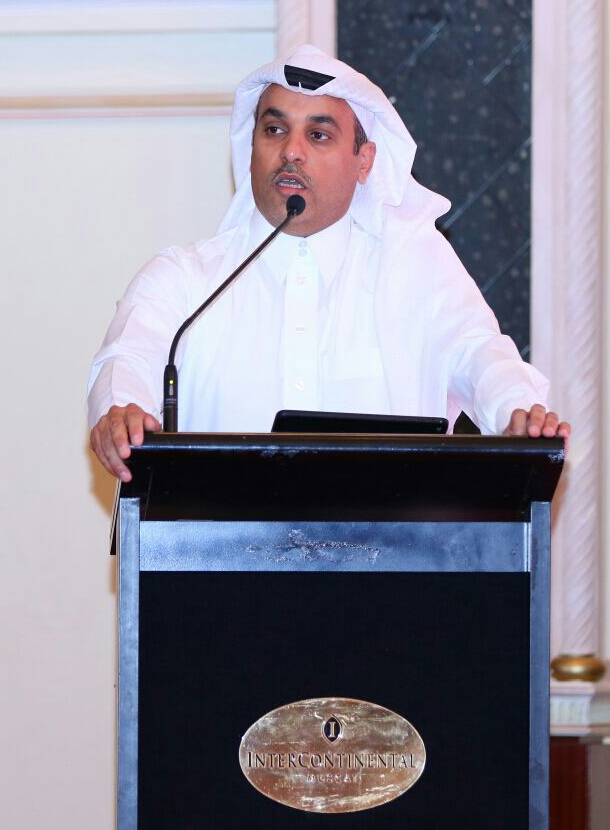
Updating the general framework of population and housing paves the way for a new labor force survey "statistics" the accurate information provided by citizens is essential for governmental resolutions and projects Media center- Riyadh Supporting the resolutions of nationalization and reduction of "unemployment",  the General Authority for Statistics ( GaStat ) stresses the importance of information accuracy provided by citizens in the activities of  labor force surveys as these information are essential for the development resolutions and can determine many national programs and projects. During his participation in the first Saudi conference for job creation held in Riyadh, GaStat chairman, dr. Fahad Altukhaifi stated that the citizen is considered the base for  development building , that is through the information that he/she provides during the process of conducting surveys done by GaStat crew. As for the survey of labor force, dr. Fahad confirmed that it is one of the most important household surveys conducted by GaStat . it provides fundamental data about the labor force and its characteristics, which helps in setting the plans to develop the labor market in Saudi Arabia, analyzing and evaluating the economic policies, and helping the decision makers in setting the labor market policies with all the related issues such as unemployment and training. The labor force survey results are very important too as they collaborate in building a data base for the Saudi labor market in order to cope with the interest and anticipations of the labor force statistics nationally, regionally, and internationally. The results also support all tendencies and efforts exerted by the public and private sectors  in the process of nationalization. Moreover, they give an opportunity to collaborate in building a base for these information  that can be beneficial in preparing and planning the future economic and social development programs. The authority conducts this survey every six months , it intends to conduct it every three months in 2016 according to the latest international standards and methodologies. The authority chairman added that providing detailed data about the national and non-national labor force ,classified by their economic, social, and demographic characteristics, is one of the main objectives of the survey, in addition to its role in measuring the averages of economic collaboration, economic support, and employment and unemployment by many variables. It should also provide data about some training programs for job seekers, and be familiar with the vocational structure and the economic activity of employed people by  a number of variables and the average of their salaries. Dr. Altukhaifi thanked all governmental entities who work with GaStat . he assured that the authority is working with all governmental entities which are related to the Saudi labor market ( ministry of labor, human resources development fund, general organization for social insurance, ministry of civil services, and the national information center in the ministry of interior) in order to develop the survey on one hand and benefit from its results on the other hand. The authority is working with them also to unify the efforts so that they can get accurate data of the most important indicators in the Saudi labor market. It is worth mentioning that the labor force survey results depend on the data and information of (33.500) households, distributed among all Saudi administrative regions, as a sample that represents the society. The households are chosen according to international and scientific fundamentals applicable in the population and housing censuses all over the world . GaStat has started preparing for the next survey after updating the general framework of population and housing which depends on the 1431 framework as it is considered the main source from which samples are collected to conduct  future researches.
Image Alt Text

"statistics" the accurate information provided by citizens is essential for governmental resolutions and projects

12-09-2017

Updating the general framework of population and housing paves the way for a new labor force survey "statistics" the accurate information provided by citizens is essential for governmental resolutions and projects Media center- Riyadh Supporting the resolutions of nationalization and reduction of "unemployment",  the General Authority for Statistics ( GaStat ) stresses the importance of information accuracy provided by citizens in the activities of  labor force surveys as these information are essential for the development resolutions and can determine many national programs and projects. During his participation in the first Saudi conference for job creation held in Riyadh, GaStat chairman, dr. Fahad Altukhaifi stated that the citizen is considered the base for  development building , that is through the information that he/she provides during the process of conducting surveys done by GaStat crew. As for the survey of labor force, dr. Fahad confirmed that it is one of the most important household surveys conducted by GaStat . it provides fundamental data about the labor force and its characteristics, which helps in setting the plans to develop the labor market in Saudi Arabia, analyzing and evaluating the economic policies, and helping the decision makers in setting the labor market policies with all the related issues such as unemployment and training. The labor force survey results are very important too as they collaborate in building a data base for the Saudi labor market in order to cope with the interest and anticipations of the labor force statistics nationally, regionally, and internationally. The results also support all tendencies and efforts exerted by the public and private sectors  in the process of nationalization. Moreover, they give an opportunity to collaborate in building a base for these information  that can be beneficial in preparing and planning the future economic and social development programs. The authority conducts this survey every six months , it intends to conduct it every three months in 2016 according to the latest international standards and methodologies. The authority chairman added that providing detailed data about the national and non-national labor force ,classified by their economic, social, and demographic characteristics, is one of the main objectives of the survey, in addition to its role in measuring the averages of economic collaboration, economic support, and employment and unemployment by many variables. It should also provide data about some training programs for job seekers, and be familiar with the vocational structure and the economic activity of employed people by  a number of variables and the average of their salaries. Dr. Altukhaifi thanked all governmental entities who work with GaStat . he assured that the authority is working with all governmental entities which are related to the Saudi labor market ( ministry of labor, human resources development fund, general organization for social insurance, ministry of civil services, and the national information center in the ministry of interior) in order to develop the survey on one hand and benefit from its results on the other hand. The authority is working with them also to unify the efforts so that they can get accurate data of the most important indicators in the Saudi labor market. It is worth mentioning that the labor force survey results depend on the data and information of (33.500) households, distributed among all Saudi administrative regions, as a sample that represents the society. The households are chosen according to international and scientific fundamentals applicable in the population and housing censuses all over the world . GaStat has started preparing for the next survey after updating the general framework of population and housing which depends on the 1431 framework as it is considered the main source from which samples are collected to conduct  future researches.
Image Alt Text

Dr. Altekhaifi : Statistics Support Decisions that will Reduce the Phenomenon of Rising Prices

12-09-2017

The GCC Statistical Centre Launches the General Consumer Prices Index In pursuit of the Gulf Cooperation Council (GCC) countries to find a number of coordinating and corrective procedural policies that will help in reducing the phenomenon of rising prices in the GCC countries, the GCC Statistical Centre launched the project of  "GCC Consumer prices index", and "the statistical centre data portal" in Muscat, Oman, under the auspices of His Excellency Sheikh Khalid Almarhoon, the Minister of Civil services in Oman. The chairman of the General Authority for statistics in Saudi Arabia, the chairman of the GCC Statistical center in its current cycle, Dr. Fahad bin Sulaiman Altekhaifi, asserted that the index number is considered to be an important tool to support decision makers in all private and public sector entities in GCC countries to prepare coordinating and corrective procedural policies that contributes in reducing the phenomenon of rising prices in the GCC countries. It is also considered to be an economic phenomenon with social dimensions. In addition, the new indicator will provide a unified prices statics data base with all its details, which will help the beneficiaries to use the information in various related fields. Talking about the statistical centre data portal, Dr. Altekhaifi added that the goal of inaugurating the portal is to enable the observation of statistical data and documenting achieved advancements in the indicators of the GCC countries in different economic, social, and energy sectors. In addition, its goal is  to provide information services that contributes in raising statistical awareness. On the other hand, in the speech of Dr. Altekhaifi, he asserted on developing and supporting the statistical and institutional abilities, to keep pace with the statistical requirements on the GCC countries' level and internationally. He also asserted that this is one of the most important common goals on the strategic level of the GCC countries. He also added that the authorities and Gulf statistical centers are seeking to continuously reinforce and enhance the quality and quantity of statistical services, and develop, expand and market the statistical publishing. Also, it seeks to show the GCC countries' region as a unified social and economic region through unifying the national statistical strategies in the GCC countries with the combined statistical programs needs according to the best international practices. Altekhaifi also explained that everyone is working on building statistical culture and raising statistical awareness, in addition to reinforcing the actual and correct use of statistical data and information in decision making and policy making in GCC countries. Altekhaifi also revealed about ten of the most important projects that are considered to be the top statistical priority determined by the GCC statistical centre, which are: the national  accounts, environment and energy, financial executive statistics, balance of payments, development, progress and sustainability indicators, short term prices and indicators, unified registered population census (year of 2020), foreign trade, administrative data, job market, and the statistical standards, categories, methodologies, and data quality. It is worth mentioning that the GCC statistical centre was established in September 2011, and its organization was approved in 2012 by the supreme council of the GCC to be the official source of statistical information and data related to GCC countries. It was also established to reinforce statistical and informational work of the national statistical centers and planning in GCC.
Image Alt Text

Dr. Altekhaifi : Statistics Support Decisions that will Reduce the Phenomenon of Rising Prices

12-09-2017

The GCC Statistical Centre Launches the General Consumer Prices Index In pursuit of the Gulf Cooperation Council (GCC) countries to find a number of coordinating and corrective procedural policies that will help in reducing the phenomenon of rising prices in the GCC countries, the GCC Statistical Centre launched the project of  "GCC Consumer prices index", and "the statistical centre data portal" in Muscat, Oman, under the auspices of His Excellency Sheikh Khalid Almarhoon, the Minister of Civil services in Oman. The chairman of the General Authority for statistics in Saudi Arabia, the chairman of the GCC Statistical center in its current cycle, Dr. Fahad bin Sulaiman Altekhaifi, asserted that the index number is considered to be an important tool to support decision makers in all private and public sector entities in GCC countries to prepare coordinating and corrective procedural policies that contributes in reducing the phenomenon of rising prices in the GCC countries. It is also considered to be an economic phenomenon with social dimensions. In addition, the new indicator will provide a unified prices statics data base with all its details, which will help the beneficiaries to use the information in various related fields. Talking about the statistical centre data portal, Dr. Altekhaifi added that the goal of inaugurating the portal is to enable the observation of statistical data and documenting achieved advancements in the indicators of the GCC countries in different economic, social, and energy sectors. In addition, its goal is  to provide information services that contributes in raising statistical awareness. On the other hand, in the speech of Dr. Altekhaifi, he asserted on developing and supporting the statistical and institutional abilities, to keep pace with the statistical requirements on the GCC countries' level and internationally. He also asserted that this is one of the most important common goals on the strategic level of the GCC countries. He also added that the authorities and Gulf statistical centers are seeking to continuously reinforce and enhance the quality and quantity of statistical services, and develop, expand and market the statistical publishing. Also, it seeks to show the GCC countries' region as a unified social and economic region through unifying the national statistical strategies in the GCC countries with the combined statistical programs needs according to the best international practices. Altekhaifi also explained that everyone is working on building statistical culture and raising statistical awareness, in addition to reinforcing the actual and correct use of statistical data and information in decision making and policy making in GCC countries. Altekhaifi also revealed about ten of the most important projects that are considered to be the top statistical priority determined by the GCC statistical centre, which are: the national  accounts, environment and energy, financial executive statistics, balance of payments, development, progress and sustainability indicators, short term prices and indicators, unified registered population census (year of 2020), foreign trade, administrative data, job market, and the statistical standards, categories, methodologies, and data quality. It is worth mentioning that the GCC statistical centre was established in September 2011, and its organization was approved in 2012 by the supreme council of the GCC to be the official source of statistical information and data related to GCC countries. It was also established to reinforce statistical and informational work of the national statistical centers and planning in GCC.
Image Alt Text

"Statistics" worked on six tracks in 90 days....Four Days and the Statistical Sector will Start a New Era

12-09-2017

"Statistics" worked on six tracks in 90 days Four Days and the Statistical Sector will Start a New Era Media Center The Saudi statistical data and information sector is starting a new era after declaring the changing of the central department of statistics to be an authority named" the general authority for statistics". This transforming will start officially on Wednesday 1st of jamad first. Director of media and statistical awareness department and the spokesman of the authority, Taiseer Almufarij states that working under the umbrella of the general authority for statistics is considered an implementation of the supreme decree number ( 64283) in 26/12/1436 H which declares transforming the central department of statistics to be a general authority called the general authority for statistics. This authority is financially and administratively independent. The supreme decree gave ninety days for the transforming process. The countdown is about to finish now and this Wednesday will be the first official day to work under the new name. Almufarij confirmed that this transforming is not only about changing the name or identity, but changing content, techniques, and mechanisms as the statistical sector must cope with all the rapid changes around it otherwise it cannot go farther.  With the increase of commercial transactions, international investments, social and economic changes, mass data revolution , and the development of digital media and portable technologies, it has been a need for the statistical work to go through a vital transforming process in order to satisfy the clients and fulfill their needs which require the authority to establish a mutual partnerships, estimate their current and future needs, unify the information sources, facilitate access to this sources, and provide more advanced statistical products. Almufarij said that the general authority for statistics is undergoing a transforming plan that has six major tracks: concentration on the client strategy, developing products and services, enhancing methodologies and procedures, upgrading information technologies and infrastructure, statistical literacy and building competences, and structuring all the authority's different tasks and departments in order to keep developing the authority and making it a distinct institution. It is worth mentioning that the Saudi statistical work has started in a very early era of the Saudi development history. It has started in 1349H /1930 AD and continued for thirty years till the issuance of the general statistics system in royal decree number (23) which made the statistical work a sector that refers technically and administratively back to an official system that cooperated in organizing the statistical sector by setting the rules of relation between the central department as it is the only central department for statistics and the other sectors. This system aimed to activate the statistical work and make it more comprehensive, and raise statistical awareness. During the last fifty eight years, the department worked on many surveys, censuses, and indicators in many different fields in Saudi Arabia.
Image Alt Text

"Statistics" worked on six tracks in 90 days....Four Days and the Statistical Sector will Start a New Era

12-09-2017

"Statistics" worked on six tracks in 90 days Four Days and the Statistical Sector will Start a New Era Media Center The Saudi statistical data and information sector is starting a new era after declaring the changing of the central department of statistics to be an authority named" the general authority for statistics". This transforming will start officially on Wednesday 1st of jamad first. Director of media and statistical awareness department and the spokesman of the authority, Taiseer Almufarij states that working under the umbrella of the general authority for statistics is considered an implementation of the supreme decree number ( 64283) in 26/12/1436 H which declares transforming the central department of statistics to be a general authority called the general authority for statistics. This authority is financially and administratively independent. The supreme decree gave ninety days for the transforming process. The countdown is about to finish now and this Wednesday will be the first official day to work under the new name. Almufarij confirmed that this transforming is not only about changing the name or identity, but changing content, techniques, and mechanisms as the statistical sector must cope with all the rapid changes around it otherwise it cannot go farther.  With the increase of commercial transactions, international investments, social and economic changes, mass data revolution , and the development of digital media and portable technologies, it has been a need for the statistical work to go through a vital transforming process in order to satisfy the clients and fulfill their needs which require the authority to establish a mutual partnerships, estimate their current and future needs, unify the information sources, facilitate access to this sources, and provide more advanced statistical products. Almufarij said that the general authority for statistics is undergoing a transforming plan that has six major tracks: concentration on the client strategy, developing products and services, enhancing methodologies and procedures, upgrading information technologies and infrastructure, statistical literacy and building competences, and structuring all the authority's different tasks and departments in order to keep developing the authority and making it a distinct institution. It is worth mentioning that the Saudi statistical work has started in a very early era of the Saudi development history. It has started in 1349H /1930 AD and continued for thirty years till the issuance of the general statistics system in royal decree number (23) which made the statistical work a sector that refers technically and administratively back to an official system that cooperated in organizing the statistical sector by setting the rules of relation between the central department as it is the only central department for statistics and the other sectors. This system aimed to activate the statistical work and make it more comprehensive, and raise statistical awareness. During the last fifty eight years, the department worked on many surveys, censuses, and indicators in many different fields in Saudi Arabia.
Image Alt Text

Dr. Altekhaifi: King Salman's speech outlines the foundations of a new development approach

12-09-2017

Dr. Fahad bin Suleiman Altekhaifi, Director General of the Central Department of Statistics and Information, affirmed that the contents of the speech delivered by the Custodian of the Two Holy Mosques King Salman bin Abdulaziz Al Saud at the outset of announcing the State’s General Budget for the fiscal year 1437/1438 AH outline a comprehensive framework for the future of the Kingdom and the effective and impactful management of its development. The Custodian of the Two Holy Mosques, King Salman bin Abdulaziz Al Saud’s directives were clearly articulated and imbued with an ambitious vision for a more stable and prosperous tomorrow.
The economic and financial reform program introduced in the speech represents a pivotal qualitative step in the journey of construction and progress. Through this program, all state institutions will be able to respond positively to the requirements of the current phase. This year’s budget contains important details of a comprehensive and integrated action plan, with the Custodian of the Two Holy Mosques King Salman bin Abdulaziz Al Saud outlining its pillars as foundational elements for building a strong and resilient economy based on ten solid principles: diversification of income sources, growth of savings, job creation, effective public-private sector partnership, continuity in implementing development and service projects, comprehensive advancement of services, improved efficiency of public spending, enhanced resource utilization, reduction of waste, and increased competitiveness of the business sector.
These ten principles form the core agenda of the Council of Economic and Development Affairs, as referenced by the Custodian of the Two Holy Mosques King Salman bin Abdulaziz Al Saud in his speech. The Council has led the transformation process with distinction and will continue to lead the development efforts in the coming period, which will witness major shifts in the management of government projects.
This places an increased responsibility on the statistical sector to ensure the quality of statistical products, especially as we now stand at the threshold of a major transformation with the conversion of the Department into the General Authority for Statistics (GASTAT). This shift aims to align statistical, data, and informational outputs with the evolving demands of the next phase of development, as these outputs constitute the primary inputs for effective developmental planning and continuous improvement.
The Director General emphasized that the statistical sector has received significant attention from the wise leadership, in recognition of its vital contribution to the development of various social, administrative, educational, economic, health, environmental, agricultural, and industrial domains. He added: “My colleagues and I in the statistical sector will spare no effort in providing everything that contributes to the development and construction of this nation’s future to perpetuate the blessings of security and prosperity upon us.


Image Alt Text

Dr. Altekhaifi: King Salman's speech outlines the foundations of a new development approach

12-09-2017

Dr. Fahad bin Suleiman Altekhaifi, Director General of the Central Department of Statistics and Information, affirmed that the contents of the speech delivered by the Custodian of the Two Holy Mosques King Salman bin Abdulaziz Al Saud at the outset of announcing the State’s General Budget for the fiscal year 1437/1438 AH outline a comprehensive framework for the future of the Kingdom and the effective and impactful management of its development. The Custodian of the Two Holy Mosques, King Salman bin Abdulaziz Al Saud’s directives were clearly articulated and imbued with an ambitious vision for a more stable and prosperous tomorrow.
The economic and financial reform program introduced in the speech represents a pivotal qualitative step in the journey of construction and progress. Through this program, all state institutions will be able to respond positively to the requirements of the current phase. This year’s budget contains important details of a comprehensive and integrated action plan, with the Custodian of the Two Holy Mosques King Salman bin Abdulaziz Al Saud outlining its pillars as foundational elements for building a strong and resilient economy based on ten solid principles: diversification of income sources, growth of savings, job creation, effective public-private sector partnership, continuity in implementing development and service projects, comprehensive advancement of services, improved efficiency of public spending, enhanced resource utilization, reduction of waste, and increased competitiveness of the business sector.
These ten principles form the core agenda of the Council of Economic and Development Affairs, as referenced by the Custodian of the Two Holy Mosques King Salman bin Abdulaziz Al Saud in his speech. The Council has led the transformation process with distinction and will continue to lead the development efforts in the coming period, which will witness major shifts in the management of government projects.
This places an increased responsibility on the statistical sector to ensure the quality of statistical products, especially as we now stand at the threshold of a major transformation with the conversion of the Department into the General Authority for Statistics (GASTAT). This shift aims to align statistical, data, and informational outputs with the evolving demands of the next phase of development, as these outputs constitute the primary inputs for effective developmental planning and continuous improvement.
The Director General emphasized that the statistical sector has received significant attention from the wise leadership, in recognition of its vital contribution to the development of various social, administrative, educational, economic, health, environmental, agricultural, and industrial domains. He added: “My colleagues and I in the statistical sector will spare no effort in providing everything that contributes to the development and construction of this nation’s future to perpetuate the blessings of security and prosperity upon us.


Image Alt Text

Dr. Altekhaifi: We aim to unify Data producers' Standards to Serve "GCC" Citizens

12-09-2017

GCC "Energy Statistics" in Riyadh Dr. Altekhaifi: We aim to unify Data producers' Standards to Serve "GCC" Citizens Media center- Riyadh The Chairman of the GCC Statistical center, the Chairman of the General Authority for Statistics in the Kingdom of Saudi Arabia, Dr. Fahad Sulaiman Altekhaifi expressed his thanks and gratitude towards the leaders of the GCC countries for supporting all programs and activities of the "GCC Statistical centre", as a result of their role in supporting all decisions related to the development of GCC nations. Dr. Altekhaifi asserted that the results of the Energy Statistics' Second Regional workshop about the final consumption of energy surveys held in Riyadh city meet the needs of the national and regional policy makers of the energy sector. It will also support everything that would develop the energy sector in GCC countries. Dr. Altekhaifi also added that through this workshop, the GCC statistical centre seeks to strengthen the cooperation between energy statistics producers, and unify the efforts in the used technical standards. In addition, it seeks to implement International standards by all data producers in member countries. Dr. Altekhaifi revealed that the most important role of data producers in this meeting is to reinforce the understanding of the international standards related to energy statistics in the statistics system. In addition, it aims to explain the links between energy data groups and discuss  the user's needs by enhancing the data and its publishing. Moreover, it aims to unify the efforts to raise the awareness about the methodologies needed in preparing energy statistic in the region. Furthermore,  it aims to deepen the participants' understanding of international standards that support energy statistics. Also it clarifies the importance of the final consumption surveys' system. In this workshop the participants reviews the national experiences of the member countries and the importance of the energy final consumption surveys. In addition, the participants visits several energy sector related entities in the kingdom of Saudi Arabia. This workshop continues until  22 March, 2016. It is worth mentioning that The GCC Statistical Centre was established in June 2011 to provide a common official pool of statistics and data for the member states of the GCC. It was also established to support the statistical work of national statistical centers and planning entities in GCC countries.. The Charter was officially endorsed in December 2012 by the GCC Supreme Council (comprised of heads of member states: United Arab Emirates, Kingdom of Bahrain, Kingdom of Saudi Arabia, Sultanate of Oman, State of Qatar and State of Kuwait).
Image Alt Text

Dr. Altekhaifi: We aim to unify Data producers' Standards to Serve "GCC" Citizens

12-09-2017

GCC "Energy Statistics" in Riyadh Dr. Altekhaifi: We aim to unify Data producers' Standards to Serve "GCC" Citizens Media center- Riyadh The Chairman of the GCC Statistical center, the Chairman of the General Authority for Statistics in the Kingdom of Saudi Arabia, Dr. Fahad Sulaiman Altekhaifi expressed his thanks and gratitude towards the leaders of the GCC countries for supporting all programs and activities of the "GCC Statistical centre", as a result of their role in supporting all decisions related to the development of GCC nations. Dr. Altekhaifi asserted that the results of the Energy Statistics' Second Regional workshop about the final consumption of energy surveys held in Riyadh city meet the needs of the national and regional policy makers of the energy sector. It will also support everything that would develop the energy sector in GCC countries. Dr. Altekhaifi also added that through this workshop, the GCC statistical centre seeks to strengthen the cooperation between energy statistics producers, and unify the efforts in the used technical standards. In addition, it seeks to implement International standards by all data producers in member countries. Dr. Altekhaifi revealed that the most important role of data producers in this meeting is to reinforce the understanding of the international standards related to energy statistics in the statistics system. In addition, it aims to explain the links between energy data groups and discuss  the user's needs by enhancing the data and its publishing. Moreover, it aims to unify the efforts to raise the awareness about the methodologies needed in preparing energy statistic in the region. Furthermore,  it aims to deepen the participants' understanding of international standards that support energy statistics. Also it clarifies the importance of the final consumption surveys' system. In this workshop the participants reviews the national experiences of the member countries and the importance of the energy final consumption surveys. In addition, the participants visits several energy sector related entities in the kingdom of Saudi Arabia. This workshop continues until  22 March, 2016. It is worth mentioning that The GCC Statistical Centre was established in June 2011 to provide a common official pool of statistics and data for the member states of the GCC. It was also established to support the statistical work of national statistical centers and planning entities in GCC countries.. The Charter was officially endorsed in December 2012 by the GCC Supreme Council (comprised of heads of member states: United Arab Emirates, Kingdom of Bahrain, Kingdom of Saudi Arabia, Sultanate of Oman, State of Qatar and State of Kuwait).
Image Alt Text

GaStat Discusses the General Statistics system draft

12-09-2017

In Collaboration with 19 Government Entities to Develop the Statistical Sector GaStat Discusses the General Statistics system draft Within the framework of activating the statistical sector in the Kingdom of Saudi Arabia, the General Authority for Statistics (GaStat) held a workshop on Wednesday, 28 Sha’ban 1438H corresponding to 24 May 2017 with 19 government entities and specialized consultation bodies. The workshop was held to discuss the draft of the general statistics system in preparation for its submission to GaStat’s board of directors then for the concerned entities for approval. H.E. Dr. Fahad Altekhaifi, GaStat President, expressed his gratitude to the workshop participants and asserted that developing the statistical sector is a joint responsibility between relevant entities. He also added that the aim of this workshop is to ensure that the proposed system draft meets all requirements which maximizes its benefit. Furthermore, he explained that the proposed system draft is comprehensive and keeps up with the latest developments in statistical systems in order to activate statistical work and deepen its impact on planning and enhancing statistical awareness. It also regulates the relationship between GaStat, as a supervisor and organizer of the statistical sector in Saudi Arabia, and all constituents of the statistical sector which includes beside GaStat; statistical administrative units in all government entities, private sector and academic sector. GaStat’s President also confirmed that the current system provides a solid structure for statistical work with the amendments that have been made over the past years. The regulation which was issued by the Council of Ministers Decision No. 11 issued in Muharram 13th, 1437H enhanced and completed the process of developing statistical work. The regulation included a number of subjects that covered a group of regulatory provisions and the most important of these subjects: emphasizing that the Authority has a public juridical personality, and a financial and administrative independence, it is the entity in charge of statistical affairs, the only official reference to implement statistical work, and it’s the only technical supervisor and regulator of statistical work, it is managed by a board of directors which by the regulation has the powers and authority on the statistical sector and its components in the Kingdom of Saudi Arabia. The regulation gave the Authority the task of establishing a permanent coordinating committee. It also gave it the responsibility of establishing a central system for information which is connecting electronically with all concerned entities. In addition to implementing statistical work, the regulation also assigned other tasks to the Authority which include: applying recognised international standards which include statistical work methodology, survey design and implementation, conducting research and studies, analyse data and information, all information and data documentation work, collecting statistical data and information that covers all aspects of life in Saudi Arabia from its different sources and classify it and section it, either from surveys and censuses or from administrative records in public entities and private establishments, analyse this data and extract its indicators, prepare evidences and national statistical classifications according to international standards, using it and developing whenever needed, prepare statistical bulletins and reports of surveys and research and publish it. The regulation also gave the Authority the right to provide statistical services, conduct surveys, prepare statistical research and studies, provide data from its databases to establishments and business sector in a commercial manner and shall benefit from its financial revenues in financing statistical and information services provided. In addition, it is responsible of transmitting knowledge and provide recommendations to public entities to develop all information system and statistical work methodology to achieve a comprehensive, accurate and unified statistical system and to develop public awareness of the importance of statistics, and to monitor and follow up all published data on the Kingdom of Saudi Arabia with the competent regional and international bodies and coordination with the concerned entities. This regulation reflects the leadership's keenness to develop the main infrastructure of all development decisions considering that the statistical products and services given by GaStat is a solid base to support all national development decisions and support policymakers with information that is considered as the compass of development work, which makes this regulation an added value at the development level  on one hand and the activation of the national strategy for statistical development on the other.
Image Alt Text

GaStat Discusses the General Statistics system draft

12-09-2017

In Collaboration with 19 Government Entities to Develop the Statistical Sector GaStat Discusses the General Statistics system draft Within the framework of activating the statistical sector in the Kingdom of Saudi Arabia, the General Authority for Statistics (GaStat) held a workshop on Wednesday, 28 Sha’ban 1438H corresponding to 24 May 2017 with 19 government entities and specialized consultation bodies. The workshop was held to discuss the draft of the general statistics system in preparation for its submission to GaStat’s board of directors then for the concerned entities for approval. H.E. Dr. Fahad Altekhaifi, GaStat President, expressed his gratitude to the workshop participants and asserted that developing the statistical sector is a joint responsibility between relevant entities. He also added that the aim of this workshop is to ensure that the proposed system draft meets all requirements which maximizes its benefit. Furthermore, he explained that the proposed system draft is comprehensive and keeps up with the latest developments in statistical systems in order to activate statistical work and deepen its impact on planning and enhancing statistical awareness. It also regulates the relationship between GaStat, as a supervisor and organizer of the statistical sector in Saudi Arabia, and all constituents of the statistical sector which includes beside GaStat; statistical administrative units in all government entities, private sector and academic sector. GaStat’s President also confirmed that the current system provides a solid structure for statistical work with the amendments that have been made over the past years. The regulation which was issued by the Council of Ministers Decision No. 11 issued in Muharram 13th, 1437H enhanced and completed the process of developing statistical work. The regulation included a number of subjects that covered a group of regulatory provisions and the most important of these subjects: emphasizing that the Authority has a public juridical personality, and a financial and administrative independence, it is the entity in charge of statistical affairs, the only official reference to implement statistical work, and it’s the only technical supervisor and regulator of statistical work, it is managed by a board of directors which by the regulation has the powers and authority on the statistical sector and its components in the Kingdom of Saudi Arabia. The regulation gave the Authority the task of establishing a permanent coordinating committee. It also gave it the responsibility of establishing a central system for information which is connecting electronically with all concerned entities. In addition to implementing statistical work, the regulation also assigned other tasks to the Authority which include: applying recognised international standards which include statistical work methodology, survey design and implementation, conducting research and studies, analyse data and information, all information and data documentation work, collecting statistical data and information that covers all aspects of life in Saudi Arabia from its different sources and classify it and section it, either from surveys and censuses or from administrative records in public entities and private establishments, analyse this data and extract its indicators, prepare evidences and national statistical classifications according to international standards, using it and developing whenever needed, prepare statistical bulletins and reports of surveys and research and publish it. The regulation also gave the Authority the right to provide statistical services, conduct surveys, prepare statistical research and studies, provide data from its databases to establishments and business sector in a commercial manner and shall benefit from its financial revenues in financing statistical and information services provided. In addition, it is responsible of transmitting knowledge and provide recommendations to public entities to develop all information system and statistical work methodology to achieve a comprehensive, accurate and unified statistical system and to develop public awareness of the importance of statistics, and to monitor and follow up all published data on the Kingdom of Saudi Arabia with the competent regional and international bodies and coordination with the concerned entities. This regulation reflects the leadership's keenness to develop the main infrastructure of all development decisions considering that the statistical products and services given by GaStat is a solid base to support all national development decisions and support policymakers with information that is considered as the compass of development work, which makes this regulation an added value at the development level  on one hand and the activation of the national strategy for statistical development on the other.
Image Alt Text

Gastat starts to visit more than 57,000 households next Thursday

12-09-2017
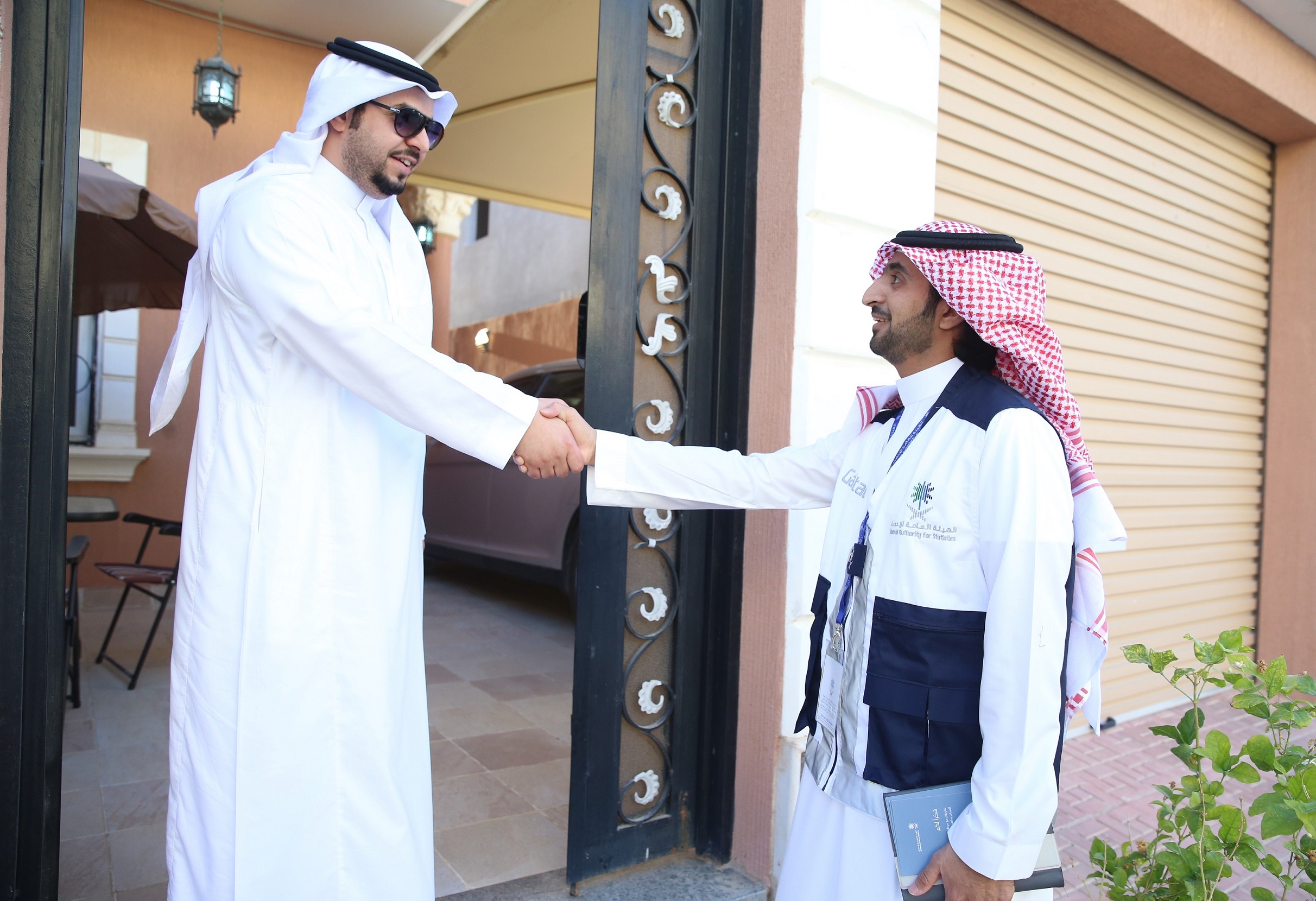
In cooperation with the Communication and Information Technology Commission and the General Sport Authority GaStat starts to visit more than 57,000 households next Thursday The General Authority of Statistics (GaStat) will start next Thursday, 19 Shawwal 1438H (13 June 2017), to visit more than 57,000 households in all regions of the Kingdom in coopereation with the Communication and Information Technology Commission and the General Sport Authority to conduct 3 household surveys: the survey of ICT’s access and use for households and individuals, sports survey for households, and the labour force survey for the third quarter. GaStat calls upon all citizens and residents to cooperate with the statisticians working in the field in 13 regions of the Kingdom including their cities and provinces. The work of than 450 field researcher will continue until 25 Dhu al-Qa’dah 1438 H (17 august 2017). GaStat official spokesman, Mr. Taiseer Almofarrej, explained that the household sport survey is one of the requirements of the Saudi Vision 2030 in cooperation with the General Sport Authority. It aims to provide recent indicators about the extent of playing sports for households. Through its results, stakeholders will learn about the reasons for playing sports or not and they will get updated statistics about the relationship of households with sports. It will also provide a comprehensive picture on the size of community participation in sports and physical activity. In addition, it will provide data on the ratio of sports practitioners within the household who practice sports on a regular basis, at least once a week. It also provides data on the percentage of sports practitioners in public facilities, clubs or sports centres, and the number of times a person is engaged in sports during the week, and the reasons why a person may not exercise. Mr. Almofarrej added that this survey coincides with the Labour Force Survey for the third quarter of this year which aims to provide detailed data about national labour force, measure the rates of employment and unemployment, provide data on employed and unemployed individuals, identifying the average monthly wages of the workers, provide data on the average weekly actual working hours by occupation, and economic activity of workers, and data on formal and informal workers. The results will be published in the Labour Market Bulletin, which was recently launched by GaStat. Regarding the survey of ICT’s access and use for individuals and households, GaStat’s official spokesman said that in cooperation with the Communication and Information Technology Commission aims at providing updated data and indicators on the extent of household and individual’s access to information and communication technologies. It includes: the availability of communication and information technology devices, the extent of using mail services by households and household access to ICTs. The survey will also provide individual data including: the extent to which information technologies are used for individuals, age groups, educational and occupational status, difficulties, places of use and reasons for not using ICTs. On the other hand, Mr. Taiseer Almofarrej confirmed that the GaStat has been keen to involve all relevant parties from data producers and users in developing its statistical products from creation to publishing through integrated partnership. A training program was recently held for the supervisors of these surveys, in which the Communications and Information Technology Commission and the General Sport Authority has participated. GaStat has confirmed that all information will be treated as an information basis which is reliable and can be used by development decision-makers in all relevant government entities that will serve the interest of citizens and residents. Gastat also has mentioned that al statistical researchers carry official badges and they are officially authorized to collect data to be kept confidential in accordance with the general statistics system issued by the Council of Ministers. GaStat also made available on its official website www.stats.gov.sa the opportunity for students and interested individuals to view field search forms on which the data will be collected. All households and establishments may inquire through the toll free number 8001240440 about this work or other coming work.
Image Alt Text

Gastat starts to visit more than 57,000 households next Thursday

12-09-2017

In cooperation with the Communication and Information Technology Commission and the General Sport Authority GaStat starts to visit more than 57,000 households next Thursday The General Authority of Statistics (GaStat) will start next Thursday, 19 Shawwal 1438H (13 June 2017), to visit more than 57,000 households in all regions of the Kingdom in coopereation with the Communication and Information Technology Commission and the General Sport Authority to conduct 3 household surveys: the survey of ICT’s access and use for households and individuals, sports survey for households, and the labour force survey for the third quarter. GaStat calls upon all citizens and residents to cooperate with the statisticians working in the field in 13 regions of the Kingdom including their cities and provinces. The work of than 450 field researcher will continue until 25 Dhu al-Qa’dah 1438 H (17 august 2017). GaStat official spokesman, Mr. Taiseer Almofarrej, explained that the household sport survey is one of the requirements of the Saudi Vision 2030 in cooperation with the General Sport Authority. It aims to provide recent indicators about the extent of playing sports for households. Through its results, stakeholders will learn about the reasons for playing sports or not and they will get updated statistics about the relationship of households with sports. It will also provide a comprehensive picture on the size of community participation in sports and physical activity. In addition, it will provide data on the ratio of sports practitioners within the household who practice sports on a regular basis, at least once a week. It also provides data on the percentage of sports practitioners in public facilities, clubs or sports centres, and the number of times a person is engaged in sports during the week, and the reasons why a person may not exercise. Mr. Almofarrej added that this survey coincides with the Labour Force Survey for the third quarter of this year which aims to provide detailed data about national labour force, measure the rates of employment and unemployment, provide data on employed and unemployed individuals, identifying the average monthly wages of the workers, provide data on the average weekly actual working hours by occupation, and economic activity of workers, and data on formal and informal workers. The results will be published in the Labour Market Bulletin, which was recently launched by GaStat. Regarding the survey of ICT’s access and use for individuals and households, GaStat’s official spokesman said that in cooperation with the Communication and Information Technology Commission aims at providing updated data and indicators on the extent of household and individual’s access to information and communication technologies. It includes: the availability of communication and information technology devices, the extent of using mail services by households and household access to ICTs. The survey will also provide individual data including: the extent to which information technologies are used for individuals, age groups, educational and occupational status, difficulties, places of use and reasons for not using ICTs. On the other hand, Mr. Taiseer Almofarrej confirmed that the GaStat has been keen to involve all relevant parties from data producers and users in developing its statistical products from creation to publishing through integrated partnership. A training program was recently held for the supervisors of these surveys, in which the Communications and Information Technology Commission and the General Sport Authority has participated. GaStat has confirmed that all information will be treated as an information basis which is reliable and can be used by development decision-makers in all relevant government entities that will serve the interest of citizens and residents. Gastat also has mentioned that al statistical researchers carry official badges and they are officially authorized to collect data to be kept confidential in accordance with the general statistics system issued by the Council of Ministers. GaStat also made available on its official website www.stats.gov.sa the opportunity for students and interested individuals to view field search forms on which the data will be collected. All households and establishments may inquire through the toll free number 8001240440 about this work or other coming work.
Image Alt Text

Gastat launches an annual household survey until 2020

12-09-2017

In a Step Towards qualitative statistical work to measure the economic and social impacts on the household Gastat launches an annual household survey until 2020 The General Authority for Statistics (GaStat) started last week to visit 24,000 households in all regions of the Kingdom to conduct a survey aimed at households to build economic and social indicators. GaStat called upon all citizens and residents to cooperate with statisticians working in the field in the different 13 regions of the Kingdom of Saudi Arabia, including their cities and governorates. The visits of more than 355 statisticians to households will continue until 8 Sha'ban 1438H corresponding to 4 May 2017. HE Dr. Fahad Altekhaifi, President of GaStat, explained that this survey is an extension of the tools of supporting decision-makers in developing the study of the economic and social status of households periodically to support the national transformation program by providing economic indicators and readings for households on a yearly basis. In addition, it will track and evaluate the changes in the social and economic indicators of households and their consumption behavior until 2020. His Excellency also explained that the Household Economy Survey is one of the new products that have been designed in cooperation with some government entities in line with international practices in such surveys to meet the needs of general economic changes. Therefore, the survey covers eight main aspects: household list data, education data, labor data, data on housing characteristics, income and expenditure data, living conditions data, household economic activity data, and future household outlook data. This survey is a complementary to other surveys implemented by Gastat. He also added that the results of the survey will be published in next August. On the other hand, GaStat met with a number of Household Economy Survey beneficiary government entities:" Ministry of Health, Ministry of Labor, Ministry of Education, Ministry of Trade and Investment, Ministry of Finance, Ministry of Labor and Social Development" when launching field work, in order to introduce the survey and its expected results, describing it as one of the most important national surveys. GaStat stressed that all data are treated as an information base for decision-makers in all relevant government agencies, which benefit citizens and residents. Gastat also notes that all statistical researchers hold official badges and are officially authorized to collect data to be stored and kept confidentially in accordance with general statistics system issued by the Council of Ministers. GaStat also made available through its official website www.stats.gov.sa the opportunity to access the field research forms on which the data will be collected. All households and establishments can contact the toll free number 8001240440 for any inquiries about this work or any other inquiries. It should be noted that the General Authority for Statistics follows the international standards approved in the selection of the sample for all its statistical work as part of the statistical society, which is selected according to the of statistical sampling methods and is required to be representative of the society being studied and include the characteristics of the community until the results are published as official statistics and published through its website.
Image Alt Text

Gastat launches an annual household survey until 2020

12-09-2017

In a Step Towards qualitative statistical work to measure the economic and social impacts on the household Gastat launches an annual household survey until 2020 The General Authority for Statistics (GaStat) started last week to visit 24,000 households in all regions of the Kingdom to conduct a survey aimed at households to build economic and social indicators. GaStat called upon all citizens and residents to cooperate with statisticians working in the field in the different 13 regions of the Kingdom of Saudi Arabia, including their cities and governorates. The visits of more than 355 statisticians to households will continue until 8 Sha'ban 1438H corresponding to 4 May 2017. HE Dr. Fahad Altekhaifi, President of GaStat, explained that this survey is an extension of the tools of supporting decision-makers in developing the study of the economic and social status of households periodically to support the national transformation program by providing economic indicators and readings for households on a yearly basis. In addition, it will track and evaluate the changes in the social and economic indicators of households and their consumption behavior until 2020. His Excellency also explained that the Household Economy Survey is one of the new products that have been designed in cooperation with some government entities in line with international practices in such surveys to meet the needs of general economic changes. Therefore, the survey covers eight main aspects: household list data, education data, labor data, data on housing characteristics, income and expenditure data, living conditions data, household economic activity data, and future household outlook data. This survey is a complementary to other surveys implemented by Gastat. He also added that the results of the survey will be published in next August. On the other hand, GaStat met with a number of Household Economy Survey beneficiary government entities:" Ministry of Health, Ministry of Labor, Ministry of Education, Ministry of Trade and Investment, Ministry of Finance, Ministry of Labor and Social Development" when launching field work, in order to introduce the survey and its expected results, describing it as one of the most important national surveys. GaStat stressed that all data are treated as an information base for decision-makers in all relevant government agencies, which benefit citizens and residents. Gastat also notes that all statistical researchers hold official badges and are officially authorized to collect data to be stored and kept confidentially in accordance with general statistics system issued by the Council of Ministers. GaStat also made available through its official website www.stats.gov.sa the opportunity to access the field research forms on which the data will be collected. All households and establishments can contact the toll free number 8001240440 for any inquiries about this work or any other inquiries. It should be noted that the General Authority for Statistics follows the international standards approved in the selection of the sample for all its statistical work as part of the statistical society, which is selected according to the of statistical sampling methods and is required to be representative of the society being studied and include the characteristics of the community until the results are published as official statistics and published through its website.
Image Alt Text

Cabinet Okays Statistical Cooperation with Netherlands and Korea

12-09-2017

Administrative-based Census and Centralized Data System Included Cabinet Okays Statistical Cooperation with Netherlands and Korea As part of its continuous support for statistical sector in Saudi Arabia, the Cabinet has approved in its sessions held on Ramadan 3rd and 17th respectively, the mandate to the Minister of Economy and Planning or his nominee for holding discussions with the Dutch and Korean sides on statistical development, and to sign memorandums of understanding (MoU) with them in this regard. His Excellency President of the General Authority for Statistics (GAStat) Dr. Fahad Sulaiman Altekhaifi hailed the decision stressing:  “The statistics sector in Saudi Arabia receives ongoing support from our leaders at all levels; establishing the importance of statistics in development. These agreements aim to develop our statistical endeavors based on the world’s best practices in the field. Also, our discussions with the Dutch side will address developing modern mechanisms to implement register-based census in compliance with the internationally recognized standards, including a defined statistical approach to run censuses, document data, and to store them in statistical archives. Also, this includes developing the necessary technical tools to create a comprehensive system from census databases, and leverage them in statistical surveys and studies, those implemented by GAStat, public or private agencies. The bilateral cooperation between KSA and Netherlands enhances sharing statistical awareness programs to ensure community participation and to share success stories, to boost the exchange of expertise between both countries, and to take part in statistics-related training courses, conferences, forums, seminars and workshops." As far as cooperation with Korea is concerned, GAStat President noted: “It features the development of technical mechanisms to collect and publish statistics in accordance with the internationally recognized standards, to identify basics needed to create a comprehensive system using various statistical databases and to share expertise as to the requirements to build a centralized data center, which will automatically be connected to all public agencies. Also, this is meant to secure the tools needed to activate these centers, and to develop public policies and mechanisms to provide statistics-based technical and advisory services to both public and private entities. It should be noted that GAStat has undertaken a series of preparatory steps with several local and international organizations towards finalizing the preparations for the (1440H – 2020) census, which will be the first register-based census using administrative records (civil registration number, national ID number, resident ID number), as well as the national home address. Unlike earlier censuses, this census features a comprehensive electronic connectivity with a number of stakeholders, including the National Information Center, Ministry of Education, Ministry of Housing, the Saudi Post, as well as various sectors in concern with the citizen, resident and housing data.
Image Alt Text

Cabinet Okays Statistical Cooperation with Netherlands and Korea

12-09-2017

Administrative-based Census and Centralized Data System Included Cabinet Okays Statistical Cooperation with Netherlands and Korea As part of its continuous support for statistical sector in Saudi Arabia, the Cabinet has approved in its sessions held on Ramadan 3rd and 17th respectively, the mandate to the Minister of Economy and Planning or his nominee for holding discussions with the Dutch and Korean sides on statistical development, and to sign memorandums of understanding (MoU) with them in this regard. His Excellency President of the General Authority for Statistics (GAStat) Dr. Fahad Sulaiman Altekhaifi hailed the decision stressing:  “The statistics sector in Saudi Arabia receives ongoing support from our leaders at all levels; establishing the importance of statistics in development. These agreements aim to develop our statistical endeavors based on the world’s best practices in the field. Also, our discussions with the Dutch side will address developing modern mechanisms to implement register-based census in compliance with the internationally recognized standards, including a defined statistical approach to run censuses, document data, and to store them in statistical archives. Also, this includes developing the necessary technical tools to create a comprehensive system from census databases, and leverage them in statistical surveys and studies, those implemented by GAStat, public or private agencies. The bilateral cooperation between KSA and Netherlands enhances sharing statistical awareness programs to ensure community participation and to share success stories, to boost the exchange of expertise between both countries, and to take part in statistics-related training courses, conferences, forums, seminars and workshops." As far as cooperation with Korea is concerned, GAStat President noted: “It features the development of technical mechanisms to collect and publish statistics in accordance with the internationally recognized standards, to identify basics needed to create a comprehensive system using various statistical databases and to share expertise as to the requirements to build a centralized data center, which will automatically be connected to all public agencies. Also, this is meant to secure the tools needed to activate these centers, and to develop public policies and mechanisms to provide statistics-based technical and advisory services to both public and private entities. It should be noted that GAStat has undertaken a series of preparatory steps with several local and international organizations towards finalizing the preparations for the (1440H – 2020) census, which will be the first register-based census using administrative records (civil registration number, national ID number, resident ID number), as well as the national home address. Unlike earlier censuses, this census features a comprehensive electronic connectivity with a number of stakeholders, including the National Information Center, Ministry of Education, Ministry of Housing, the Saudi Post, as well as various sectors in concern with the citizen, resident and housing data.
Image Alt Text

GaStat launches real estate index indicator

12-09-2017
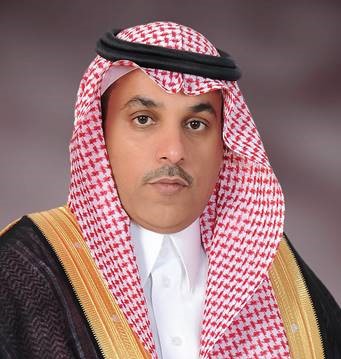
Based on ministry of justice registry data GaStat launches real estate index indicator On Monday 27th of  Rajab 1438 H corresponding to 24th of  April 2017, GaStat launched the Saudi real estate index indicator. This indicator is based on available registry data of the ministry of justice which are about real estate transactions . GaStat described this indicator as an essential tool that supports entities which make economic and statistical decisions  associated with real estate price movements and future expectations during different periods of time. The indicator includes three main sectors composed of many real estate classes: residential sector ( piece of land, building, villa, apartment, and house) , commercial sector (piece of land, building, shop, and commercial center), and agricultural sector ( agricultural lands).  Real estate price index indicator showed a decrease in the Saudi real estate prices during the first quarter of 2017. The indicator registered a decrease of (2.3%) compared to the previous quarter (fourth quarter of 2016). Whereas it registered a decrease of (9.9%) during the first quarter of 2017 compared to the same quarter of last year. The report attributed the decrease in the first quarter of 2017 (compared to the previous quarter) to the decrease in all composing sectors: commercial sector (1.8%), residential sector (2.6%), and agricultural sector (0.3%).  On the other hand,  the decrease in the first quarter of 2017 (compared to the same quarter of 2016) is attributed  to the decrease in all composing sectors: commercial sector (11.7%), residential sector (9.5%), and agricultural sector (1.3%).  GaStat indicated in a workshop ,held in " Restatex " exhibition in Riyadh city, that : as an official  reference of statistics and an organizer of the statistical sector in Saudi Arabia, one of Gastat tasks is following up the price movement of real estate composing units and recording the values of their transactions all over Saudi Arabia. In addition to monitoring their changes from time to time through the new statistical product " real estate price index" which relies on the data provided by ministry of justice. This represents the integration and cooperation between the different government entities which aim at moving sustainable development forward.  GaStat also stated that the new statistical product aims at founding distinct real estate statistical indicators that measure the Saudi real estate market performance and fill the gap of data in this sector. It is considered an essential tool that supports entities which make economic decisions in this field. This product's data benefit those who are interested in the economic and statistical analysis of real estate prices and the future expectations during different periods of time. GaStat has issued a complete bulletin about this index and its details.
Image Alt Text

GaStat launches real estate index indicator

12-09-2017

Based on ministry of justice registry data GaStat launches real estate index indicator On Monday 27th of  Rajab 1438 H corresponding to 24th of  April 2017, GaStat launched the Saudi real estate index indicator. This indicator is based on available registry data of the ministry of justice which are about real estate transactions . GaStat described this indicator as an essential tool that supports entities which make economic and statistical decisions  associated with real estate price movements and future expectations during different periods of time. The indicator includes three main sectors composed of many real estate classes: residential sector ( piece of land, building, villa, apartment, and house) , commercial sector (piece of land, building, shop, and commercial center), and agricultural sector ( agricultural lands).  Real estate price index indicator showed a decrease in the Saudi real estate prices during the first quarter of 2017. The indicator registered a decrease of (2.3%) compared to the previous quarter (fourth quarter of 2016). Whereas it registered a decrease of (9.9%) during the first quarter of 2017 compared to the same quarter of last year. The report attributed the decrease in the first quarter of 2017 (compared to the previous quarter) to the decrease in all composing sectors: commercial sector (1.8%), residential sector (2.6%), and agricultural sector (0.3%).  On the other hand,  the decrease in the first quarter of 2017 (compared to the same quarter of 2016) is attributed  to the decrease in all composing sectors: commercial sector (11.7%), residential sector (9.5%), and agricultural sector (1.3%).  GaStat indicated in a workshop ,held in " Restatex " exhibition in Riyadh city, that : as an official  reference of statistics and an organizer of the statistical sector in Saudi Arabia, one of Gastat tasks is following up the price movement of real estate composing units and recording the values of their transactions all over Saudi Arabia. In addition to monitoring their changes from time to time through the new statistical product " real estate price index" which relies on the data provided by ministry of justice. This represents the integration and cooperation between the different government entities which aim at moving sustainable development forward.  GaStat also stated that the new statistical product aims at founding distinct real estate statistical indicators that measure the Saudi real estate market performance and fill the gap of data in this sector. It is considered an essential tool that supports entities which make economic decisions in this field. This product's data benefit those who are interested in the economic and statistical analysis of real estate prices and the future expectations during different periods of time. GaStat has issued a complete bulletin about this index and its details.
Image Alt Text

H.E. the President of GaStat appreciates the approval of the Cabinet and confirms the continuation of the statistical work to support development decisions

12-09-2017

The application of GOSI's staff regulations and pay scale on the staff of GaStat H.E. the President of GaStat appreciates the approval of the Cabinet and confirms the continuation of the statistical work to support development decisions H.E. the President of the General Authority for Statistics, Dr. Fahad Bin Sulaiman Altekhaifi,  appreciated the approval of the Cabinet in its meeting on Monday, 30th of Muharram 1438H on the application of GOSI's staff regulations and pay scale on the staff of GaStat. H.E. expressed his gratitude to His Highness the Custodian of the Two Holy Mosques, King Salman Bin Abdulaziz Al Saud, and His Highness the deputy Crown Prince for the support given to all government entities to achieve its objective in national development. It reflects the care of the prudent leadership for developing the infrastructure of all development resolutions, considering the statistical products and services provided by GaStat as a solid bases to support national development decisions, and support decision makers with information that is considered the compass of development work. H.E. stressed that the application of GOSI's staff regulations and pay scale helps GaStat to adapt to next phase requirements and allows them to attract specialized national talents in the statistical and administrative work in an effort to complete the transformation, which started after the Royal Decree No. (64283), dated 26/12/1436H, approving the transformation from (Central Department of Statistics and Information) into an independent Authority. This transformation helped in enhancing the environment to provide a wider range of statistical information and data and its dissemination to support decision making. Since the Royal Decree issuance,   GaStat worked on the preparation of a transformation road map in statistical work including a number of projects and initiatives that are consistent with the 2020 National transformation Program, and the 2030 Saudi Vision. It is worth mentioning that the modification, on which the cabinet has agreed, was listed as ( the second) item of the cabinet resolution of the General Authority for Statistics organization, number (11) in 13/01/1437 H. The resolution was modified to be as following  " except the authority president, GOSI regulations, pay scales, and modifications are applied on GaStat  staff". The organization included (17) terms covering a group of organizational rules, the most important of which are: stressing on the authority's legal personality, administrative and financial independency, and asserting that it is the only statistics- concerned entity. Moreover, it is the only official reference that supervises and organizes the statistical work. The authority's affairs are managed by a board that  contains (18) entities, (13) of which are government entities including the authority, in addition to the council of Saudi chambers, and two independent statistics specialists. The board is headed by HE minister of economy and planning, and has been given the description of " the dominant authority" which means implementing its resolutions on the level of statistical sector and all its components in Saudi Arabia. The organization has charged the authority with the responsibility of forming a coordination committee that constantly coordinate the statistical work between the authority and the other related entities. The authority will also carry out the responsibility of founding an information central system in the authority  that is automatically linked with  all concerned entities. Furthermore, the organization included many tasks in addition to implementing the statistical works such as: applying the recognized international  standards which include the statistical work methodology, designing and implementing surveys, conducting research and studies, analyzing data and information, documenting data, collecting, recording, classifying, and analyzing statistical data ,which cover all aspects of life in Saudi Arabia, from its different sources either from surveys, censuses, or administrative records in the public and private establishments. Moreover, the tasks include preparing, using, and updating the national statistical guides and classifications according to international standards, preparing and publishing the surveys and researches' statistical reports and bulletins, providing statistical services, conducting surveys, preparing statistical studies and researches to provide the establishments and business sector with statistical data from its databases. In addition to the tasks of exchanging knowledge, providing the entities with recommendations to improve all information systems and statistical work methodology, so that they can have a unified, accurate, and comprehensive statistical system. The tasks also cover raising awareness about the importance of statistics, recording and following any statistics related to Saudi Arabia published by the national and international authorities, and coordinating with the concerned entities.
Image Alt Text

H.E. the President of GaStat appreciates the approval of the Cabinet and confirms the continuation of the statistical work to support development decisions

12-09-2017

The application of GOSI's staff regulations and pay scale on the staff of GaStat H.E. the President of GaStat appreciates the approval of the Cabinet and confirms the continuation of the statistical work to support development decisions H.E. the President of the General Authority for Statistics, Dr. Fahad Bin Sulaiman Altekhaifi,  appreciated the approval of the Cabinet in its meeting on Monday, 30th of Muharram 1438H on the application of GOSI's staff regulations and pay scale on the staff of GaStat. H.E. expressed his gratitude to His Highness the Custodian of the Two Holy Mosques, King Salman Bin Abdulaziz Al Saud, and His Highness the deputy Crown Prince for the support given to all government entities to achieve its objective in national development. It reflects the care of the prudent leadership for developing the infrastructure of all development resolutions, considering the statistical products and services provided by GaStat as a solid bases to support national development decisions, and support decision makers with information that is considered the compass of development work. H.E. stressed that the application of GOSI's staff regulations and pay scale helps GaStat to adapt to next phase requirements and allows them to attract specialized national talents in the statistical and administrative work in an effort to complete the transformation, which started after the Royal Decree No. (64283), dated 26/12/1436H, approving the transformation from (Central Department of Statistics and Information) into an independent Authority. This transformation helped in enhancing the environment to provide a wider range of statistical information and data and its dissemination to support decision making. Since the Royal Decree issuance,   GaStat worked on the preparation of a transformation road map in statistical work including a number of projects and initiatives that are consistent with the 2020 National transformation Program, and the 2030 Saudi Vision. It is worth mentioning that the modification, on which the cabinet has agreed, was listed as ( the second) item of the cabinet resolution of the General Authority for Statistics organization, number (11) in 13/01/1437 H. The resolution was modified to be as following  " except the authority president, GOSI regulations, pay scales, and modifications are applied on GaStat  staff". The organization included (17) terms covering a group of organizational rules, the most important of which are: stressing on the authority's legal personality, administrative and financial independency, and asserting that it is the only statistics- concerned entity. Moreover, it is the only official reference that supervises and organizes the statistical work. The authority's affairs are managed by a board that  contains (18) entities, (13) of which are government entities including the authority, in addition to the council of Saudi chambers, and two independent statistics specialists. The board is headed by HE minister of economy and planning, and has been given the description of " the dominant authority" which means implementing its resolutions on the level of statistical sector and all its components in Saudi Arabia. The organization has charged the authority with the responsibility of forming a coordination committee that constantly coordinate the statistical work between the authority and the other related entities. The authority will also carry out the responsibility of founding an information central system in the authority  that is automatically linked with  all concerned entities. Furthermore, the organization included many tasks in addition to implementing the statistical works such as: applying the recognized international  standards which include the statistical work methodology, designing and implementing surveys, conducting research and studies, analyzing data and information, documenting data, collecting, recording, classifying, and analyzing statistical data ,which cover all aspects of life in Saudi Arabia, from its different sources either from surveys, censuses, or administrative records in the public and private establishments. Moreover, the tasks include preparing, using, and updating the national statistical guides and classifications according to international standards, preparing and publishing the surveys and researches' statistical reports and bulletins, providing statistical services, conducting surveys, preparing statistical studies and researches to provide the establishments and business sector with statistical data from its databases. In addition to the tasks of exchanging knowledge, providing the entities with recommendations to improve all information systems and statistical work methodology, so that they can have a unified, accurate, and comprehensive statistical system. The tasks also cover raising awareness about the importance of statistics, recording and following any statistics related to Saudi Arabia published by the national and international authorities, and coordinating with the concerned entities.
Image Alt Text

GaStat: Real Estate Index Decreased by (6.3%) compared to the previous year and stabilized compared to Second Quarter

26-10-2017

GaStat: Real Estate Index Decreased by (6.3%) compared to the previous year and stabilized compared to Second Quarter On Tuesday Safar 4th, 1439 (October 24th,2017), GaStat issued its quarterly indicator of the real estate price general index in the Kingdom of Saudi Arabia for the third quarter (2017) and published it through its official website www.stats.gov.sa . This indicator is based on available registry data of the Ministry of Justice regarding real estate transactions. This indicator is an essential tool that supports entities which make economic and statistical decisions regarding the real estate price movements and future forecasts during different periods of time. The indicator includes three main sectors consisting of many real estate types: residential sector (piece of land, building, villa, apartment, and house), commercial sector (piece of land, building, shop, gallery and commercial centre), and agricultural sector which only includes agricultural land. The index of real estate prices for the third quarter 2017 recorded a relative stability compared to the previous quarter (second quarter 2017), reaching (84.9) in the third quarter 2017. The report attributed the stability of the real estate price index for the third quarter of 2017 to the varying percentage of change in the main sectors composing the indicator. The commercial sector witnessed a decline by (1.0%), the residential sector witnesses an increase by (0.2%), while the agricultural sector was stable without any relative change. The indicator recorded a decline of (6.3%) compared to the same quarter of the previous year (third quarter 2017). The report attributed this decline to the decline in the main sectors composing the indicator: the residential sector (7.9%), the commercial sector (10.9%) and the agricultural sector (1.0%).
logo-vertical

GaStat: The Saudi unemployment rate is 12.8% in the 2nd Quarter (2017)

02-10-2017

Labor Market Bulletin Includes 67 Statistical indicators GaStat: The Saudi unemployment rate is 12.8% in the 2nd Quarter (2017)  The General authority for Statistics (GaStat) published the Labor Market Bulletin for the second quarter of 2017 on Sunday Muharram 11th,1439H (Corresponding to October 1st,2017) which provides comprehensive data and indicators on the labor market in the Kingdom from April 1st to June 30th, 2017 (Corresponding to Rajab 15th to Shawwal 6th, 1438H) to support decision and policy makers regarding labor force. It also contributes in building a database on the labor market in the Kingdom that can be used to prepare and plan future social and economic development programs. The quarterly bulletin includes 67 statistical indicators which contain data and indicators from the Labor Force Survey estimates and labor market data from the administrative records of the relevant entities (Ministry of Labor and Social Development, Ministry of Civil Service, General Organization for Social Insurance(GOSI), Human Resources Development Fund and National Information Center) applying international standards in this area. The results of the bulletin for the second quarter of 2017 indicated that the total number of employees from the data of administrative records in the Kingdom of Saudi Arabia reached (13,841,158) individuals compared to (13,889,137) for the first quarter of 2017.   According to the results of the bulletin also from the data of administrative records in the government agencies for the second quarter of 2017, the total number of Saudis seeking work reached (1,075,933) individuals, (216,352) of them are males and (859,581) are females. The results also showed that the highest percentage of Saudis seeking employment was among the age group (25-29), which is (34.2%). Also according to the results of the administrative records data, nearly half of the Saudi job seekers hold university degrees reaching (50.5%). The results of the bulletin showed that the unemployment rate in Saudi Arabia for the Saudi population (15 years and over) from the Labor Force Survey estimates for the second quarter 2017 reached (12.8%), (7.4%) are males and (33.1%) are females. And the unemployment rate in the Kingdom for the total population (15 years and over) is (6.0%), (3.3%) are males and (22.9%) are females. The results also showed that (11.6%) of the unemployed Saudis had previously worked, and (32.9%) of unemployed Saudis who had previously worked left their jobs due to dismissal from the employer. The survey results also showed that (9.6%) of unemployed Saudis have already been trained. Regarding the economic activity rate of total population (15 years and over) it reached (54.2%), divided between males (78.2%) and females (18.7%). In its bulletin, GaStat also explained that the economic activity rate for total Saudi population (15 years and over) reached (40.3%). The bulletin included a large number of detailed data on workers according to the regulations they are subject to, nationality, sex, age, administrative region and educational level, as well as data for job seekers, average monthly wages, working hours and domestic workers. For more details, you can view the bulletin through Gastat’s official website: www.stats.gov.sa
Image Alt Text

Dr. Altekhaifi: KSA's distinctive work at statistics leads to council membership and participation in recurring meetings

19-09-2017

UN International Comparison Program board of directors holds second meeting Dr. Altekhaifi: KSA's distinctive work at statistics leads to council membership and participation in recurring meetings Saudi Arabia has participated at the second meeting of the board of directors of the International Comparison Program (ICP), which was held at Washington D.C. early this week.  His Excellency, president of the General Authority for Statistics, Dr. Fahad bin Sulaiman Altekhaifi, confirmed that the program’s work and results will help shape policies for global comparison to support statistical products of the participating countries. It will also enable the General Authority for Statistics to access the best global practices for statistics for the purpose of improving and developing the statistical work. Also, it will raise the quality of the data, which will reflect positively on the decisions for development that rely mainly on statistics. On the other hand, his excellency Dr. Altekhaifi pointed out that the board of directors, which has 11 countries including Saudi Arabia, which represents west Asia, has looked into the progress made when implementing the 2017 cycle in the participating areas. The council also specified a list of research topics including, implementing a rolling survey approach and building Purchasing Power Parity (PPP) time series, integrating ICP and Consumer Price Index (CPI) activities, Streamlining the process of establishing product lists and the use of importance indicators, improving the availability and quality of input data for rents, government services, and construction, streamline the use of productivity adjustments for government services, fine tuning global linking procedures, quality assurance of resulting PPPs and measures of reliability and other topics related to statistical work. Dr. Altekhaifi added that the ICP selecting of Saudi Arabia for the membership at the 2017-2019 cycle came as a result of the positive role of the General Authority for Statistics in different statistical programs organized by the UN. It also confirmed the kingdom’s effective role on the global map of statistics. Moreover, it reflects the results of the strategic transformation of the kingdom’s Statistic sector, which the leadership cares for and supports due to its role in aiding the national development decisions.  The ICP, which is under the supervision of the World Bank, is a partnership program for statistics on a global level. It is based on a statistical system that is connected with economic analysis. It uses statistical methods to derive the necessary data to calculate the PPP for about 200 countries and economies worldwide. It will facilitate the use of PPP as currency converters. That will allow for the comparison of the total economic indicators and the economic situations of countries worldwide. It is noteworthy to mention that the ICP board of directors is compiled of executives, chairpersons, and leading experts in 11 statistical devices participating in the program. They are distributed according to the regional areas: Africa, Asia, Pacific Islands, Latin America, the Caribbean, West Asia, Commonwealth of Independence States, European Union, non-European Union States, members of the organization for Economic Cooperation and Development, representatives of the International Monetary Fund, World Bank, UN Statistics Division, and the Inter-Agency Coordination Group.
Image Alt Text

GASTAT: Final announcement of the number of Pilgrims 1438 comes after sunset on the day of Arafah

12-09-2017

A detailed report on Hajj statistics featuring 40 key statistical outputs to be released following the official announcement
The General Authority for Statistics (GASTAT): Final Count of Hajj Pilgrims for 1438 AH to Be Announced After Sunset on the Day of Arafah
 GASTAT has announced that the counting and enumeration of pilgrims for the 1438 AH Hajj season, through the official entry points to the city of Makkah, will conclude at 6:30 PM, coinciding with sunset on Thursday, the ninth of Dhul-Hijjah (Day of Arafah). The final announcement of the total number of pilgrims and the release of the detailed Hajj statistics report will follow a few hours later, the same evening.
Mr. Abdullah Al-Batel, Deputy President of the Authority for Statistical Operations, confirmed that the Hajj Statistics Report, which will be issued shortly after the official announcement, will include forty principal statistical outputs intended to support strategic planning for serving the pilgrims and visitors to the Two Holy Mosques. He explained that the report provides comprehensive and accurate data on the number of pilgrims, classified by their methods and dates of arrival, and includes a variety of analytical tables and charts presenting figures such as the number of domestic pilgrims by gender and arrival method, the arrival patterns of Saudi pilgrims, the breakdown of non-Saudi domestic pilgrims by gender and nationality, their distribution by arrival method and nationality, and comparative figures across different nationalities. The report also details the number of vehicles used to transport domestic pilgrims to Makkah, organized by vehicle type and date of arrival. Furthermore, it presents data on international pilgrims by gender and arrival method, by gender and date of arrival, as well as comparative statistics on their methods of arrival. This information will be made available in multiple formats, including the Hajj Statistical Map, which allows users to easily access all data related to Hajj statistics.
Mr. Al-Batel further emphasized that the Hajj Statistics Program, implemented by GASTAT, aims to provide detailed and reliable data on the number of pilgrims from both inside and outside the Kingdom. These statistics serve as a foundational input for all relevant government entities to support future planning and ensure the delivery of essential services to pilgrims, including those related to social, health, security, food, and transportation sectors. The program relies on time-series data to estimate the manpower required to serve pilgrims and ensure their safety and comfort throughout the Hajj season. It also provides essential insights into infrastructure and facility needs in Makkah and the Holy Sites, which are considered when preparing development plans. In addition, the program contributes to the design of annual traffic management plans, including the phases of escalation and dispersal, and supports researchers, academics, and stakeholders interested in this field. It also assists in evaluating the efforts of various entities responsible for serving pilgrims and monitoring changes in arrival patterns.
In response to inquiries regarding the scope of enumeration and whether it includes drivers of vehicles and buses, Mr. Al-Batel clarified that the official unit of counting in Hajj statistics is the pilgrim in the state of Ihram. Accordingly, the enumeration of domestic pilgrims is limited to those in Ihram who are physically counted at the Hajj Statistics Centers located at the entrances to the city of Makkah. If a driver is in a state of Ihram, he is counted as a pilgrim. The enumeration includes all Saudi and non-Saudi individuals, male and female, arriving from within the Kingdom to perform Hajj. As for international pilgrims, they are counted by the General Directorate of Passports at the Kingdom’s official ports of entry, and their figures are subsequently provided to GASTAT to be added to the total number of pilgrims.


logo-vertical

GaStat Launches the “Statistical Calendar” for 1438H Hajj Season

12-09-2017

More than 450 Statisticians Started this morning GaStat Launches the “Statistical Calendar” for 1438H Hajj Season Through its official website www.stats.gov.sa, the General Authority for statistics (GaStat) launched the statistical calendar for the 1438H Hajj season. It shows the publishing dates of services provided by the Kingdom to pilgrims, in addition to the statistics of domestic and international pilgrims. GaStat official spokesman, Mr. Taiseer Almofarrej, explained that the statistical calendar with its content, from statistics and numbers, aims to show the efforts made to pilgrims from more than 45 public and private entities. On the second day of the current month of Dhu al-Hijjah, the statistics of services provided to pilgrims from health and medical services, public services, transportation sector services and telecommunication services will be announced respectively. Then, the number of domestic and international pilgrims arriving to Makkah will be published and updated daily until the evening of the 9th day of Dhu Al-Hijjah when the total number of pilgrims will be announced. Mr. Almofarrej added that GaStat will issue the detailed bulletin of Hajj statistics the morning of Eied day (10 Dhul Al-Hijja ), he also added that all information will be available at GaStat official website on schedule.  On the other hand, GaStat official spokesman explained that the enumeration of pilgrims coming to Makkah has started the morning of Wednesday (1st of Dhu Al-Hijjah), by more than 450 statisticians, administrative and technicians from GaStat. They are distributed on all main centers in Makkah, Medina, Jeddah and Alta’if, and they work 24 hours until the sunset of Arafah day, next Thursday (9th of Dhu Al-HIjjah). GaStat called all pilgrims coming to Makkah for Hajj to provide the necessary statistical data required in all Pilgrims enumeration centers this year which are (Makkah/Jeddah Highway) Road , (Makkah/old Jeddah)Road, Altan’eim center(the connection road between Medina and Makkah), AlShrai’e center (the connection road between Makkah city and Alta’if city through AlSail), Alkar center (the connection road between Makkah and Alta’if through Alhada), and the Southern center ( Allaith -Jazan road  near Als’adeiah village) in addition to the Hajj statistics supportive centers in Jeddah at King Abdulaziz international airport, mass transportation stations, and other locations in Jeddah, Medina center (Abiar Ali and ‘Ashirah), and Alta’if center (Alsail Alkabeer).
Image Alt Text

Saudi Arabia has been honored to serve nearly 24 million pilgrims in 10 years

12-09-2017

GaStat Enumerates Pilgrims Every Year Saudi Arabia has been honored to serve nearly 24 million pilgrims in 10 years According to the official statistics of the General Authority for Statistics (GaStat), the total number of pilgrims that Saudi Arabia has been honored to serve during the last ten years has reached 23,935,354 pilgrims. The last Hajj season (1437H) recorded the lowest number of pilgrims during the last ten years as it reached 1,862,909 pilgrims. While the year (1433H) recorded the highest number of pilgrims during the last ten years as it reached 3,161,573 pilgrims. The official spokesman of Gastat, Mr.Taiseer Almofarrej, explained that the task of pilgrims enumeration every years is one of the tasks that Gastat has the honor of. It started since 1390H since Gastat was called (the Central Department of statistics), in order to provide accurate information that helps all state agencies in planning and development of everything related to serving Hajj visitors. This mission continued during all these years to witness developments and enhancements in the enumeration techniques every year to be more accurate and comprehensive. Mr. Almofarrej added that the Hajj statistics program aims at the completion of all future planning programs to ensure providing the necessary services needed by the guest of Makkah, whether social, health, security, food, or transportation services. This is done through using a time series of accurate data about the number of pilgrims, in addition to the estimation of labor forces needed for providing the necessary services for pilgrims during Hajj season every year. The data and number of pilgrims is also used by relevant systems who studies the preparations and main facilities in Makkah city and holy places, and take it into consideration when preparing the necessary plans. In addition, accurate data and information about Hajj statistics is provided to researchers, students, and individuals who are interested in this field. The data is also used in the evaluation of activities and events made by relevant entities who serve pilgrims, in addition to identify the method of arrival of domestic and international pilgrims. The official spokesman stressed that GaStat will be announcing the number of pilgrims periodically starting from the 1st of Dhu al-Hijjah. GaStat will also announce the final and official number of pilgrims on the evening of the ninth day of Dhu al-Hijjah through the Hajj statistics bulletin. The Bulletin will include detailed results about: number of domestic pilgrims, international pilgrims, pilgrims by gender, pilgrims by nationality, pilgrims by arrival destination, number of cars carrying pilgrims by type, and other detailed data. It is worth mentioning that the number of pilgrims in the last ten years exceeded 3 Million pilgrims in one time, and it exceeded 6 Million pilgrims 6 times. The number was lower than 2 Million in 3 Hajj seasons, and last year was the lowest according to the following table:
Image Alt Text

Director of the Department: transforming statistics into an Authority establishes effective partnerships

12-09-2017

Dr. Fahad Altekhaifi, Director of the Central Department of Statistics and Information, stated that the transformation into a “General Authority” will focus on two principal areas: serving clients and beneficiaries—which encompass all entities that utilize statistical products—and enhancing the quality of these products to more effectively support data-driven decision-making that benefits both citizens and residents.
Altekhaifi explained that the statistical sector, in its new institutional form represented by the Authority and associated statistical departments, will strive to establish effective partnerships across all sectors. The objective is to consolidate the source of official statistics and accelerate their dissemination through formats and services that enable users to leverage the information and maximize its impact.
Speaking during a workshop held yesterday at the Department’s headquarters in Riyadh, which brought together more than thirty officials and specialists from various public and private sector institutions, Altekhaifi emphasized that clients are at the core of the transformation initiative launched by the Department, aimed at establishing a high-caliber statistical authority aligned with international standards relevant to development.
Government and private sector stakeholders involved in statistical work affirmed that the ongoing transformation of Saudi Arabia’s statistical sector—spearheaded by the Central Department of Statistics and Information—is advancing rapidly and cohesively, keeping pace with the evolving demands of both national and global economies.
The workshop, organized by the Central Department of Statistics and Information, aimed to engage all beneficiaries and partners of statistical products in the transition toward the establishment of the General Authority for Statistics (GASTAT), and to develop a unified vision regarding the Authority’s current and future strategic priorities.
The Department’s meeting halls witnessed a dynamic exchange of ideas and expertise, with the participation of representatives from the Ministries of Economy and Planning, Commerce, Labor, Housing, Civil Service, Social Affairs, Education, Health, Culture and Information, Water and Electricity, and Communications and Information Technology. Also in attendance were the General Investment Authority, the Saudi Export Development Authority, the General Commission for Audiovisual Media, the Saudi Arabian Monetary Authority, the e-Government Program (Yesser), King Saud University, Saudi Aramco, and a number of independent Saudi consultants.


logo-vertical

Minister of economy launches the general authority for statistics and its electronic portal....The authority of statistics signs 4 agreements with private and public sectors

12-09-2017

Minister of economy launches the general authority for statistics and its electronic portal The authority of statistics signs 4 agreements with private and public sectors Media center- Riyadh Minister of economy and planning, chairman of the general authority for statistics, Eng. Adel bin Mohammed Faqeeh, launched the first day of working in the statistical field with a new structure and identity. This was an implementation of the supreme decree issued on 26-12-1536 H which states transforming the central department of statistics to be a general authority called ( the general authority for statistics). The authority is financially and administratively independent. In his speech that was declared in the launching event which was held in Marriot hotel, the minister expressed his gratitude and thanks to the custodian of the two holly mosques, king Salman bin Abdulaziz Alsaud, may God protect him, for his approval to transform the central department of statistics to be an independent authority. He confirmed that the work will start officially in the general authority for statistics as a result of many supreme directives, orders, and resolutions that support and enhance a lot of governmental sectors by transforming them into independent authorities that provide services compatible with the rapid changes and developments. On his part, the authority's general director, dr. Fahad bin Sulaiman Altukhaifi, in his name and on behalf of all the staff of the central department of statistics , and all those who work in the statistical sector , he expressed his gratitude and thanks to the custodian of the two holy mosques for his supreme approval to transform the central department of statistics to a general authority. Dr.Fahad said that this transformation process has been done through six fundamental tracks which can be briefed in a working strategy that is all about the authority’s clients and partners to fulfill the actual need of statistical products, then developing these products and services and improving statistical and data methodologies and procedures. In addition, it focuses on upgrading the level of information technologies and digital infrastructure in order to give the products the ability to start from a very tough base that can cope with all technological changes. It also concentrate on raising awareness and literacy in the statistical field, and finally structuring the authority’s different tasks and departments. He assured that the general authority for statistics’ role has become more important as long as there are national transformation projects as it is very crucial to provide accurate statistical data and effective indicators besides developing the measurement tools. On the first working day and after the transformation process, the authority’s general director has announced that the first of Muharram of the next year will be the day in which the information bank will be issued. This bank is one of the statistical development national strategy’ aspects, which aim to organize statistical data and information in Saudi Arabia, to guarantee providing the governmental sectors and individuals with statistical information and indicators through an easy and accurate technique. This is to support the development decisions via collaborative system, which starts with electronic linking between all data resources in many related sectors. Furthermore, minister of economy and planning Eng. Adel bin Mohammed Faqeeh has launched the electronic portal of the general authority for statistics. In this portal, the users can get all the needed information in very easy and direct ways through many windows and according to the international statistical and technical standards. On the first working day, four agreements have been signed with different private and public sectors. The authority has signed two agreements with the national information center in the interior ministry and e-government program (yesser). These agreements have been signed to develop the techniques of collecting, exchanging, and integrating data. The third agreement has been signed with the national center for communication, aiming to develop the mechanisms of communication with disabled people. It also aims to provide statistical content in sign language. On the other hand, the central department of statistics and information ex-directors and retired employees were honored. After the launching event, the authority held an introducing workshop with many partners from both the private and public sectors. This workshop aimed to introduce the authority and its roles. The participants watched a detailed presentation about the products and services in addition to the interactive statistics window and a brief of the statistical awareness. The minister of economy and planning revealed that the statistical sector partnership with the private and public sectors will open many opportunities for the statistical sector to be constantly developed and improved in order to be able to effectively collaborate in supporting any developmental decision taken by any private or public sector in all fields of national development. It is worth mentioning that the ministers’ council resolution issued on 13/1/1437 H included the approval of general authority for statistics structure, and made it the only authorized entity that technically and structurally supervise the statistics sector. It also made it the only responsible authority for creating thorough national statistical databases in different fields. Moreover, it made it the only responsible entity for managing the authority affairs and creating its own board of directors
Image Alt Text

GaStat Starts Working with the New Structure

12-09-2017

New (Statistical, Creative, and Awareness) Departments to Cope with the Requirements of the New Saudi Vision and National Transformation GaStat Starts Working with the New Structure The General Authority for Statistics starts working with the new organizational structure. A general administration for natural resources and knowledge statistics has been created. It works beside the general administration of economic statistics, the general administration of social statistics, field statistics departments, methodologies departments, creativity departments, and awareness departments. GaStat president, Dr. Fahad bin Sulaiman Al-Tukhaifi said that working with this new organizational structure is a response to the 2030 Saudi vision and 2020 national transformation program. The next phase needs integrated efforts from the statistical sector, so the sector must work in a distinct way as it is the only official sector that is responsible for the production of data, information, and statistics, which reflect the developments in Saudi Arabia. Dr. Fahad clarified that the new structure, which has been authorized since the first day of this Muhharam, is a way that guarantees achieving the authority's strategic goals that are represented in enhancing the efficiency and quality of statistical services and products. Moreover, it makes these services more comprehensive and beneficial. It also helps to raise the satisfaction level of all clients and beneficiaries, gives the authority a positive reputation in the society, promotes the statistical sector level, and builds a strong authority. Al-Tukhaifi added that this new structure is based on the statistical development' national strategy aspects, covering five aspects that guarantee the efficiency of the statistical sector in Saudi Arabia. The first aspect is using the statistical data and information, which aims at improving the use of statistical data and information in Saudi Arabia. This would fulfill all the users' needs by providing easy and on time statistical data and information.  There is also the aspect of statistical data and information production, which aims at enhancing the field operations such as censuses, surveys, and researches. Furthermore, it enhances using the most recent standards and classifications in collecting, analyzing, and publishing data. The third aspect is the recent technologies. It aims at using the most recent technologies in all the phases of the statistical and administrative work. It provides a high quality IT infrastructure. The fourth aspect is the communication and awareness, which aims at enhancing the statistical knowledge in society through education and awareness. It introduces those who work in the statistical sector with the concept of communication. The fifth aspect is about governance. Through this aspect, the authority is trying to set the principals that govern the statistical sector. This enhance the idea of "results based management" . It continuously develops the human resources and tries to recruit people with high capabilities. As for the main components of the authority new structure, Dr.Fahad stated that the organizational structure has been made by a teamwork from the authority and some experts outside the authority. This structure was made to develop and improve the statistical work. It also positively collaborate in activating the strategic transformation through which the Saudi statistical work is going. It enhances the role of the entity that supervises and organizes the statistical work by transforming it into an independent authority that has a featured personality and administrative and financial independence. The teamwork worked on determining the tasks, duties, and regulations according to certified instructions that guarantee founding an effective and comprehensive statistical organization. This new organization focused more on the clients and raising the products quality, considering them the main dimensions of work.  The new statistical organization has been built in a way that prevent duality in work and responsibilities. It also intends to make the organizational structure compatible with the authority’s strategy by collecting the harmonized activities in one sectors and administrative units to implement unified tasks. In this structure, Many administrations and departments have been founded to achieve the strategic goals. Regarding the main components of the new organizational structure, the authority president revealed that the statistical and administrative work has been distributed among three main sectors headed by the vice presidents. These sectors include the statistical works sector, which contains general administrations of economic statistics, social statistics, and natural resources and knowledge statistics (new one). In addition to the independency of the statistical field works with a general administration of operations. There is also an administration specialized in methodologies. As for the second sector, the statistical creativity and customer service sector, it is a totally new sector. However, the third sector represents IT and supporting services, as they are the main infrastructure of the authority’s statistical and administrative work. Moreover, the new structure includes a general administration of media and statistical awareness, which manages all the internal and external activities aiming at raising statistical awareness. It also includes a general administration of projects and strategic planning which implements and prepares the authority’s strategies and plans. Furthermore, there is a general administration of support and institutional excellence that manage, prepare, and update all the policies, operations, and procedures. The later also supervises the programs of total quality department and knowledge department.
Image Alt Text

"statistics" the accurate information provided by citizens is essential for governmental resolutions and projects

12-09-2017

Updating the general framework of population and housing paves the way for a new labor force survey "statistics" the accurate information provided by citizens is essential for governmental resolutions and projects Media center- Riyadh Supporting the resolutions of nationalization and reduction of "unemployment",  the General Authority for Statistics ( GaStat ) stresses the importance of information accuracy provided by citizens in the activities of  labor force surveys as these information are essential for the development resolutions and can determine many national programs and projects. During his participation in the first Saudi conference for job creation held in Riyadh, GaStat chairman, dr. Fahad Altukhaifi stated that the citizen is considered the base for  development building , that is through the information that he/she provides during the process of conducting surveys done by GaStat crew. As for the survey of labor force, dr. Fahad confirmed that it is one of the most important household surveys conducted by GaStat . it provides fundamental data about the labor force and its characteristics, which helps in setting the plans to develop the labor market in Saudi Arabia, analyzing and evaluating the economic policies, and helping the decision makers in setting the labor market policies with all the related issues such as unemployment and training. The labor force survey results are very important too as they collaborate in building a data base for the Saudi labor market in order to cope with the interest and anticipations of the labor force statistics nationally, regionally, and internationally. The results also support all tendencies and efforts exerted by the public and private sectors  in the process of nationalization. Moreover, they give an opportunity to collaborate in building a base for these information  that can be beneficial in preparing and planning the future economic and social development programs. The authority conducts this survey every six months , it intends to conduct it every three months in 2016 according to the latest international standards and methodologies. The authority chairman added that providing detailed data about the national and non-national labor force ,classified by their economic, social, and demographic characteristics, is one of the main objectives of the survey, in addition to its role in measuring the averages of economic collaboration, economic support, and employment and unemployment by many variables. It should also provide data about some training programs for job seekers, and be familiar with the vocational structure and the economic activity of employed people by  a number of variables and the average of their salaries. Dr. Altukhaifi thanked all governmental entities who work with GaStat . he assured that the authority is working with all governmental entities which are related to the Saudi labor market ( ministry of labor, human resources development fund, general organization for social insurance, ministry of civil services, and the national information center in the ministry of interior) in order to develop the survey on one hand and benefit from its results on the other hand. The authority is working with them also to unify the efforts so that they can get accurate data of the most important indicators in the Saudi labor market. It is worth mentioning that the labor force survey results depend on the data and information of (33.500) households, distributed among all Saudi administrative regions, as a sample that represents the society. The households are chosen according to international and scientific fundamentals applicable in the population and housing censuses all over the world . GaStat has started preparing for the next survey after updating the general framework of population and housing which depends on the 1431 framework as it is considered the main source from which samples are collected to conduct  future researches.
Image Alt Text

Dr. Altekhaifi : Statistics Support Decisions that will Reduce the Phenomenon of Rising Prices

12-09-2017

The GCC Statistical Centre Launches the General Consumer Prices Index In pursuit of the Gulf Cooperation Council (GCC) countries to find a number of coordinating and corrective procedural policies that will help in reducing the phenomenon of rising prices in the GCC countries, the GCC Statistical Centre launched the project of  "GCC Consumer prices index", and "the statistical centre data portal" in Muscat, Oman, under the auspices of His Excellency Sheikh Khalid Almarhoon, the Minister of Civil services in Oman. The chairman of the General Authority for statistics in Saudi Arabia, the chairman of the GCC Statistical center in its current cycle, Dr. Fahad bin Sulaiman Altekhaifi, asserted that the index number is considered to be an important tool to support decision makers in all private and public sector entities in GCC countries to prepare coordinating and corrective procedural policies that contributes in reducing the phenomenon of rising prices in the GCC countries. It is also considered to be an economic phenomenon with social dimensions. In addition, the new indicator will provide a unified prices statics data base with all its details, which will help the beneficiaries to use the information in various related fields. Talking about the statistical centre data portal, Dr. Altekhaifi added that the goal of inaugurating the portal is to enable the observation of statistical data and documenting achieved advancements in the indicators of the GCC countries in different economic, social, and energy sectors. In addition, its goal is  to provide information services that contributes in raising statistical awareness. On the other hand, in the speech of Dr. Altekhaifi, he asserted on developing and supporting the statistical and institutional abilities, to keep pace with the statistical requirements on the GCC countries' level and internationally. He also asserted that this is one of the most important common goals on the strategic level of the GCC countries. He also added that the authorities and Gulf statistical centers are seeking to continuously reinforce and enhance the quality and quantity of statistical services, and develop, expand and market the statistical publishing. Also, it seeks to show the GCC countries' region as a unified social and economic region through unifying the national statistical strategies in the GCC countries with the combined statistical programs needs according to the best international practices. Altekhaifi also explained that everyone is working on building statistical culture and raising statistical awareness, in addition to reinforcing the actual and correct use of statistical data and information in decision making and policy making in GCC countries. Altekhaifi also revealed about ten of the most important projects that are considered to be the top statistical priority determined by the GCC statistical centre, which are: the national  accounts, environment and energy, financial executive statistics, balance of payments, development, progress and sustainability indicators, short term prices and indicators, unified registered population census (year of 2020), foreign trade, administrative data, job market, and the statistical standards, categories, methodologies, and data quality. It is worth mentioning that the GCC statistical centre was established in September 2011, and its organization was approved in 2012 by the supreme council of the GCC to be the official source of statistical information and data related to GCC countries. It was also established to reinforce statistical and informational work of the national statistical centers and planning in GCC.
Image Alt Text

"Statistics" worked on six tracks in 90 days....Four Days and the Statistical Sector will Start a New Era

12-09-2017

"Statistics" worked on six tracks in 90 days Four Days and the Statistical Sector will Start a New Era Media Center The Saudi statistical data and information sector is starting a new era after declaring the changing of the central department of statistics to be an authority named" the general authority for statistics". This transforming will start officially on Wednesday 1st of jamad first. Director of media and statistical awareness department and the spokesman of the authority, Taiseer Almufarij states that working under the umbrella of the general authority for statistics is considered an implementation of the supreme decree number ( 64283) in 26/12/1436 H which declares transforming the central department of statistics to be a general authority called the general authority for statistics. This authority is financially and administratively independent. The supreme decree gave ninety days for the transforming process. The countdown is about to finish now and this Wednesday will be the first official day to work under the new name. Almufarij confirmed that this transforming is not only about changing the name or identity, but changing content, techniques, and mechanisms as the statistical sector must cope with all the rapid changes around it otherwise it cannot go farther.  With the increase of commercial transactions, international investments, social and economic changes, mass data revolution , and the development of digital media and portable technologies, it has been a need for the statistical work to go through a vital transforming process in order to satisfy the clients and fulfill their needs which require the authority to establish a mutual partnerships, estimate their current and future needs, unify the information sources, facilitate access to this sources, and provide more advanced statistical products. Almufarij said that the general authority for statistics is undergoing a transforming plan that has six major tracks: concentration on the client strategy, developing products and services, enhancing methodologies and procedures, upgrading information technologies and infrastructure, statistical literacy and building competences, and structuring all the authority's different tasks and departments in order to keep developing the authority and making it a distinct institution. It is worth mentioning that the Saudi statistical work has started in a very early era of the Saudi development history. It has started in 1349H /1930 AD and continued for thirty years till the issuance of the general statistics system in royal decree number (23) which made the statistical work a sector that refers technically and administratively back to an official system that cooperated in organizing the statistical sector by setting the rules of relation between the central department as it is the only central department for statistics and the other sectors. This system aimed to activate the statistical work and make it more comprehensive, and raise statistical awareness. During the last fifty eight years, the department worked on many surveys, censuses, and indicators in many different fields in Saudi Arabia.
Image Alt Text

Dr. Altekhaifi: King Salman's speech outlines the foundations of a new development approach

12-09-2017

Dr. Fahad bin Suleiman Altekhaifi, Director General of the Central Department of Statistics and Information, affirmed that the contents of the speech delivered by the Custodian of the Two Holy Mosques King Salman bin Abdulaziz Al Saud at the outset of announcing the State’s General Budget for the fiscal year 1437/1438 AH outline a comprehensive framework for the future of the Kingdom and the effective and impactful management of its development. The Custodian of the Two Holy Mosques, King Salman bin Abdulaziz Al Saud’s directives were clearly articulated and imbued with an ambitious vision for a more stable and prosperous tomorrow.
The economic and financial reform program introduced in the speech represents a pivotal qualitative step in the journey of construction and progress. Through this program, all state institutions will be able to respond positively to the requirements of the current phase. This year’s budget contains important details of a comprehensive and integrated action plan, with the Custodian of the Two Holy Mosques King Salman bin Abdulaziz Al Saud outlining its pillars as foundational elements for building a strong and resilient economy based on ten solid principles: diversification of income sources, growth of savings, job creation, effective public-private sector partnership, continuity in implementing development and service projects, comprehensive advancement of services, improved efficiency of public spending, enhanced resource utilization, reduction of waste, and increased competitiveness of the business sector.
These ten principles form the core agenda of the Council of Economic and Development Affairs, as referenced by the Custodian of the Two Holy Mosques King Salman bin Abdulaziz Al Saud in his speech. The Council has led the transformation process with distinction and will continue to lead the development efforts in the coming period, which will witness major shifts in the management of government projects.
This places an increased responsibility on the statistical sector to ensure the quality of statistical products, especially as we now stand at the threshold of a major transformation with the conversion of the Department into the General Authority for Statistics (GASTAT). This shift aims to align statistical, data, and informational outputs with the evolving demands of the next phase of development, as these outputs constitute the primary inputs for effective developmental planning and continuous improvement.
The Director General emphasized that the statistical sector has received significant attention from the wise leadership, in recognition of its vital contribution to the development of various social, administrative, educational, economic, health, environmental, agricultural, and industrial domains. He added: “My colleagues and I in the statistical sector will spare no effort in providing everything that contributes to the development and construction of this nation’s future to perpetuate the blessings of security and prosperity upon us.


Image Alt Text

Dr. Altekhaifi: We aim to unify Data producers' Standards to Serve "GCC" Citizens

12-09-2017

GCC "Energy Statistics" in Riyadh Dr. Altekhaifi: We aim to unify Data producers' Standards to Serve "GCC" Citizens Media center- Riyadh The Chairman of the GCC Statistical center, the Chairman of the General Authority for Statistics in the Kingdom of Saudi Arabia, Dr. Fahad Sulaiman Altekhaifi expressed his thanks and gratitude towards the leaders of the GCC countries for supporting all programs and activities of the "GCC Statistical centre", as a result of their role in supporting all decisions related to the development of GCC nations. Dr. Altekhaifi asserted that the results of the Energy Statistics' Second Regional workshop about the final consumption of energy surveys held in Riyadh city meet the needs of the national and regional policy makers of the energy sector. It will also support everything that would develop the energy sector in GCC countries. Dr. Altekhaifi also added that through this workshop, the GCC statistical centre seeks to strengthen the cooperation between energy statistics producers, and unify the efforts in the used technical standards. In addition, it seeks to implement International standards by all data producers in member countries. Dr. Altekhaifi revealed that the most important role of data producers in this meeting is to reinforce the understanding of the international standards related to energy statistics in the statistics system. In addition, it aims to explain the links between energy data groups and discuss  the user's needs by enhancing the data and its publishing. Moreover, it aims to unify the efforts to raise the awareness about the methodologies needed in preparing energy statistic in the region. Furthermore,  it aims to deepen the participants' understanding of international standards that support energy statistics. Also it clarifies the importance of the final consumption surveys' system. In this workshop the participants reviews the national experiences of the member countries and the importance of the energy final consumption surveys. In addition, the participants visits several energy sector related entities in the kingdom of Saudi Arabia. This workshop continues until  22 March, 2016. It is worth mentioning that The GCC Statistical Centre was established in June 2011 to provide a common official pool of statistics and data for the member states of the GCC. It was also established to support the statistical work of national statistical centers and planning entities in GCC countries.. The Charter was officially endorsed in December 2012 by the GCC Supreme Council (comprised of heads of member states: United Arab Emirates, Kingdom of Bahrain, Kingdom of Saudi Arabia, Sultanate of Oman, State of Qatar and State of Kuwait).
Image Alt Text

GaStat Discusses the General Statistics system draft

12-09-2017

In Collaboration with 19 Government Entities to Develop the Statistical Sector GaStat Discusses the General Statistics system draft Within the framework of activating the statistical sector in the Kingdom of Saudi Arabia, the General Authority for Statistics (GaStat) held a workshop on Wednesday, 28 Sha’ban 1438H corresponding to 24 May 2017 with 19 government entities and specialized consultation bodies. The workshop was held to discuss the draft of the general statistics system in preparation for its submission to GaStat’s board of directors then for the concerned entities for approval. H.E. Dr. Fahad Altekhaifi, GaStat President, expressed his gratitude to the workshop participants and asserted that developing the statistical sector is a joint responsibility between relevant entities. He also added that the aim of this workshop is to ensure that the proposed system draft meets all requirements which maximizes its benefit. Furthermore, he explained that the proposed system draft is comprehensive and keeps up with the latest developments in statistical systems in order to activate statistical work and deepen its impact on planning and enhancing statistical awareness. It also regulates the relationship between GaStat, as a supervisor and organizer of the statistical sector in Saudi Arabia, and all constituents of the statistical sector which includes beside GaStat; statistical administrative units in all government entities, private sector and academic sector. GaStat’s President also confirmed that the current system provides a solid structure for statistical work with the amendments that have been made over the past years. The regulation which was issued by the Council of Ministers Decision No. 11 issued in Muharram 13th, 1437H enhanced and completed the process of developing statistical work. The regulation included a number of subjects that covered a group of regulatory provisions and the most important of these subjects: emphasizing that the Authority has a public juridical personality, and a financial and administrative independence, it is the entity in charge of statistical affairs, the only official reference to implement statistical work, and it’s the only technical supervisor and regulator of statistical work, it is managed by a board of directors which by the regulation has the powers and authority on the statistical sector and its components in the Kingdom of Saudi Arabia. The regulation gave the Authority the task of establishing a permanent coordinating committee. It also gave it the responsibility of establishing a central system for information which is connecting electronically with all concerned entities. In addition to implementing statistical work, the regulation also assigned other tasks to the Authority which include: applying recognised international standards which include statistical work methodology, survey design and implementation, conducting research and studies, analyse data and information, all information and data documentation work, collecting statistical data and information that covers all aspects of life in Saudi Arabia from its different sources and classify it and section it, either from surveys and censuses or from administrative records in public entities and private establishments, analyse this data and extract its indicators, prepare evidences and national statistical classifications according to international standards, using it and developing whenever needed, prepare statistical bulletins and reports of surveys and research and publish it. The regulation also gave the Authority the right to provide statistical services, conduct surveys, prepare statistical research and studies, provide data from its databases to establishments and business sector in a commercial manner and shall benefit from its financial revenues in financing statistical and information services provided. In addition, it is responsible of transmitting knowledge and provide recommendations to public entities to develop all information system and statistical work methodology to achieve a comprehensive, accurate and unified statistical system and to develop public awareness of the importance of statistics, and to monitor and follow up all published data on the Kingdom of Saudi Arabia with the competent regional and international bodies and coordination with the concerned entities. This regulation reflects the leadership's keenness to develop the main infrastructure of all development decisions considering that the statistical products and services given by GaStat is a solid base to support all national development decisions and support policymakers with information that is considered as the compass of development work, which makes this regulation an added value at the development level  on one hand and the activation of the national strategy for statistical development on the other.
Image Alt Text

Gastat starts to visit more than 57,000 households next Thursday

12-09-2017

In cooperation with the Communication and Information Technology Commission and the General Sport Authority GaStat starts to visit more than 57,000 households next Thursday The General Authority of Statistics (GaStat) will start next Thursday, 19 Shawwal 1438H (13 June 2017), to visit more than 57,000 households in all regions of the Kingdom in coopereation with the Communication and Information Technology Commission and the General Sport Authority to conduct 3 household surveys: the survey of ICT’s access and use for households and individuals, sports survey for households, and the labour force survey for the third quarter. GaStat calls upon all citizens and residents to cooperate with the statisticians working in the field in 13 regions of the Kingdom including their cities and provinces. The work of than 450 field researcher will continue until 25 Dhu al-Qa’dah 1438 H (17 august 2017). GaStat official spokesman, Mr. Taiseer Almofarrej, explained that the household sport survey is one of the requirements of the Saudi Vision 2030 in cooperation with the General Sport Authority. It aims to provide recent indicators about the extent of playing sports for households. Through its results, stakeholders will learn about the reasons for playing sports or not and they will get updated statistics about the relationship of households with sports. It will also provide a comprehensive picture on the size of community participation in sports and physical activity. In addition, it will provide data on the ratio of sports practitioners within the household who practice sports on a regular basis, at least once a week. It also provides data on the percentage of sports practitioners in public facilities, clubs or sports centres, and the number of times a person is engaged in sports during the week, and the reasons why a person may not exercise. Mr. Almofarrej added that this survey coincides with the Labour Force Survey for the third quarter of this year which aims to provide detailed data about national labour force, measure the rates of employment and unemployment, provide data on employed and unemployed individuals, identifying the average monthly wages of the workers, provide data on the average weekly actual working hours by occupation, and economic activity of workers, and data on formal and informal workers. The results will be published in the Labour Market Bulletin, which was recently launched by GaStat. Regarding the survey of ICT’s access and use for individuals and households, GaStat’s official spokesman said that in cooperation with the Communication and Information Technology Commission aims at providing updated data and indicators on the extent of household and individual’s access to information and communication technologies. It includes: the availability of communication and information technology devices, the extent of using mail services by households and household access to ICTs. The survey will also provide individual data including: the extent to which information technologies are used for individuals, age groups, educational and occupational status, difficulties, places of use and reasons for not using ICTs. On the other hand, Mr. Taiseer Almofarrej confirmed that the GaStat has been keen to involve all relevant parties from data producers and users in developing its statistical products from creation to publishing through integrated partnership. A training program was recently held for the supervisors of these surveys, in which the Communications and Information Technology Commission and the General Sport Authority has participated. GaStat has confirmed that all information will be treated as an information basis which is reliable and can be used by development decision-makers in all relevant government entities that will serve the interest of citizens and residents. Gastat also has mentioned that al statistical researchers carry official badges and they are officially authorized to collect data to be kept confidential in accordance with the general statistics system issued by the Council of Ministers. GaStat also made available on its official website www.stats.gov.sa the opportunity for students and interested individuals to view field search forms on which the data will be collected. All households and establishments may inquire through the toll free number 8001240440 about this work or other coming work.
Image Alt Text

Gastat launches an annual household survey until 2020

12-09-2017

In a Step Towards qualitative statistical work to measure the economic and social impacts on the household Gastat launches an annual household survey until 2020 The General Authority for Statistics (GaStat) started last week to visit 24,000 households in all regions of the Kingdom to conduct a survey aimed at households to build economic and social indicators. GaStat called upon all citizens and residents to cooperate with statisticians working in the field in the different 13 regions of the Kingdom of Saudi Arabia, including their cities and governorates. The visits of more than 355 statisticians to households will continue until 8 Sha'ban 1438H corresponding to 4 May 2017. HE Dr. Fahad Altekhaifi, President of GaStat, explained that this survey is an extension of the tools of supporting decision-makers in developing the study of the economic and social status of households periodically to support the national transformation program by providing economic indicators and readings for households on a yearly basis. In addition, it will track and evaluate the changes in the social and economic indicators of households and their consumption behavior until 2020. His Excellency also explained that the Household Economy Survey is one of the new products that have been designed in cooperation with some government entities in line with international practices in such surveys to meet the needs of general economic changes. Therefore, the survey covers eight main aspects: household list data, education data, labor data, data on housing characteristics, income and expenditure data, living conditions data, household economic activity data, and future household outlook data. This survey is a complementary to other surveys implemented by Gastat. He also added that the results of the survey will be published in next August. On the other hand, GaStat met with a number of Household Economy Survey beneficiary government entities:" Ministry of Health, Ministry of Labor, Ministry of Education, Ministry of Trade and Investment, Ministry of Finance, Ministry of Labor and Social Development" when launching field work, in order to introduce the survey and its expected results, describing it as one of the most important national surveys. GaStat stressed that all data are treated as an information base for decision-makers in all relevant government agencies, which benefit citizens and residents. Gastat also notes that all statistical researchers hold official badges and are officially authorized to collect data to be stored and kept confidentially in accordance with general statistics system issued by the Council of Ministers. GaStat also made available through its official website www.stats.gov.sa the opportunity to access the field research forms on which the data will be collected. All households and establishments can contact the toll free number 8001240440 for any inquiries about this work or any other inquiries. It should be noted that the General Authority for Statistics follows the international standards approved in the selection of the sample for all its statistical work as part of the statistical society, which is selected according to the of statistical sampling methods and is required to be representative of the society being studied and include the characteristics of the community until the results are published as official statistics and published through its website.
Image Alt Text

Cabinet Okays Statistical Cooperation with Netherlands and Korea

12-09-2017

Administrative-based Census and Centralized Data System Included Cabinet Okays Statistical Cooperation with Netherlands and Korea As part of its continuous support for statistical sector in Saudi Arabia, the Cabinet has approved in its sessions held on Ramadan 3rd and 17th respectively, the mandate to the Minister of Economy and Planning or his nominee for holding discussions with the Dutch and Korean sides on statistical development, and to sign memorandums of understanding (MoU) with them in this regard. His Excellency President of the General Authority for Statistics (GAStat) Dr. Fahad Sulaiman Altekhaifi hailed the decision stressing:  “The statistics sector in Saudi Arabia receives ongoing support from our leaders at all levels; establishing the importance of statistics in development. These agreements aim to develop our statistical endeavors based on the world’s best practices in the field. Also, our discussions with the Dutch side will address developing modern mechanisms to implement register-based census in compliance with the internationally recognized standards, including a defined statistical approach to run censuses, document data, and to store them in statistical archives. Also, this includes developing the necessary technical tools to create a comprehensive system from census databases, and leverage them in statistical surveys and studies, those implemented by GAStat, public or private agencies. The bilateral cooperation between KSA and Netherlands enhances sharing statistical awareness programs to ensure community participation and to share success stories, to boost the exchange of expertise between both countries, and to take part in statistics-related training courses, conferences, forums, seminars and workshops." As far as cooperation with Korea is concerned, GAStat President noted: “It features the development of technical mechanisms to collect and publish statistics in accordance with the internationally recognized standards, to identify basics needed to create a comprehensive system using various statistical databases and to share expertise as to the requirements to build a centralized data center, which will automatically be connected to all public agencies. Also, this is meant to secure the tools needed to activate these centers, and to develop public policies and mechanisms to provide statistics-based technical and advisory services to both public and private entities. It should be noted that GAStat has undertaken a series of preparatory steps with several local and international organizations towards finalizing the preparations for the (1440H – 2020) census, which will be the first register-based census using administrative records (civil registration number, national ID number, resident ID number), as well as the national home address. Unlike earlier censuses, this census features a comprehensive electronic connectivity with a number of stakeholders, including the National Information Center, Ministry of Education, Ministry of Housing, the Saudi Post, as well as various sectors in concern with the citizen, resident and housing data.
Image Alt Text

GaStat launches real estate index indicator

12-09-2017

Based on ministry of justice registry data GaStat launches real estate index indicator On Monday 27th of  Rajab 1438 H corresponding to 24th of  April 2017, GaStat launched the Saudi real estate index indicator. This indicator is based on available registry data of the ministry of justice which are about real estate transactions . GaStat described this indicator as an essential tool that supports entities which make economic and statistical decisions  associated with real estate price movements and future expectations during different periods of time. The indicator includes three main sectors composed of many real estate classes: residential sector ( piece of land, building, villa, apartment, and house) , commercial sector (piece of land, building, shop, and commercial center), and agricultural sector ( agricultural lands).  Real estate price index indicator showed a decrease in the Saudi real estate prices during the first quarter of 2017. The indicator registered a decrease of (2.3%) compared to the previous quarter (fourth quarter of 2016). Whereas it registered a decrease of (9.9%) during the first quarter of 2017 compared to the same quarter of last year. The report attributed the decrease in the first quarter of 2017 (compared to the previous quarter) to the decrease in all composing sectors: commercial sector (1.8%), residential sector (2.6%), and agricultural sector (0.3%).  On the other hand,  the decrease in the first quarter of 2017 (compared to the same quarter of 2016) is attributed  to the decrease in all composing sectors: commercial sector (11.7%), residential sector (9.5%), and agricultural sector (1.3%).  GaStat indicated in a workshop ,held in " Restatex " exhibition in Riyadh city, that : as an official  reference of statistics and an organizer of the statistical sector in Saudi Arabia, one of Gastat tasks is following up the price movement of real estate composing units and recording the values of their transactions all over Saudi Arabia. In addition to monitoring their changes from time to time through the new statistical product " real estate price index" which relies on the data provided by ministry of justice. This represents the integration and cooperation between the different government entities which aim at moving sustainable development forward.  GaStat also stated that the new statistical product aims at founding distinct real estate statistical indicators that measure the Saudi real estate market performance and fill the gap of data in this sector. It is considered an essential tool that supports entities which make economic decisions in this field. This product's data benefit those who are interested in the economic and statistical analysis of real estate prices and the future expectations during different periods of time. GaStat has issued a complete bulletin about this index and its details.
Image Alt Text

H.E. the President of GaStat appreciates the approval of the Cabinet and confirms the continuation of the statistical work to support development decisions

12-09-2017

The application of GOSI's staff regulations and pay scale on the staff of GaStat H.E. the President of GaStat appreciates the approval of the Cabinet and confirms the continuation of the statistical work to support development decisions H.E. the President of the General Authority for Statistics, Dr. Fahad Bin Sulaiman Altekhaifi,  appreciated the approval of the Cabinet in its meeting on Monday, 30th of Muharram 1438H on the application of GOSI's staff regulations and pay scale on the staff of GaStat. H.E. expressed his gratitude to His Highness the Custodian of the Two Holy Mosques, King Salman Bin Abdulaziz Al Saud, and His Highness the deputy Crown Prince for the support given to all government entities to achieve its objective in national development. It reflects the care of the prudent leadership for developing the infrastructure of all development resolutions, considering the statistical products and services provided by GaStat as a solid bases to support national development decisions, and support decision makers with information that is considered the compass of development work. H.E. stressed that the application of GOSI's staff regulations and pay scale helps GaStat to adapt to next phase requirements and allows them to attract specialized national talents in the statistical and administrative work in an effort to complete the transformation, which started after the Royal Decree No. (64283), dated 26/12/1436H, approving the transformation from (Central Department of Statistics and Information) into an independent Authority. This transformation helped in enhancing the environment to provide a wider range of statistical information and data and its dissemination to support decision making. Since the Royal Decree issuance,   GaStat worked on the preparation of a transformation road map in statistical work including a number of projects and initiatives that are consistent with the 2020 National transformation Program, and the 2030 Saudi Vision. It is worth mentioning that the modification, on which the cabinet has agreed, was listed as ( the second) item of the cabinet resolution of the General Authority for Statistics organization, number (11) in 13/01/1437 H. The resolution was modified to be as following  " except the authority president, GOSI regulations, pay scales, and modifications are applied on GaStat  staff". The organization included (17) terms covering a group of organizational rules, the most important of which are: stressing on the authority's legal personality, administrative and financial independency, and asserting that it is the only statistics- concerned entity. Moreover, it is the only official reference that supervises and organizes the statistical work. The authority's affairs are managed by a board that  contains (18) entities, (13) of which are government entities including the authority, in addition to the council of Saudi chambers, and two independent statistics specialists. The board is headed by HE minister of economy and planning, and has been given the description of " the dominant authority" which means implementing its resolutions on the level of statistical sector and all its components in Saudi Arabia. The organization has charged the authority with the responsibility of forming a coordination committee that constantly coordinate the statistical work between the authority and the other related entities. The authority will also carry out the responsibility of founding an information central system in the authority  that is automatically linked with  all concerned entities. Furthermore, the organization included many tasks in addition to implementing the statistical works such as: applying the recognized international  standards which include the statistical work methodology, designing and implementing surveys, conducting research and studies, analyzing data and information, documenting data, collecting, recording, classifying, and analyzing statistical data ,which cover all aspects of life in Saudi Arabia, from its different sources either from surveys, censuses, or administrative records in the public and private establishments. Moreover, the tasks include preparing, using, and updating the national statistical guides and classifications according to international standards, preparing and publishing the surveys and researches' statistical reports and bulletins, providing statistical services, conducting surveys, preparing statistical studies and researches to provide the establishments and business sector with statistical data from its databases. In addition to the tasks of exchanging knowledge, providing the entities with recommendations to improve all information systems and statistical work methodology, so that they can have a unified, accurate, and comprehensive statistical system. The tasks also cover raising awareness about the importance of statistics, recording and following any statistics related to Saudi Arabia published by the national and international authorities, and coordinating with the concerned entities.
Sort