Saudi Arabia Flag
A government website registered with the Digital Government Authority.
Live Stream LinkLive Stream
Official Saudi Government websites URL ends with.gov.sa .

Website belongs to an official government organization in the Kingdom ofSaudi Arabia always ends with .gov.sa .

Official Reliable websites useHTTPS

Ensure the website is using the HTTPS protocol.

Dga Logo

Registered on Digital Government Authority:

20250724844

News

General Authority for Statistics News

Image Alt Text

Dr. Altekhaifi: the transition towards a knowledge-based society promotes sustainable development in the Kingdom

12-09-2017
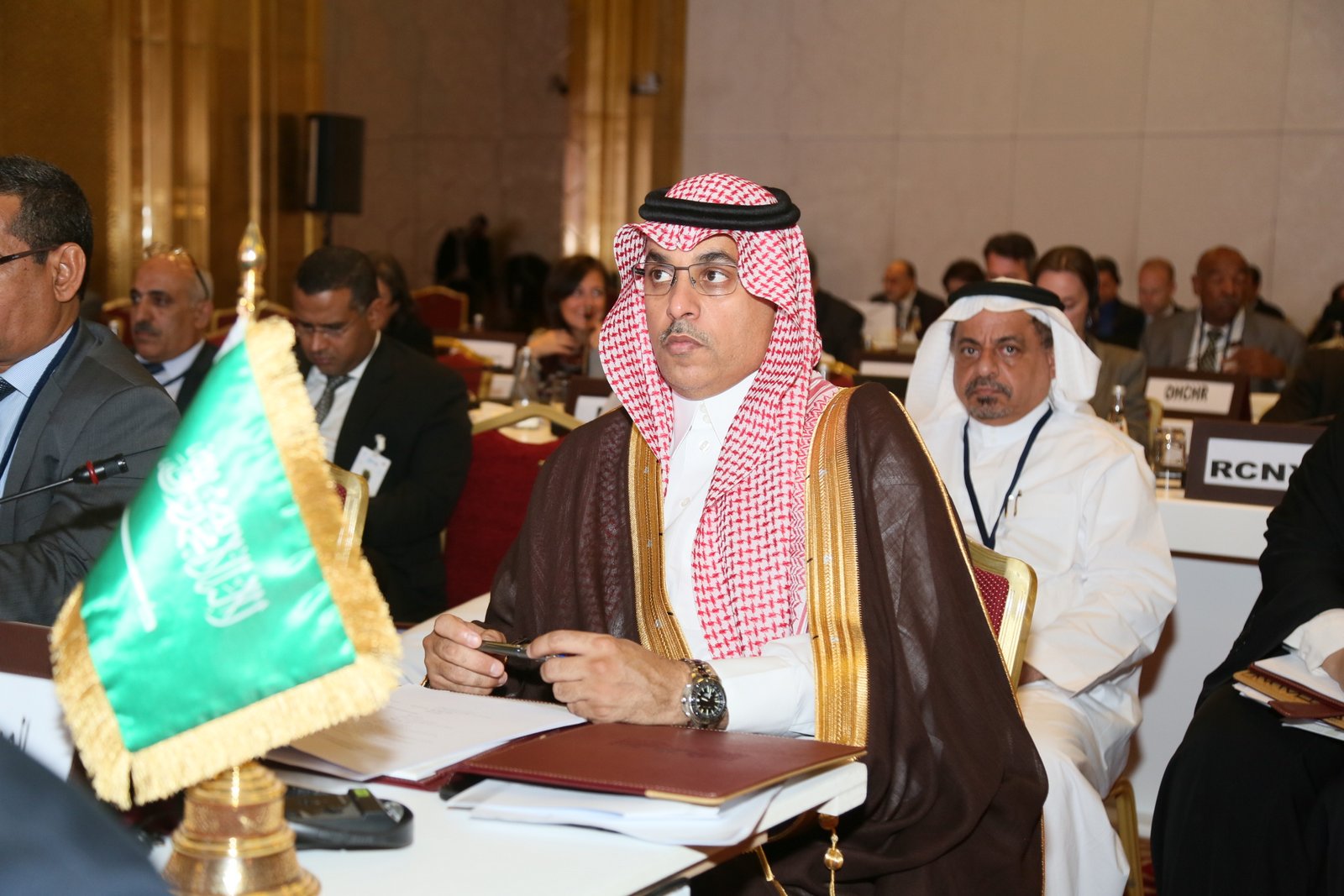
As the Chairman of the Saudi Delegation in the ESCWA Ministrial Session Dr. Altekhaifi: the transition towards a knowledge-based society promotes sustainable development in the Kingdom H.E. Dr. Fahad Sulaiman Altekhaifi, GaStat President, assured that the Kingdom of Saudi Arabia has completed remarkable steps towards achieving the millennium goals of sustainable development and has developed a strategy for total development under the framework of its 2030 Vision. This came during the 29th ministerial session of ESCWA entitled "Implementing the Sustainable Development Goals of 2030 in Arab countries", held in Doha,Qatar. HE GaStat President chaired the Saudi delegation participating in this session. He clarified that the Kingdom has made deliberate steps towards achieving the goals of sustainable development, where all conditions are prepared to achieve its goals of growth rates, average income increasing, promote the transition towards a knowledge-based society. This can be made through multiple strategies such as those based on economic diversification, sovereign investment funds, support the private investment initiatives, invest in quality education, research and development, health facilities, public services, and international and regional agreements. He added that the entire government systems in the Kingdom works on increasing the development of national and regional institutions, and enhance coordination efforts, enhance the flexibility of public institutions in developing governance strategies. On Tuesday, The United Nations Economic and Social Commission for West Asia (ESCWA) held its 29th session for senior officials, in the presence of representatives from member states and non-member states in international and regional organizations and committees. ESCWA is one of the five United Nations' regional commissions, and is a part of its general secretariat. It works under the supervision of economic and social council in order to support the economic and social cooperation between the region countries and promotes the development process in order to achieve regional integration. Its membership compromises of 17 member states which are: Saudi Arabia, Bahrain, Egypt, Iraq, Jordan, Kuwait, Lebanon, Libya, Morocco, Oman, Palestine, Qatar, Sudan, Syria, UAE, Tunisia and Yemen.  The ESCWA ministerial session is held every two years with the participation of the commission member states representatives on the mistrial level and representatives from United Nations' organizations and programs in addition to United Nation member states who are not member of ESCWA.
Image Alt Text

Dr. Altekhaifi: the transition towards a knowledge-based society promotes sustainable development in the Kingdom

12-09-2017

As the Chairman of the Saudi Delegation in the ESCWA Ministrial Session Dr. Altekhaifi: the transition towards a knowledge-based society promotes sustainable development in the Kingdom H.E. Dr. Fahad Sulaiman Altekhaifi, GaStat President, assured that the Kingdom of Saudi Arabia has completed remarkable steps towards achieving the millennium goals of sustainable development and has developed a strategy for total development under the framework of its 2030 Vision. This came during the 29th ministerial session of ESCWA entitled "Implementing the Sustainable Development Goals of 2030 in Arab countries", held in Doha,Qatar. HE GaStat President chaired the Saudi delegation participating in this session. He clarified that the Kingdom has made deliberate steps towards achieving the goals of sustainable development, where all conditions are prepared to achieve its goals of growth rates, average income increasing, promote the transition towards a knowledge-based society. This can be made through multiple strategies such as those based on economic diversification, sovereign investment funds, support the private investment initiatives, invest in quality education, research and development, health facilities, public services, and international and regional agreements. He added that the entire government systems in the Kingdom works on increasing the development of national and regional institutions, and enhance coordination efforts, enhance the flexibility of public institutions in developing governance strategies. On Tuesday, The United Nations Economic and Social Commission for West Asia (ESCWA) held its 29th session for senior officials, in the presence of representatives from member states and non-member states in international and regional organizations and committees. ESCWA is one of the five United Nations' regional commissions, and is a part of its general secretariat. It works under the supervision of economic and social council in order to support the economic and social cooperation between the region countries and promotes the development process in order to achieve regional integration. Its membership compromises of 17 member states which are: Saudi Arabia, Bahrain, Egypt, Iraq, Jordan, Kuwait, Lebanon, Libya, Morocco, Oman, Palestine, Qatar, Sudan, Syria, UAE, Tunisia and Yemen.  The ESCWA ministerial session is held every two years with the participation of the commission member states representatives on the mistrial level and representatives from United Nations' organizations and programs in addition to United Nation member states who are not member of ESCWA.
Image Alt Text

GaStat honours Tawuniya

12-09-2017

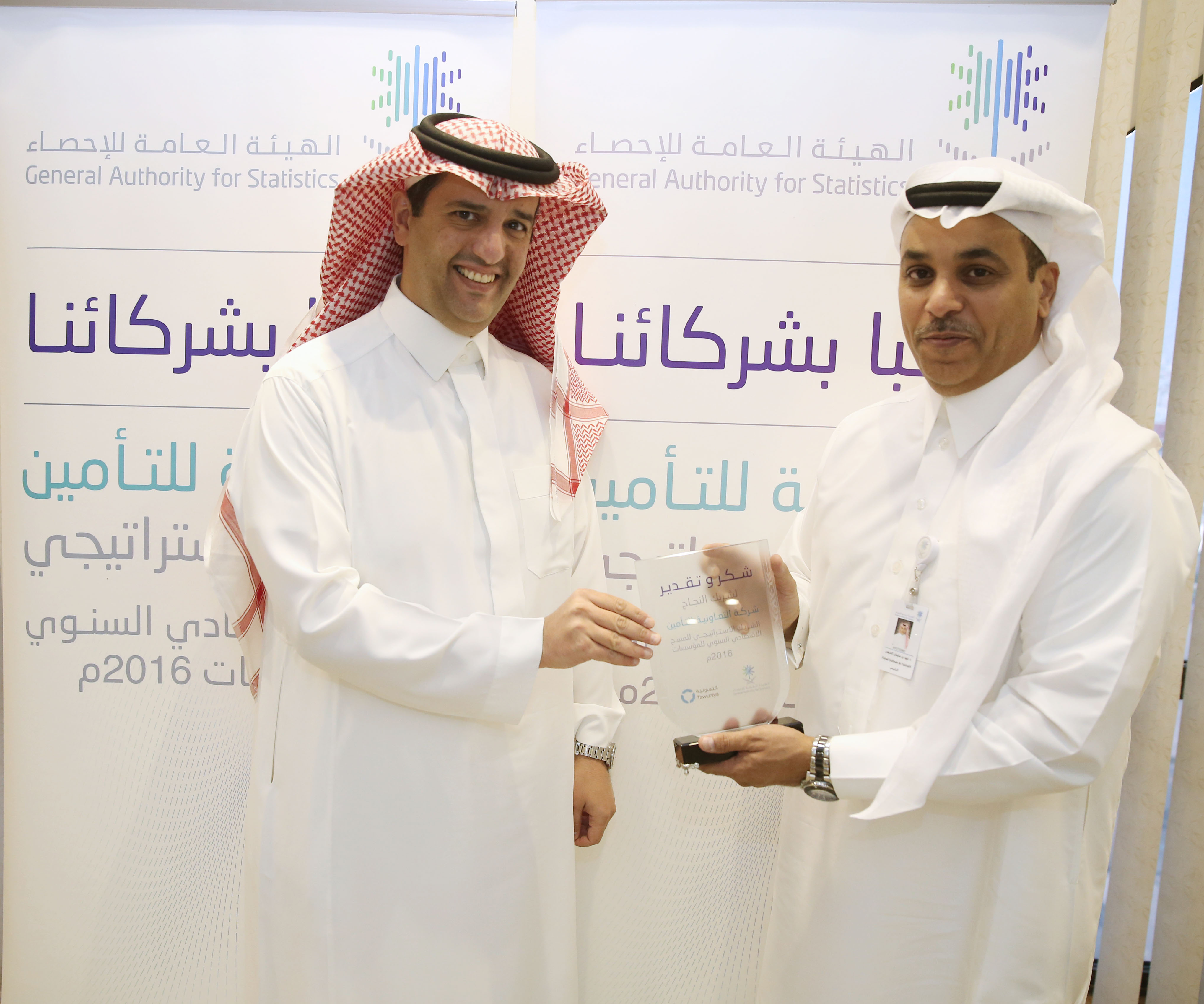
For its role in raising statistical awareness within the economic survey GaStat honours Tawuniya H.E. Dr.Fahad Altekhaifi, the President of the General Authority for Statistics (GaStat), expressed his thanks to Tawuniya insurance company for supporting the operations of the economic survey of establishments (2016) that aim to support statistical awareness programs.  H.E. GaStat President stressed that giving the opportunity for the private sector to sponsor specialized surveys and research comes within the framework of enabling the support of statistical awareness, in which Gastat aims to raise the awareness of any research or study targeted groups to the importance of the information provided and its role in supporting relevant development decisions. He added that the private sector in the Kingdom of Saudi Arabia realizes its societal role and offers a number of supporting initiatives to achieve the goals of government agencies. Dr. Altekhaifi explained that in this year, GaStat conducted its periodic economic survey through a series of economic research and surveys in order to provide detailed economic data of all establishments in the private and public sector and non-profit organizations to prepare indicators that help in recognizing the economic activities growth rate. More than 650 statistical researchers collected the data of 33,500 establishments in all regions of the Kingdom in order to obtain detailed economic data related to different aspects of the establishment. Mr. Raed bin Abdullah Al-Tamimi, Tawuniya CEO,  expressed pride in the strategic collaboration with GaStat through his visit to GaStat. He clarified that this sponsorship is part of the initiatives of Tawuniya to support the statistical awareness of the Saudi society because of the importance of its results in the development of the private sector. Mr. Al-Tamimi expressed his thanks to Gastat for giving them the opportunity to contribute in achieving the objectives of economic statistical products that supports the economic projects. Mr. Al-Tamimi added that Tawuniya, as the leading insurance industry in the Kingdom, supports the economic projects especially small and medium enterprises and national authorities to complete the initiatives that have a positive impact on the society and insurance sector. He noted that Tawuniya has a great experience in insurance practices and provides a variety of insurance solutions that meet the needs of all business sectors, drawing attention that this approach is in line with the 2030 Saudi Vision. Al-Tamimi asserted the importance of providing economic information about economic establishments to support decision makers in drawing a clear roadmap that contributes in implementing the goals and plans of the national transformation program. This program supports the role of economic establishments especially small and medium establishments in the GDP at a rate of up to 25% in 2020, which will contribute to reduce the dependence on oil and diversify sources of income.
Image Alt Text

GaStat honours Tawuniya

12-09-2017

For its role in raising statistical awareness within the economic survey GaStat honours Tawuniya H.E. Dr.Fahad Altekhaifi, the President of the General Authority for Statistics (GaStat), expressed his thanks to Tawuniya insurance company for supporting the operations of the economic survey of establishments (2016) that aim to support statistical awareness programs.  H.E. GaStat President stressed that giving the opportunity for the private sector to sponsor specialized surveys and research comes within the framework of enabling the support of statistical awareness, in which Gastat aims to raise the awareness of any research or study targeted groups to the importance of the information provided and its role in supporting relevant development decisions. He added that the private sector in the Kingdom of Saudi Arabia realizes its societal role and offers a number of supporting initiatives to achieve the goals of government agencies. Dr. Altekhaifi explained that in this year, GaStat conducted its periodic economic survey through a series of economic research and surveys in order to provide detailed economic data of all establishments in the private and public sector and non-profit organizations to prepare indicators that help in recognizing the economic activities growth rate. More than 650 statistical researchers collected the data of 33,500 establishments in all regions of the Kingdom in order to obtain detailed economic data related to different aspects of the establishment. Mr. Raed bin Abdullah Al-Tamimi, Tawuniya CEO,  expressed pride in the strategic collaboration with GaStat through his visit to GaStat. He clarified that this sponsorship is part of the initiatives of Tawuniya to support the statistical awareness of the Saudi society because of the importance of its results in the development of the private sector. Mr. Al-Tamimi expressed his thanks to Gastat for giving them the opportunity to contribute in achieving the objectives of economic statistical products that supports the economic projects. Mr. Al-Tamimi added that Tawuniya, as the leading insurance industry in the Kingdom, supports the economic projects especially small and medium enterprises and national authorities to complete the initiatives that have a positive impact on the society and insurance sector. He noted that Tawuniya has a great experience in insurance practices and provides a variety of insurance solutions that meet the needs of all business sectors, drawing attention that this approach is in line with the 2030 Saudi Vision. Al-Tamimi asserted the importance of providing economic information about economic establishments to support decision makers in drawing a clear roadmap that contributes in implementing the goals and plans of the national transformation program. This program supports the role of economic establishments especially small and medium establishments in the GDP at a rate of up to 25% in 2020, which will contribute to reduce the dependence on oil and diversify sources of income.
Image Alt Text

GaStat: 5,382 photographers work in 2,415 photography studios in Saudi Arabia

12-09-2017
Within the new bundle of cultural indicators  GaStat: 5,382 photographers work in 2,415 photography studios in Saudi Arabia On Sunday, 12 Rabī‘ al-awwal 1438 corresponding to December 11, 2016, GaStat issued its indicator about the number of photography studios and its workers from 2011 to 2015 in all administrative regions of the Kingdom which has reached 2415 studios with 5382 photographer and workers. The indicator issued by GaStat showed that Makkah region is in the lead by number of photography studios and its workers for the last five years. The number of studios in Makkah region has reached more than 802 in 2015, while Riyadh region is the second largest area after Makkah in the number of operators and photography studios which has reached more than 640 studios with more than 1400 worker in 2015. GaStat's spokesman Taiseer Almofarrej explained that the photography indicator is considered one of the most important cultural indicators, and it measures the changes in number of shops that photograph people, number of photographers, and number of workers annually. The indicator reflects the development in photography activity in different regions of the Kingdom. Almofarrej stressed that GaStat was keen to launch its indicator today to cope with the events of "colors of Saudi Arabia forum" to shed light on this activity. He also added that after the launch of any indicator, GaStat begin its assessment in order to develop the indicator with the collaboration of relevant entities. One of these indicators is the photography as one of the most important cultural indicators, in addition to the fact that photography field is one of the attractive fields to work in especially with the development of photography tools and the increasing demand on photographers, and the impact of images on media, art and culture particularly with the spread of social media. Knowing that the indicator does not include amateur photographers or who works independently as the indicator relies on record data from relevant entities.
Image Alt Text

GaStat: 5,382 photographers work in 2,415 photography studios in Saudi Arabia

12-09-2017

Within the new bundle of cultural indicators  GaStat: 5,382 photographers work in 2,415 photography studios in Saudi Arabia On Sunday, 12 Rabī‘ al-awwal 1438 corresponding to December 11, 2016, GaStat issued its indicator about the number of photography studios and its workers from 2011 to 2015 in all administrative regions of the Kingdom which has reached 2415 studios with 5382 photographer and workers. The indicator issued by GaStat showed that Makkah region is in the lead by number of photography studios and its workers for the last five years. The number of studios in Makkah region has reached more than 802 in 2015, while Riyadh region is the second largest area after Makkah in the number of operators and photography studios which has reached more than 640 studios with more than 1400 worker in 2015. GaStat's spokesman Taiseer Almofarrej explained that the photography indicator is considered one of the most important cultural indicators, and it measures the changes in number of shops that photograph people, number of photographers, and number of workers annually. The indicator reflects the development in photography activity in different regions of the Kingdom. Almofarrej stressed that GaStat was keen to launch its indicator today to cope with the events of "colors of Saudi Arabia forum" to shed light on this activity. He also added that after the launch of any indicator, GaStat begin its assessment in order to develop the indicator with the collaboration of relevant entities. One of these indicators is the photography as one of the most important cultural indicators, in addition to the fact that photography field is one of the attractive fields to work in especially with the development of photography tools and the increasing demand on photographers, and the impact of images on media, art and culture particularly with the spread of social media. Knowing that the indicator does not include amateur photographers or who works independently as the indicator relies on record data from relevant entities.
Image Alt Text

GaStat: An Increase in Exports and a Decrease in Merchandise Imports of Saudi Arabia (1st quarter-2017)

27-07-2017

GaStat: An Increase in Exports and a Decrease in Merchandise Imports of Saudi Arabia (1st quarter-2017) The value of merchandise exports of Saudi Arabia during the first quarter of 2017 amounted to (206984) million riyals compared to (140186) million riyals for the same quarter last year, with an increase of (66799) million riyals (47.7%). While non-oil exports amounted to (44849) million riyals during the first quarter of 2017 compared to (43029) million riyals for the same period last year, with an increase of (1820) million riyals (4.2%). The value of Saudi Arabia's imports during the first quarter decreased by (12.3%) to reach (125558) million riyals with a decrease of (17542) million riyals compared to same quarter last year which recorded (143100) million riyals. According to the quarterly report issued by GaStat for the first quarter of 2017, the value of Saudi merchandise exports recorded an increase of (5.2%) compared to the last quarter (4th quarter 2016) which recorded (196842) million riyals. While non-oil exports recorded a decrease of (4.5%)compared to the last quarter (4th quarter 2016) which recorded (46964) million riyals. The Saudi imports recorded a decrease of (0,05%) compared to the last quarter which recorded (125616) million riyals. The ratio of non-oil exports to imports reached (35.7%) in the first quarter of 2017 compared to (30.1%) for the same quarter last year, but this percentage was lower than the previous quarter (fourth quarter 2016), which recorded (37.4%).   The report shows that 20.4% of the imports were capital goods, 39.3% intermediate goods and 40.3% imports were goods for final consumption. The increase in the value of non-oil exports in the first quarter of 2017 compared to the same quarter of last year was the result of the rise of the most important sections of merchandises exported, mainly plastics, rubber and their products, which rose by (9.8%) to the value of (14570) million riyals. The products of chemical industries and related industries increased to (13355) million riyals compared to (11361) million riyals in the first quarter of 2016, which means an increase of (1993) million riyals (17.5%). Base metals and its products increased to (3703) million riyals Compared to (3636) million riyals in the first quarter of 2016, which means an increase of (66) million riyals (1.8%). The exports of Saudi Arabia in the transport equipment and its parts, machinery, and electrical appliances and equipment section reached (6204) million riyals which form (13.8%) of the Saudi non-oil exports in this period. Regarding imports, the machinery, electrical appliances and equipment and thereof decreased by (19.3%) to reach (30191) million riyals in the first quarter of 2017 compared to (37397) million riyals in the first quarter of 2016. The imports of transportation equipment and thereof decreased to (20529) million riyals compared to (25377) million riyals (19.1%). While imports of chemical products and related industries decreased by (4.7%) to record (12638) million riyals in the first quarter of 2017 compared to (13268) million riyals for the same period last year. The report pointed out that the total volume of non-oil exported merchandise increased to (13248) thousand tons in the first quarter of 2017 compared to (13103) thousand tons in the first quarter of 2016, which means an increase of 1.1%. The volume of imports in the first quarter of 2017 also decreased to (17130) thousand tons compared to (20561) thousand tons for the same quarter of last year with a decrease of (16.7%).  On the geographical distribution of Saudi Arabia's exports of non-oil merchandise, the report pointed out that exports to Asian countries, excluding Arab and Islamic countries, are at the top of the groups that have been exported to, recording a rise of (32.1%) to register (14246) in the first quarter of 2017 compared to (10781) million riyals in the first quarter 2016. Exports to the GCC countries decreased by (4.9%) to reach (11934) million riyals, while the rest of the groups decreased to (5.3%) to register (18669) million riyals. UAE is the top country for exports in the first quarter of 2017: The United Arab Emirates, China, India, Singapore and Kuwait are the top countries for exports, as their exports formed (41.7%) of the total non-oil exports compared to (36.6%) in the first quarter of 2016. China is the top country for imports in the first quarter of 2017:  The United States of America, China, Germany, the United Arab Emirates and Japan are the top countries of imports, as their merchandise imports formed (45.9%) compared to (46%) in the first quarter of 2016.
Image Alt Text

GaStat: An Increase in Exports and a Decrease in Merchandise Imports of Saudi Arabia (1st quarter-2017)

27-07-2017

GaStat: An Increase in Exports and a Decrease in Merchandise Imports of Saudi Arabia (1st quarter-2017) The value of merchandise exports of Saudi Arabia during the first quarter of 2017 amounted to (206984) million riyals compared to (140186) million riyals for the same quarter last year, with an increase of (66799) million riyals (47.7%). While non-oil exports amounted to (44849) million riyals during the first quarter of 2017 compared to (43029) million riyals for the same period last year, with an increase of (1820) million riyals (4.2%). The value of Saudi Arabia's imports during the first quarter decreased by (12.3%) to reach (125558) million riyals with a decrease of (17542) million riyals compared to same quarter last year which recorded (143100) million riyals. According to the quarterly report issued by GaStat for the first quarter of 2017, the value of Saudi merchandise exports recorded an increase of (5.2%) compared to the last quarter (4th quarter 2016) which recorded (196842) million riyals. While non-oil exports recorded a decrease of (4.5%)compared to the last quarter (4th quarter 2016) which recorded (46964) million riyals. The Saudi imports recorded a decrease of (0,05%) compared to the last quarter which recorded (125616) million riyals. The ratio of non-oil exports to imports reached (35.7%) in the first quarter of 2017 compared to (30.1%) for the same quarter last year, but this percentage was lower than the previous quarter (fourth quarter 2016), which recorded (37.4%).   The report shows that 20.4% of the imports were capital goods, 39.3% intermediate goods and 40.3% imports were goods for final consumption. The increase in the value of non-oil exports in the first quarter of 2017 compared to the same quarter of last year was the result of the rise of the most important sections of merchandises exported, mainly plastics, rubber and their products, which rose by (9.8%) to the value of (14570) million riyals. The products of chemical industries and related industries increased to (13355) million riyals compared to (11361) million riyals in the first quarter of 2016, which means an increase of (1993) million riyals (17.5%). Base metals and its products increased to (3703) million riyals Compared to (3636) million riyals in the first quarter of 2016, which means an increase of (66) million riyals (1.8%). The exports of Saudi Arabia in the transport equipment and its parts, machinery, and electrical appliances and equipment section reached (6204) million riyals which form (13.8%) of the Saudi non-oil exports in this period. Regarding imports, the machinery, electrical appliances and equipment and thereof decreased by (19.3%) to reach (30191) million riyals in the first quarter of 2017 compared to (37397) million riyals in the first quarter of 2016. The imports of transportation equipment and thereof decreased to (20529) million riyals compared to (25377) million riyals (19.1%). While imports of chemical products and related industries decreased by (4.7%) to record (12638) million riyals in the first quarter of 2017 compared to (13268) million riyals for the same period last year. The report pointed out that the total volume of non-oil exported merchandise increased to (13248) thousand tons in the first quarter of 2017 compared to (13103) thousand tons in the first quarter of 2016, which means an increase of 1.1%. The volume of imports in the first quarter of 2017 also decreased to (17130) thousand tons compared to (20561) thousand tons for the same quarter of last year with a decrease of (16.7%).  On the geographical distribution of Saudi Arabia's exports of non-oil merchandise, the report pointed out that exports to Asian countries, excluding Arab and Islamic countries, are at the top of the groups that have been exported to, recording a rise of (32.1%) to register (14246) in the first quarter of 2017 compared to (10781) million riyals in the first quarter 2016. Exports to the GCC countries decreased by (4.9%) to reach (11934) million riyals, while the rest of the groups decreased to (5.3%) to register (18669) million riyals. UAE is the top country for exports in the first quarter of 2017: The United Arab Emirates, China, India, Singapore and Kuwait are the top countries for exports, as their exports formed (41.7%) of the total non-oil exports compared to (36.6%) in the first quarter of 2016. China is the top country for imports in the first quarter of 2017:  The United States of America, China, Germany, the United Arab Emirates and Japan are the top countries of imports, as their merchandise imports formed (45.9%) compared to (46%) in the first quarter of 2016.
Image Alt Text

Dr. Altekhaifi: the transition towards a knowledge-based society promotes sustainable development in the Kingdom

12-09-2017

As the Chairman of the Saudi Delegation in the ESCWA Ministrial Session Dr. Altekhaifi: the transition towards a knowledge-based society promotes sustainable development in the Kingdom H.E. Dr. Fahad Sulaiman Altekhaifi, GaStat President, assured that the Kingdom of Saudi Arabia has completed remarkable steps towards achieving the millennium goals of sustainable development and has developed a strategy for total development under the framework of its 2030 Vision. This came during the 29th ministerial session of ESCWA entitled "Implementing the Sustainable Development Goals of 2030 in Arab countries", held in Doha,Qatar. HE GaStat President chaired the Saudi delegation participating in this session. He clarified that the Kingdom has made deliberate steps towards achieving the goals of sustainable development, where all conditions are prepared to achieve its goals of growth rates, average income increasing, promote the transition towards a knowledge-based society. This can be made through multiple strategies such as those based on economic diversification, sovereign investment funds, support the private investment initiatives, invest in quality education, research and development, health facilities, public services, and international and regional agreements. He added that the entire government systems in the Kingdom works on increasing the development of national and regional institutions, and enhance coordination efforts, enhance the flexibility of public institutions in developing governance strategies. On Tuesday, The United Nations Economic and Social Commission for West Asia (ESCWA) held its 29th session for senior officials, in the presence of representatives from member states and non-member states in international and regional organizations and committees. ESCWA is one of the five United Nations' regional commissions, and is a part of its general secretariat. It works under the supervision of economic and social council in order to support the economic and social cooperation between the region countries and promotes the development process in order to achieve regional integration. Its membership compromises of 17 member states which are: Saudi Arabia, Bahrain, Egypt, Iraq, Jordan, Kuwait, Lebanon, Libya, Morocco, Oman, Palestine, Qatar, Sudan, Syria, UAE, Tunisia and Yemen.  The ESCWA ministerial session is held every two years with the participation of the commission member states representatives on the mistrial level and representatives from United Nations' organizations and programs in addition to United Nation member states who are not member of ESCWA.
Image Alt Text

GaStat honours Tawuniya

12-09-2017

For its role in raising statistical awareness within the economic survey GaStat honours Tawuniya H.E. Dr.Fahad Altekhaifi, the President of the General Authority for Statistics (GaStat), expressed his thanks to Tawuniya insurance company for supporting the operations of the economic survey of establishments (2016) that aim to support statistical awareness programs.  H.E. GaStat President stressed that giving the opportunity for the private sector to sponsor specialized surveys and research comes within the framework of enabling the support of statistical awareness, in which Gastat aims to raise the awareness of any research or study targeted groups to the importance of the information provided and its role in supporting relevant development decisions. He added that the private sector in the Kingdom of Saudi Arabia realizes its societal role and offers a number of supporting initiatives to achieve the goals of government agencies. Dr. Altekhaifi explained that in this year, GaStat conducted its periodic economic survey through a series of economic research and surveys in order to provide detailed economic data of all establishments in the private and public sector and non-profit organizations to prepare indicators that help in recognizing the economic activities growth rate. More than 650 statistical researchers collected the data of 33,500 establishments in all regions of the Kingdom in order to obtain detailed economic data related to different aspects of the establishment. Mr. Raed bin Abdullah Al-Tamimi, Tawuniya CEO,  expressed pride in the strategic collaboration with GaStat through his visit to GaStat. He clarified that this sponsorship is part of the initiatives of Tawuniya to support the statistical awareness of the Saudi society because of the importance of its results in the development of the private sector. Mr. Al-Tamimi expressed his thanks to Gastat for giving them the opportunity to contribute in achieving the objectives of economic statistical products that supports the economic projects. Mr. Al-Tamimi added that Tawuniya, as the leading insurance industry in the Kingdom, supports the economic projects especially small and medium enterprises and national authorities to complete the initiatives that have a positive impact on the society and insurance sector. He noted that Tawuniya has a great experience in insurance practices and provides a variety of insurance solutions that meet the needs of all business sectors, drawing attention that this approach is in line with the 2030 Saudi Vision. Al-Tamimi asserted the importance of providing economic information about economic establishments to support decision makers in drawing a clear roadmap that contributes in implementing the goals and plans of the national transformation program. This program supports the role of economic establishments especially small and medium establishments in the GDP at a rate of up to 25% in 2020, which will contribute to reduce the dependence on oil and diversify sources of income.
Image Alt Text

GaStat: 5,382 photographers work in 2,415 photography studios in Saudi Arabia

12-09-2017

Within the new bundle of cultural indicators  GaStat: 5,382 photographers work in 2,415 photography studios in Saudi Arabia On Sunday, 12 Rabī‘ al-awwal 1438 corresponding to December 11, 2016, GaStat issued its indicator about the number of photography studios and its workers from 2011 to 2015 in all administrative regions of the Kingdom which has reached 2415 studios with 5382 photographer and workers. The indicator issued by GaStat showed that Makkah region is in the lead by number of photography studios and its workers for the last five years. The number of studios in Makkah region has reached more than 802 in 2015, while Riyadh region is the second largest area after Makkah in the number of operators and photography studios which has reached more than 640 studios with more than 1400 worker in 2015. GaStat's spokesman Taiseer Almofarrej explained that the photography indicator is considered one of the most important cultural indicators, and it measures the changes in number of shops that photograph people, number of photographers, and number of workers annually. The indicator reflects the development in photography activity in different regions of the Kingdom. Almofarrej stressed that GaStat was keen to launch its indicator today to cope with the events of "colors of Saudi Arabia forum" to shed light on this activity. He also added that after the launch of any indicator, GaStat begin its assessment in order to develop the indicator with the collaboration of relevant entities. One of these indicators is the photography as one of the most important cultural indicators, in addition to the fact that photography field is one of the attractive fields to work in especially with the development of photography tools and the increasing demand on photographers, and the impact of images on media, art and culture particularly with the spread of social media. Knowing that the indicator does not include amateur photographers or who works independently as the indicator relies on record data from relevant entities.
Image Alt Text

GaStat: An Increase in Exports and a Decrease in Merchandise Imports of Saudi Arabia (1st quarter-2017)

27-07-2017

GaStat: An Increase in Exports and a Decrease in Merchandise Imports of Saudi Arabia (1st quarter-2017) The value of merchandise exports of Saudi Arabia during the first quarter of 2017 amounted to (206984) million riyals compared to (140186) million riyals for the same quarter last year, with an increase of (66799) million riyals (47.7%). While non-oil exports amounted to (44849) million riyals during the first quarter of 2017 compared to (43029) million riyals for the same period last year, with an increase of (1820) million riyals (4.2%). The value of Saudi Arabia's imports during the first quarter decreased by (12.3%) to reach (125558) million riyals with a decrease of (17542) million riyals compared to same quarter last year which recorded (143100) million riyals. According to the quarterly report issued by GaStat for the first quarter of 2017, the value of Saudi merchandise exports recorded an increase of (5.2%) compared to the last quarter (4th quarter 2016) which recorded (196842) million riyals. While non-oil exports recorded a decrease of (4.5%)compared to the last quarter (4th quarter 2016) which recorded (46964) million riyals. The Saudi imports recorded a decrease of (0,05%) compared to the last quarter which recorded (125616) million riyals. The ratio of non-oil exports to imports reached (35.7%) in the first quarter of 2017 compared to (30.1%) for the same quarter last year, but this percentage was lower than the previous quarter (fourth quarter 2016), which recorded (37.4%).   The report shows that 20.4% of the imports were capital goods, 39.3% intermediate goods and 40.3% imports were goods for final consumption. The increase in the value of non-oil exports in the first quarter of 2017 compared to the same quarter of last year was the result of the rise of the most important sections of merchandises exported, mainly plastics, rubber and their products, which rose by (9.8%) to the value of (14570) million riyals. The products of chemical industries and related industries increased to (13355) million riyals compared to (11361) million riyals in the first quarter of 2016, which means an increase of (1993) million riyals (17.5%). Base metals and its products increased to (3703) million riyals Compared to (3636) million riyals in the first quarter of 2016, which means an increase of (66) million riyals (1.8%). The exports of Saudi Arabia in the transport equipment and its parts, machinery, and electrical appliances and equipment section reached (6204) million riyals which form (13.8%) of the Saudi non-oil exports in this period. Regarding imports, the machinery, electrical appliances and equipment and thereof decreased by (19.3%) to reach (30191) million riyals in the first quarter of 2017 compared to (37397) million riyals in the first quarter of 2016. The imports of transportation equipment and thereof decreased to (20529) million riyals compared to (25377) million riyals (19.1%). While imports of chemical products and related industries decreased by (4.7%) to record (12638) million riyals in the first quarter of 2017 compared to (13268) million riyals for the same period last year. The report pointed out that the total volume of non-oil exported merchandise increased to (13248) thousand tons in the first quarter of 2017 compared to (13103) thousand tons in the first quarter of 2016, which means an increase of 1.1%. The volume of imports in the first quarter of 2017 also decreased to (17130) thousand tons compared to (20561) thousand tons for the same quarter of last year with a decrease of (16.7%).  On the geographical distribution of Saudi Arabia's exports of non-oil merchandise, the report pointed out that exports to Asian countries, excluding Arab and Islamic countries, are at the top of the groups that have been exported to, recording a rise of (32.1%) to register (14246) in the first quarter of 2017 compared to (10781) million riyals in the first quarter 2016. Exports to the GCC countries decreased by (4.9%) to reach (11934) million riyals, while the rest of the groups decreased to (5.3%) to register (18669) million riyals. UAE is the top country for exports in the first quarter of 2017: The United Arab Emirates, China, India, Singapore and Kuwait are the top countries for exports, as their exports formed (41.7%) of the total non-oil exports compared to (36.6%) in the first quarter of 2016. China is the top country for imports in the first quarter of 2017:  The United States of America, China, Germany, the United Arab Emirates and Japan are the top countries of imports, as their merchandise imports formed (45.9%) compared to (46%) in the first quarter of 2016.
Sort